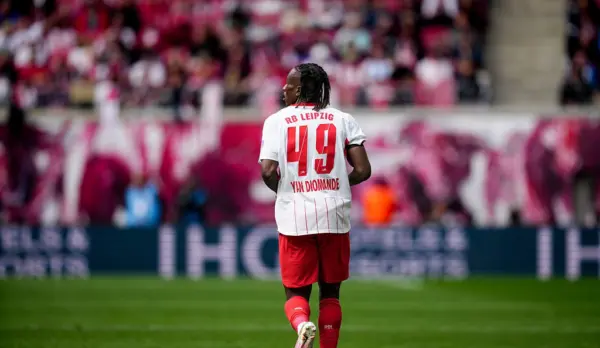
Yan Diomande became the latest sensation to leave Bundesliga club RB Leipzig for Spanish giants Real Madrid in a deal that could potentially fetch the German side 140 million euros.
Diomande stayed at Leipzig for only a year after joining the club in July 2023 from La Liga side Leganes, before being courted by Real Madrid. While this is the first time Leipzig have fetched a fee exceeding 100 million euros for a single player, it is hardly the first instance of one of their talents attracting interest from, and being sold to, a giant of European football.
The likes of Dani Olmo, Dayot Upamecano, Christopher Nkunku, Benjamin Sesko, Ibrahima Konate, and Dominik Szoboszlai are just a few of the names who earned big-money moves across Europe after honing their skills at Leipzig. Diomande was not the first, and he will certainly not be the last. But what makes Leipzig so successful at producing top-quality talent?
The ‘Secret Recipe’ Behind Leipzig’s Talent Factory
Leipzig sits at the apex of a global talent-scouting framework established by Red Bull. This network encompasses RB Salzburg (Austria), FC Liefering (Austria), Red Bull Bragantino (Brazil), New York Red Bulls (USA), and RB Omiya Ardija (Japan). Rather than throwing raw teenage talent straight into top-five European league football, players complete developmental stages across these clubs. Players such as Szoboszlai, Sesko, and Upamecano refined their tactical understanding at Salzburg before making the natural progression to Leipzig.
Because all Red Bull-affiliated clubs share the same tactical philosophy, training regimens, and medical standards, a player moving from Salzburg or Bragantino to Leipzig requires far less adaptation time than he would at another club.
Unlike some other clubs in Europe’s top five leagues, Leipzig do not scout players solely on technical flair. Instead, they ensure shortlisted candidates meet strict physical and cognitive metrics tailored to their high-octane tactical identity. Central defenders such as Upamecano, Konate, and Josko Gvardiol were targeted because they possessed both the physical dominance and elite ball-carrying verticality required for a high defensive line, which is central to the team’s playing philosophy. For attacking players, acceleration, recovery speed, high-speed sprint distance per 90 minutes, and decision-making speed under extreme physical pressure are key parameters.
The Recruitment Criteria
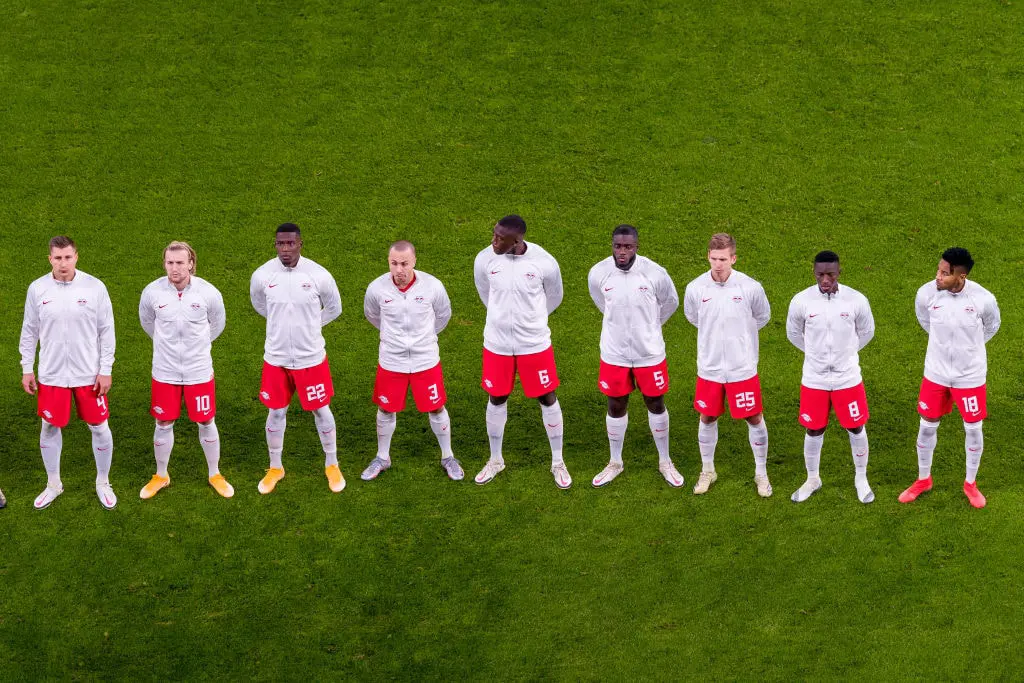
Leipzig also maintain strict recruitment criteria regarding age, primarily targeting players between 18 and 23. Unlike elite clubs such as Real Madrid, Manchester City, or Paris Saint-Germain, where success is judged strictly by silverware won every season, Leipzig offer immediate Champions League and Bundesliga exposure paired with patience. Young defenders and attackers are given room to make mistakes and learn from them, an opportunity rarely afforded at other European clubs of comparable stature.
Additionally, Leipzig excel at timing their market moves. They took advantage of Dani Olmo’s situation at Dinamo Zagreb, swooping in before rival clubs made serious moves. Christopher Nkunku was signed when he lacked guaranteed starts at PSG, while players such as Gvardiol and Diomande were deemed too raw by other suitors, though Leipzig recognised their ceiling early.
Finally, the process does not end with recruitment. Leipzig’s high-tech performance centre tracks player biomechanics, injury risk, and physical capacity to ensure their bodies can withstand the club’s demanding pressing style. While no recruitment strategy is foolproof, Leipzig’s integrated system ensures they land the right player far more often than not.