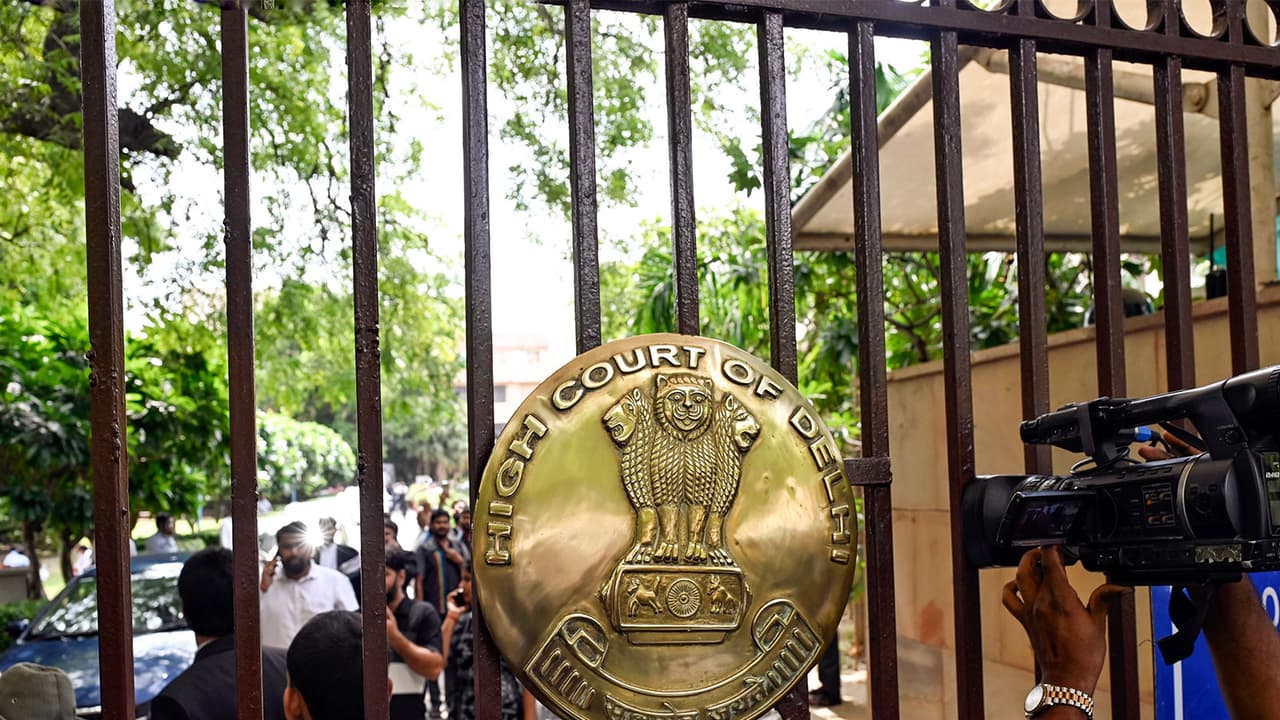
Delhi HC set aside a 3-year jail term for a sweet maker in a 20-year-old Yamuna pollution case. Citing an amendment to the Water Act, the court upheld the conviction but imposed an additional Rs 10 lakh fine and ordered 100 trees to be planted.
The Delhi High Court on Wednesday, in a two-decade-old matter concerning the discharge of untreated effluent into the sewer leading to the River Yamuna, set aside the 3-year sentence imposed on a sweet manufacturer in Chandni Chowk.
The High Court granted the relief after imposing an additional penalty of Rs 10 lakh, citing the latest amendment to the Water (Prevention and Control of Pollution) Act, 1974, which has abolished custodial punishment. In 2017, the trial court imposed a penalty of Rs 2 lakh and sentenced the proprietor of a sweet manufacturer to 3 years’ imprisonment. The petitioner has challenged the trial court’s order. Now that the High Court has upheld the conviction, it has modified the sentence in light of an amendment to the Act, imposing an additional penalty in addition to the previous one.
Modified Sentence and Additional Penalties
Justice Swarana Kanta Sharma passed the judgement in the petition moved by Raj Kumar Gupta, the proprietor of the manufacturing unit. “Accordingly, while upholding the conviction of the petitioner, the order on sentence is modified to the extent that the sentence of imprisonment is set aside. In addition to the fine of Rs 2 lakhs already deposited, the petitioner is directed to pay a further fine of Rs 10 lakhs, which shall be deposited with the DPCC, within a period of 2 months from date,” Justice Sharma said in the judgement passed on January 29.
The High Court has also directed the petitioner to undertake the planting of 100 trees, in coordination with the Government of NCT of Delhi, through its Forest Department, in and around the Chandni Chowk area, or at any other location to be identified by the said Department. It is also directed that each tree shall have a minimum of two-years’ nursery age and a trunk height of six feet. The petitioner shall file a compliance affidavit, along with proof of plantation, before this Court within three months of the date.
Court’s Observations on Environmental Responsibility
“This Court is mindful that pollution of water bodies, particularly rivers, has serious and long-lasting consequences. The Honourable Supreme Court has repeatedly emphasised the need for strict compliance with environmental laws,” the High Court said.
The High Court also stated that small eateries, restaurants, and food-processing units, though individually limited in scale, collectively contribute significantly to pollution when untreated effluents are discharged into public sewers and drains that discharge into rivers. Such establishments cannot be absolved of their responsibility merely on the grounds of size or scale of operation. “Compliance with environmental norms is a responsibility shared by all, and the need for deterrence remains an important factor while dealing with offences relating to the environment,” Justice Sharma said.
Case Background
The High Court also noted that the petitioner is approximately 59 years of age and that the offence in question dates back to 2000. More than two decades have elapsed since then, and the petitioner has been facing trial for about 25 years. It is also not in dispute that the petitioner has already deposited the fine of Rs 2 lakhs imposed upon him.
A complaint was filed by the DPCC in the backdrop of directions issued by the Supreme Court regarding the prevention of pollution of the Yamuna River. (ANI)
(Except for the headline, this story has not been edited by Asianet Newsable English staff and is published from a syndicated feed.)