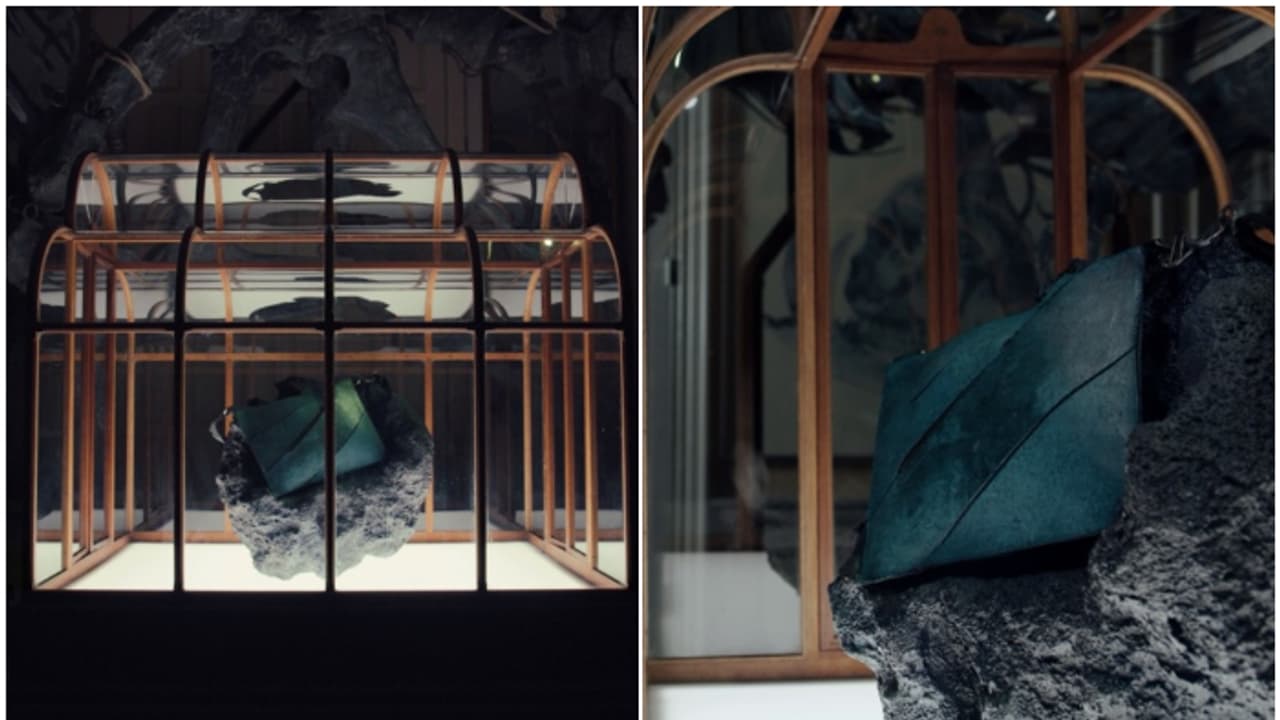
The result of this scientific breakthrough is a teal-coloured luxury handbag, designed in collaboration with fashion experts to showcase the potential of lab-grown leather. The bag is currently on display at Amsterdam’s Art Zoo museum, placed dramatically under a replica T. rex and enclosed in a cage, reinforcing its prehistoric inspiration.
Set to be exhibited until May 11, the piece will later go up for auction with a starting price exceeding $500,000 (approximately Rs 5 crore). Beyond its visual appeal, the handbag serves as a proof-of-concept for sustainable and ethically produced leather alternatives.
Che Connon, CEO of Lab-Grown Leather Ltd., described the project as more than just an eco-friendly substitute. According to him, it represents a technological upgrade—combining sustainability with advanced material science while also leveraging the dramatic appeal of the T. rex to capture public imagination.
Not the First Experiment: Science’s Fascination with the Past
This isn’t the first time scientists have blended ancient biology with modern innovation. The same organisations previously created a mammoth meatball in 2023 by combining woolly mammoth DNA with sheep cells—an experiment that drew both fascination and debate.
Similarly, in 2019, video game designer Seamus Blackley successfully baked bread using 4,500-year-old yeast extracted from ancient Egyptian pottery. Collaborating with experts, he cultivated a starter using ancient grains, demonstrating how dormant biological materials can be revived in meaningful ways.
These experiments underline a growing scientific trend: exploring the past not to recreate it entirely, but to reinterpret it through modern technology. While critics argue that such projects blur scientific accuracy, proponents see them as stepping stones toward innovation and sustainability.