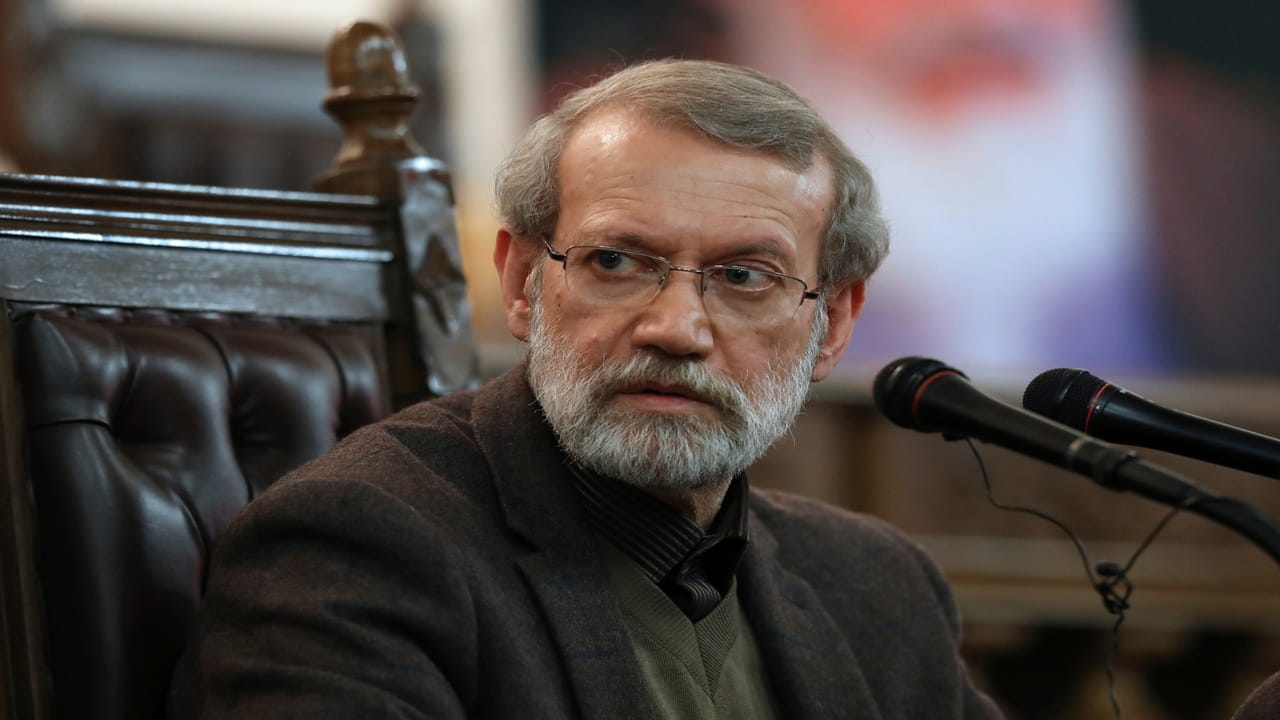
New Delhi: The killing of Ali Larijani, one of the most powerful figures in Tehran’s wartime leadership, has injected fresh uncertainty into the seemingly unending and tumultuous conflict. Tehran confirmed that Larijani was killed alongside his son, Morteza, late Tuesday night. The deaths came soon after the Israeli military targeted Gholamreza Soleimani, head of Iran’s Basij paramilitary force.
Israeli Defense Minister Israel Katz confirmed Larijani had been “eliminated,” and a government spokesperson said, “solving the conflict involves hammering the ayatollah regime until they are gone. We will not allow one ayatollah regime to be replaced with another ayatollah regime.”
The killing of Larijani is more than just another high-profile strike in the ongoing war. It also poses the risk of causing a major halt in the little chances of the war’s resolution through diplomacy, and might only harden Iran’s already aggressive stance against both the US and its allies.
Disastrous effects for the war
Larijani had come to be one of the most important and influential people in Iran’s current war-time leadership. Occupying multiple roles through an illustrious career, he was deeply embedded across Iran’s political, military, and clerical establishments. What made him special in the context of the ongoing war is that he was one of the few seen to be engaging indirectly with mediators, while at the same time being the forefront of confrontations. With him now gone, this vacuum would be too difficult to be filled.
While Larijani had publicly ruled out talks in the immediate aftermath of the war’s outbreak, he was one of the few that could bend the will of the larger leadership towards any chances of a diplomatic resolution. With Larijani gone, factions aligned more closely with the Islamic Revolutionary Guard Corps in the leadership structure would see prominence, and a tougher line against the US is expected to be seen as a result.
The immediate aftermath of his killing thus points toward escalation, not restraint. Iranian officials have vowed a “decisive” response, and retaliatory strikes have already followed. Iranian army chief Amir Hatami vowed “decisive and regrettable” retaliation for Larijani’s death. The Revolutionary Guards reported launching missiles at central Israel “in revenge for the blood of martyr Dr Ali Larijani and his companions.” Parliament speaker Qalibaf warned that traffic through the Strait of Hormuz “won’t return to its pre-war status,” signaling prolonged disruption in the Persian Gulf.