Will China’s money be invested in Make in India?
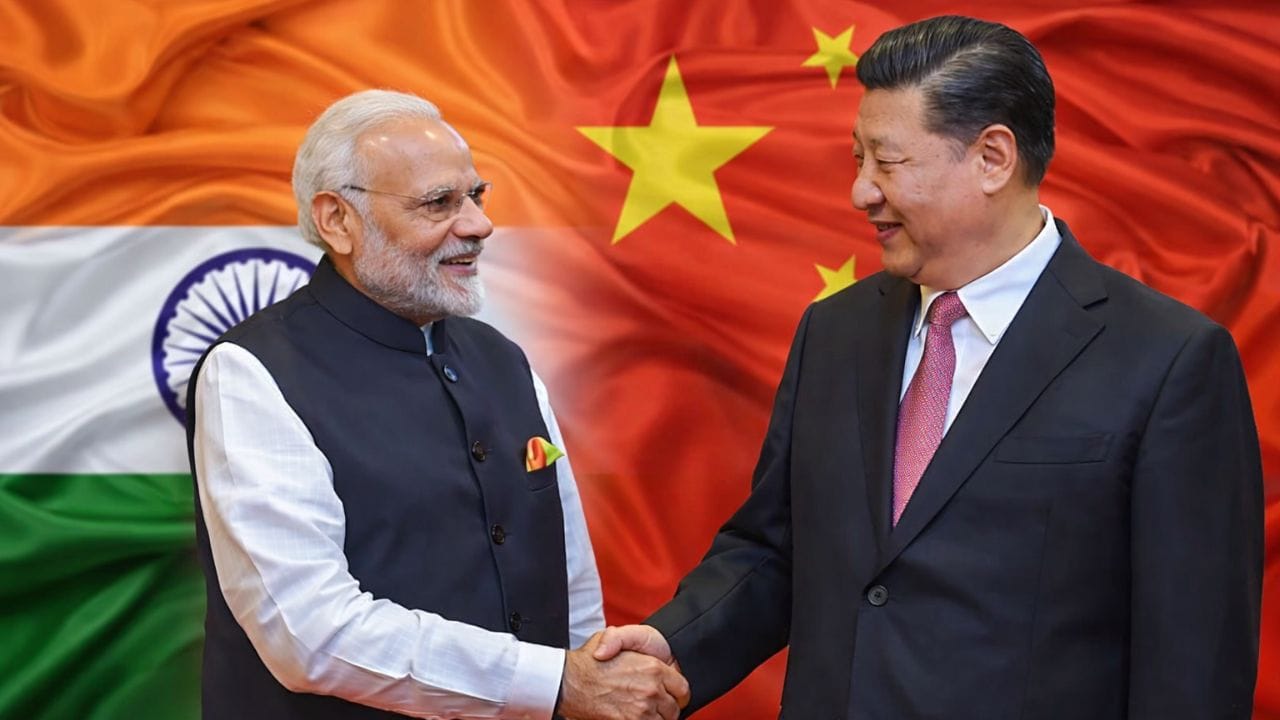
The ice on the relations between India and China now seems to be slowly melting. With the tension on the border reducing, now the Modi government is preparing to take a big decision on the economic front as well. According to the report of Economics Times, the Indian government is considering relaxing the rules for investment (FDI) coming from China. The doors which were strictly closed through ‘Press Note 3’ in April 2020, have now gained momentum to reopen them with some conditions. This will have a direct impact on India’s manufacturing industry and the ‘Make in India’ campaign.
According to the report, the government is assessing whether small investments coming from neighboring countries like China can be approved through the automatic route. This change will be no less than a lifesaver for those Indian companies which are dependent on Chinese partners for money and technology.
Preparation to give green signal to small investment
The root of this entire matter is hidden in ‘Press Note 3’. In April 2020, when border tension was at its peak, the Indian government made a rule. Under this, it was made mandatory to take prior approval of the government for any investment coming from countries bordering India (especially China). Its purpose was to protect Indian companies from Chinese takeover.
But now the government is considering setting a ‘de minimis’ limit. Understand it this way, if a Chinese investment is limited to a certain small amount or stake, then it will not have to go through the long and complicated process of government approval. The official said they are looking at whether the process of saying ‘yes’ or ‘no’ to investment can be made faster and easier. However, the government has also made it clear that Press Note 3 will not be completely abolished, but some practical relaxations will be given in it.
Give a share, but control will remain ours
Indian companies, which understand the pulse of the market, have been continuously giving signals to the government for the last few months. Especially the companies in the electronics sector have appealed to the government to allow joint ventures (JV) with Chinese companies.
The logic of these companies is very practical. They say that to increase electronics manufacturing in India, we are in dire need of Chinese supply chain and their technology, which we do not currently have. The industry has suggested a middle path, Chinese companies should be allowed a maximum stake of 26% in joint ventures. The figure of 26% is important because Chinese companies will benefit from it, but the control of the company will remain in Indian hands. This is a kind of agreement, so that India gets technology and money and security also does not get endangered.
Will ‘Make in India’ be made with Chinese money?
Sajid Chinoy, Chief India Economist of JP Morgan and member of the Prime Minister’s Economic Advisory Council, had recently said a very important thing. He believes that merely imposing tariff (import duty) on goods coming from China will not work. Instead, we should cautiously allow Chinese investment (FDI).
The economics behind this argument is that if Chinese companies come to India and invest money and open factories, it will increase India’s domestic production capacity. We will be able to create our own value chain instead of depending on imports. This is the real objective of ‘Make in India’, even if money comes from across the border, employment and factories should be on Indian soil. Chinoy says that private companies are not able to invest due to lack of demand and on top of that, cheap Chinese goods are flooding the market. In such a situation, Chinese investment can act as a booster.
Why do Chinese companies want to come to India?
It is not that only India needs money, China also has its own compulsions. China’s domestic economy is slowing down and it is becoming difficult for them to do business in developed markets like America and Europe. In such a situation, India is the fastest growing big market in the world for them.
Chinese companies are seeing investment in India as a ‘growth strategy’. They know that by manufacturing in India, they will not only be able to make inroads in the Indian market but will also be able to avoid the tariffs and geo-political tensions across the world.
However, the government does not want to make any compromise on security. The main objective of Press Note 3 was to stop investments related to the Chinese Communist Party or their military. Therefore, even though small investments (de minimis) may be exempted, large and strategic investments will continue to be closely monitored by the government. The Home Ministry and the External Affairs Ministry will still examine each proposal closely.