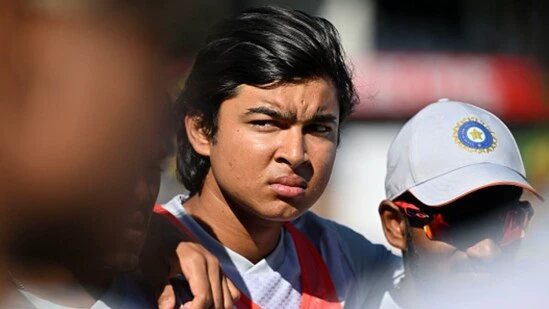
Vaibhav Sooryavanshi became the youngest U19 World Cup-winning cricketer when India demolished England by 100 runs to win their 6th world title.
Sooryavanshi, at just 14, has witnessed so much, becoming an IPL crorepati, smashing the league’s youngest centurion and living a dream World Cup final, where his knock of 175 was the difference between the two sides. As the clamour for his inclusion in the senior India men’s team refuses to relent, it’s only onwards and upwards for Sooryavanshi from here.
Having belted almost every batting record there is in youth cricket – barring scoring a 200 – it’s scary to think about the kind of things Sooryavanshi can achieve by the time he’s 19. However, the one accolade that will always elude him is becoming a multiple-time U19 World Cup winner. By the time the next U19 World Cup comes around in 2028, Sooryavanshi will be 16, and by 2030, he’ll turn 18. But none of that will matter. Not because he won’t win it, but because he won’t play. And not because of form or selection, but because he won’t be eligible.
You heard it. Sooryavanshi won’t get to play another U19 World Cup for India, nor would any of his teammates. Simply because the BCCI guidelines don’t allow it. While Sooryavanshi is eligible, as per the board protocols, an Indian cricketer can feature in only one edition of the U19 World Cup. The rule came into effect in 2016, when the BCCI prohibited players from playing more than one U19 World Cup, and although no official explanation was given, the belief is that the policy stemmed from age-fudging, an extremely common practice at junior cricket levels in India.
When Rahul Dravid addressed a glaring issue
In fact, former India batter, captain and coach Rahul Dravid had spoken about it back in the day, serving as an eye-opener that led to to the BCCI’s crackdown. “I think of this overage business as dangerous and even toxic and to me, gives rise to a question: If a child sees his parents and coaches cheating and creating a fake birth certificate, will he not be encouraged to become a cheat? He is being taught to lie by his own elders,” Dravid had said.
“At 14, it may be in the matter of the age criteria, at 25 it may be fixing and corruption. How are the two different in any way? In both cases, is it not blatant cheating?”
Which is why, regardless of whether a player wins or loses the Under-19 World Cup, they only get one crack at the tournament. In Sooryavanshi’s case, however, it could be seen as a bittersweet development, one that opens the door to an India cap, which now feels less a question of if and more a matter of when.