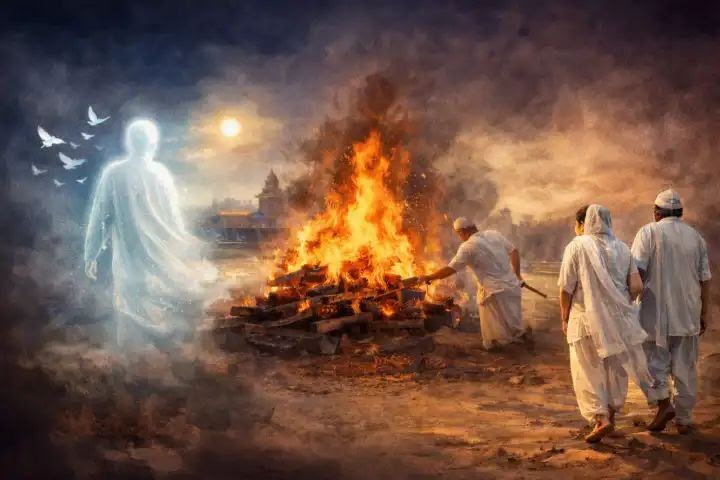
Dah Sanskar Rules: There are sixteen rituals in Sanatan Dharma, which are performed to purify a person’s life from birth to death. Sixteen rites like Garbhadhan, Punsvan, Seemantonnayan (rites of pregnancy), Jaatkarma, Namkaran, Nishkraman, Annaprashan, Chudakarma, Karnavedha (childhood rites), Vidyarambh, Yajnopaveet (Upanayan), Vedarambh, Keshant (rites of education), Vivah (household life), Vanaprastha, Sanyas (rites of old age) and Antyeshti (rites after death) were performed. Let’s go.
Dah Sanskar: Religious and spiritual reasons
Astrologer and palmistry expert Chandrashekhar Sahastrabahu: Told that in Sanatan Dharma, many strict rules and traditions have been made regarding sixteen rituals, one of the important traditions is not to look back after cremation. While returning from the crematorium, the elders forbid you not to look back. According to religious scriptures, after cremation, the soul leaves the body and starts on its further journey. Even after the body is burnt, the soul continues to hover around its family members and call out to them. It is believed that by looking back, the soul can get attached to the world again, which hinders its forward movement.
psychological reasons
When one looks back after cremation, fear and negative emotions settle in the mind. Death is a deep shock, looking back after cremation can further weaken a person’s emotions, hence the tradition of returning without looking back is considered to help the person mentally separate from the event.
Peace of soul, cremation is necessary
The dead body is merged into the five elements through fire. This is the last rites of sixteen rites. According to religious belief, after death the soul goes on a subtle journey. Karmas like cremation, Pind Daan, Tarpan and Shraddha are performed to free the soul from the bondage of the physical world.
thirteenth sacrament
Thirteenth Sanskar is a ritual performed on the 13th day of death, in which a Brahmin feast and charity is performed. The family returns to normal life only after performing the thirteenth rites.
- Rules of the Thirteenth Rite: The thirteenth rites are performed on the 13th day after the death of the person.
- law of purity: A virtuous atmosphere is maintained in the house, meat and alcohol are prohibited.
- Food rules: Brahmin feast is organized on the thirteenth day. Food should be pure and satvik.
- Charity: On the thirteenth day, food, clothes, dakshina, sesame seeds, ghee, utensils etc. are donated.