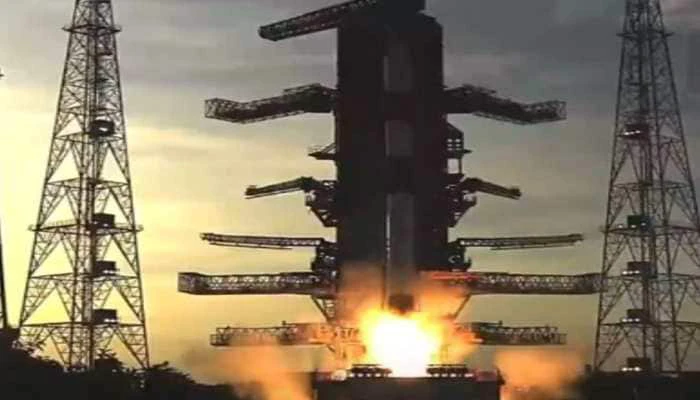
New Delhi: Over the past nine years, the Indian Space Research Organisation (ISRO) carried out 44 satellite launches. Five of those missions failed.
Every failed mission was linked to national defence. Three setbacks came within a single year. These numbers have triggered questions about why defence-related projects face repeated trouble. Rocket launches demand zero tolerance for error. Each failure calls for close scrutiny.
The period from 2017 to 2026 has tested ISRO like never before. Five missions connected to national security did not succeed. Three failures occurred between January 2025 and January 2026 alone. These repeated losses have dealt a blow to Indias space-based surveillance and defence preparedness.
Why This Matters
The failed satellites were meant for spying, navigation and earth observation. Each carried a cost running into hundreds or thousands of crores. Rebuilding them will take more money and more time. Without reliable domestic satellites, India may need help from foreign providers. That dependence can slow strategic programmes and weaken autonomy.
Even a minor fault in a rocket can ruin an entire mission. Every failure happened for a different technical reason. Many involved launch vehicles known for reliability. This raises concerns about testing, checks and quality control.
Below are the five failed strategic missions, their purpose and what went wrong.
January 2026: PSLV-C62 / EOS-N1
The ISRO opened 2026 with the PSLV-C62 launch on January 12. The main payload was EOS-N1 (also known as Anvesha). The DRDO built this hyperspectral imaging satellite. It could identify materials on earth by analysing reflected sunlight. Soil, water, metals and vegetation could be distinguished through spectral data. The planned orbit stood at 511 kilometres.
The rocket also carried 15 smaller satellites. Seven came from India, two from Europe, five from Brazil and one belonged to Nepal. Most were academic or startup experiments.
A problem emerged at the end of the third stage. The rocket drifted off its planned path. ISRO chief Dr V Narayanan said teams were analysing the data. The rocket and all satellites were lost. This marked the second consecutive PSLV failure after May 2025.
May 2025: PSLV-C61 / EOS-09
On May 18, 2025, PSLV-C61 lifted off with EOS-09 onboard. The satellite was earlier known as RISAT. It used radar imaging and could capture images day or night and through cloud cover. That capability made it vital for defence and surveillance. The satellite weighed about 1,700 kilograms and had a planned life of five years.
Six minutes after launch, trouble hit the third stage. Chamber pressure dropped inside the solid fuel motor. The mission failed. The PSLV rarely fails. This loss dented Indias earth imaging strength.
January 2025: GSLV-F15 / NVS-02
Indias NAVIC navigation system needed new satellites as the first generation aged. The ISRO planned five NVS satellites. The NVS-01 was launched successfully in May 2023, while the NVS-02 failed in January 2025. The launch marked the 100th rocket mission from Sriharikota.
The GSLV placed the satellite in an initial orbit. A fault inside the satellite stopped further manoeuvres. A valve linked to oxidiser release malfunctioned. The engine never fired. The satellite was stuck in a transfer orbit. Perigee sat at 170 kilometres. Apogee reached 36,500 kilometres.
The target orbit required a circular path at 35,700 kilometres, but that never happened. The satellite became unusable. The NAVIC serves as Indias GPS equivalent and supports military operations.
August 2021: GSLV-F10 / EOS-03
During the Covid-19 period, the ISRO launched GSLV-F10 in August 2021. The payload was EOS-03, also called GISAT-1. This satellite allowed continuous monitoring of a chosen region. It supported disaster management, weather tracking, agriculture, forests, minerals, clouds, ice and oceans.
The satellite needed placement at 36,000 kilometres above India. A malfunction in the cryogenic upper stage stopped the mission. A leak in a liquid hydrogen valve caused failure. The mission stood ready in 2020 but faced delays before launch.
August 2017: PSLV-C39 / IRNSS-1H
The IRNSS, later renamed NAVIC, forms Indias regional navigation system. The PSLV-C39 was launched in August 2017. The heat shield failed to separate and the satellite was trapped inside. As a result, the mission failed. The NAVIC supports positioning, navigation and timing for government and military users.
Lessons For India
These failures cost more than money. They weaken space-based security and delay strategic planning. Gaps in domestic capability increase reliance on foreign systems. That reliance affects speed and independence.
The ISRO must draw clear lessons from these setbacks. Quality checks need strengthening. Processes need tightening. Defence missions demand the highest reliability as the countrys space security depends on it.