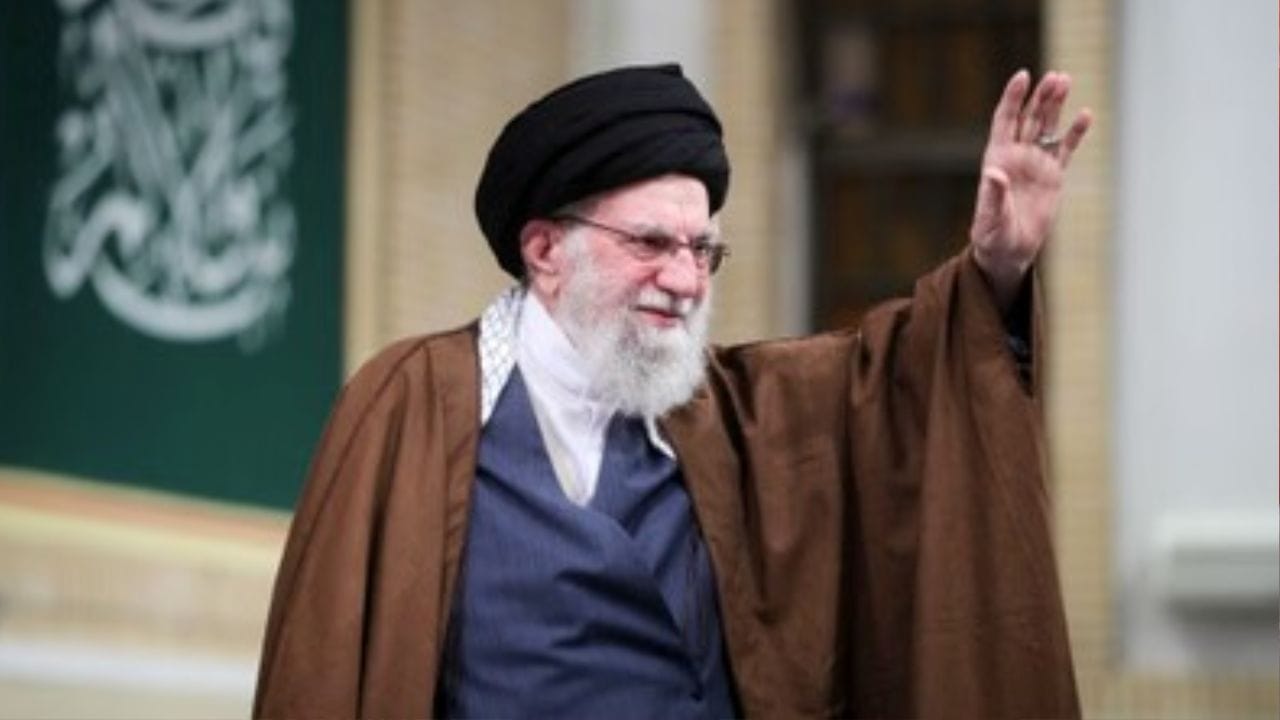
New Delhi: Iran’s Supreme Leader Ayatollah Ali Khamenei has reportedly shifted to a fortified underground shelter in Tehran amid rising tensions over a potential US attack on the Islamic Republic. The underground facility is said to be a highly secure complex with interconnected tunnels, designed to provide protection during wartime and emergencies.
According to reports, Ayatollah Khamenei’s third son, Masoud Khamenei, has assumed administrative control of his father’s office and is currently acting as the sole channel of communication with Iran’s executive institutions.
Trump’s warning to Iran
The development comes days after the US issued a warning to Tehran. US President Donald Trump said a naval “armada” was heading towards Iran. Sources familiar with the matter claimed that the aircraft carrier USS Abraham Lincoln, along with several guided-missile destroyers, is currently operating in the Indian Ocean and is expected to reach the Middle East in the coming days.
In addition, the Trump administration is deploying extra air defence systems to protect US and Israeli military installations. The United Kingdom has also announced it will send RAF Eurofighter Typhoon jets to Qatar at Doha’s request.
Reacting to Trump’s assertions, Iran warned that it would treat any attack as an all-out war, following reports of the US deploying a carrier strike group to the region.
An Iranian official said that this time, Iran would treat any attack — “limited, unlimited, surgical, kinetic, whatever they call it” — as an act of full-scale war and would respond in the strongest possible manner “to settle the matter.” The warning came a day after Trump spoke of sending an “armada,” although he added that he did not wish to use it. The US President also cautioned Tehran against provocations and restarting its nuclear programme.
Why are the Iranians protesting?
The military standoff follows weeks of widespread unrest inside Iran, driven by economic hardship and a sharp decline in the national currency, the rial.
Protests that began in late December spread across the country, prompting a major security crackdown and what activists described as the longest and most extensive internet shutdown in Iran’s history.