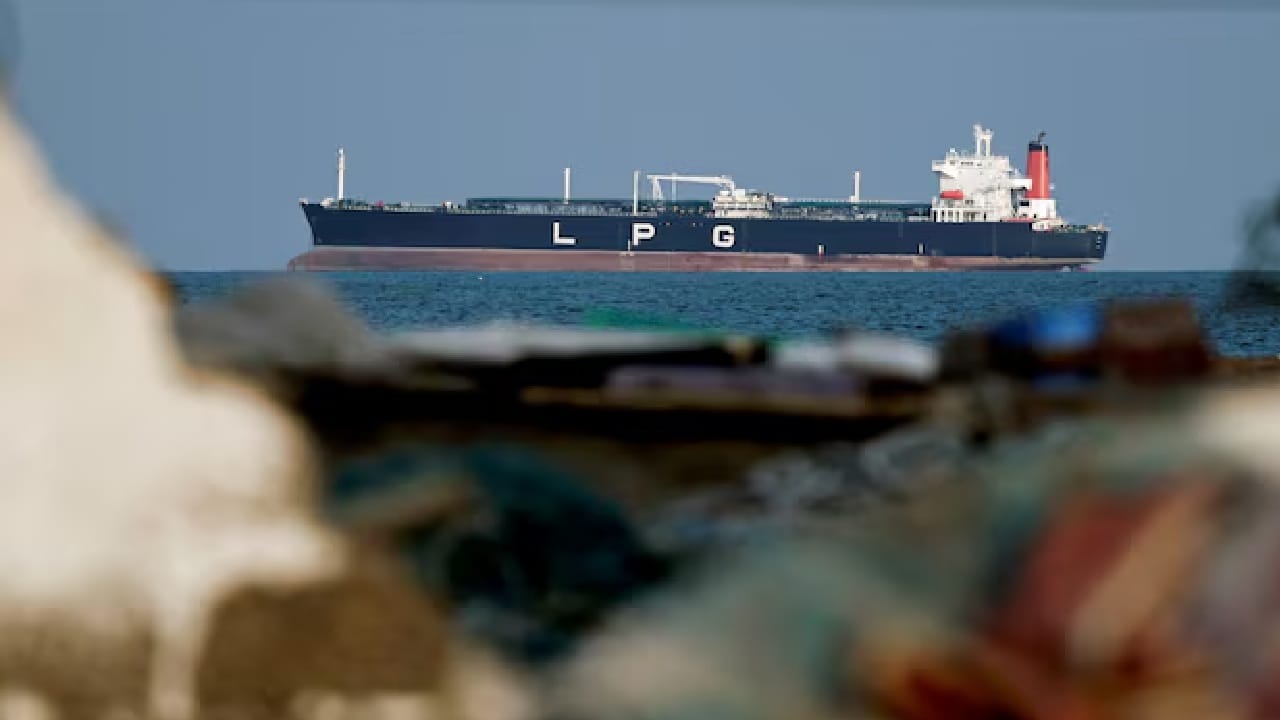
New Delhi: The turning back of the Karachi-bound vessel SELEN by the Iranian Revolutionary Guard Corps (IRGC) was a calculated display of Tehran’s new “sovereign regime” over the Strait of Hormuz. By blocking the ship for a “lack of permission,” Iran has signalled that the days of free passage are over for those who don’t follow their strict new legal protocols, protocols that now carry a staggering $2 million price tag as Tehran asserts total control over the world’s most vital oil artery.
The SELEN, a container ship destined for Pakistan’s economic hub, found its path obstructed by the IRGC Navy. According to a statement from the Iranian Embassy in Kabul, the vessel failed to secure the necessary clearance to navigate the narrow chokepoint, which handles nearly 20 per cent of the world’s oil and gas trade. “The container ship SELEN was turned back by the IRGC Navy due to failure to comply with legal protocols and lack of permission to pass through the #Hormuz Strait”, the statement read.
‘No coordination means no passage’
Rear Admiral Alireza Tangsiri was blunt when he made a statement that “no coordination with Iranian maritime authorities means no passage”. “The passage of any vessel through this waterway requires full coordination with the maritime authority of the Islamic Republic of Iran”, it said.
This isn’t just about paperwork; it’s about power. Iranian lawmaker Alaeddin Boroujerdi confirmed to state media that Iran has begun charging certain vessels a 2 million dollar (approx. Rs 18.8 crore) transit fee. “War has costs,” Boroujerdi remarked, framing the fee as a legitimate levy to fund Iran’s defence in its ongoing shadow war with the US and Israel.
“Open to all, except…”
This maritime muscle-flexing follows the devastating strikes of February 28, when US and Israeli forces targeted Tehran, sparking a cycle of retaliatory attacks across the Gulf. Iranian President Masoud Pezeshkian recently took to ‘X’ to clarify the new rules of the sea. While the Strait remains “open to all,” that invitation expires the moment a nation is deemed an adversary or a violator of Iranian sovereignty. For Tehran, the $2 million fee and the forced U-turns are proof of a “history-making nation” refusing to be erased from the map.
Political aftershocks in India
The incident has sent ripples all the way to New Delhi, igniting a fresh political firestorm. For weeks, Indian opposition leaders had been criticising the BJP-led government, pointing to Pakistan’s supposed role as a peace broker between the US and Israel, an idea even hinted at by US President Donald Trump.
So much for the “Pakistan is brokering peace” narrative peddled by the usual suspects in India.
Iran has reportedly turned back a vessel bound for Karachi after it failed to secure approval to pass through the Strait of Hormuz. https://t.co/3HDdeHdxWt
— Amit Malviya (@amitmalviya) March 25, 2026
However, the sight of an Iranian Navy forcing a Pakistani ship to turn around provided the BJP with immediate political ammunition. Amit Malviya, head of the BJP’s IT Cell, used the development to dismantle the “peacemaker” narrative. “So much for the ‘Pakistan is brokering peace’ narrative peddled by the usual suspects in India,” Malviya wrote on ‘X,’ highlighting the irony of a “peace broker” being denied entry by its own neighbour.