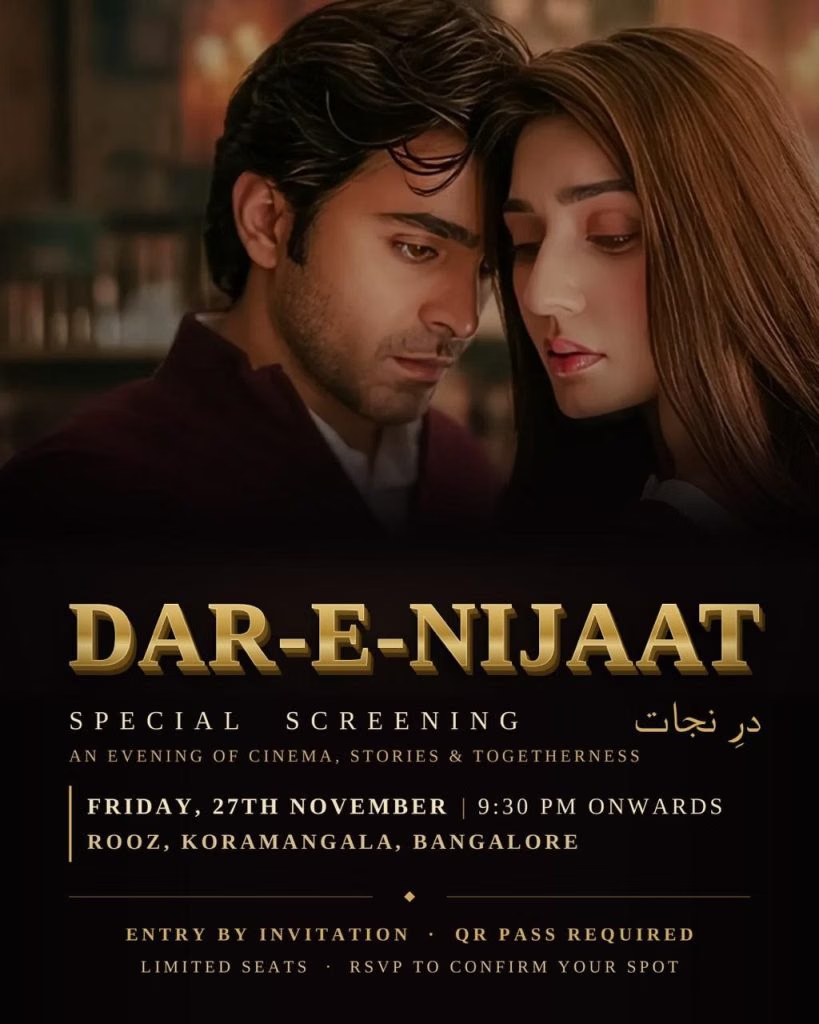
New Delhi: Project Otenga, a cafe in Central Delhi, became an unlikely gathering place over the weekend for fans of a Pakistani television drama. People gathered not just to watch an episode of Dar-e-Nijaat but also to take part in what might seem improbable: a communal screening of a Pakistani serial in India.
Hundreds of miles away, cafés in Dhaka have been organising similar gatherings. Some screenings draw dozens of people; others have become elaborate affairs featuring food carnivals, shopping and cardboard cutouts of the show’s characters.
Dar-e-Nijaat, an ARY Digital production, has become a phenomenon well beyond Pakistan. In India, apart from Delhi, watch parties have been organised in Bengaluru and Hyderabad, with viewers turning a television experience into a social event.
With more than 1.7 billion social media views, Dar-e-Nijaat is now the most-watched show in Pakistani history. It premiered on 1 August, with episodes airing on Fridays and Saturdays at 8 pm. Its reach has extended well beyond its television schedule, with clips, character discussions and fan edits circulating across social media.
The first Delhi screening was hosted by Tales of City Official. Organiser Abu Sufiyan said the response was so overwhelming that they had to stop accepting entries, with the team eventually forced to close its DMs. Sufiyan said they had initially planned the screening for 10-15 people, but around 45 turned up, despite the absence of any large-scale promotional campaign.
Influencer Aanchal Malhotra told ThePrint that the most enjoyable part of the gathering was the quizzes and discussions around the show.
“I want to create spaces where people can engage with culture and have meaningful conversations, rather than simply arrive at a venue, watch something on a screen and leave,” Sufiyan said.
He compared the enthusiasm for Dar-e-Nijaat with the public interest in Hum Paanch, the hit 1995 show that once ruled Indian television, as well as Pakistani serials such as Humsafar. According to Sufiyan, television once had a greater ability to make audiences emotionally invest in characters and eagerly await the next episode. In recent years, viewers have increasingly watched content for entertainment without necessarily relating to it.
Dar-e-Nijaat, he said, seems to have brought back some of that connection.
The Delhi screening drew viewers across generations, with some attendees bringing their parents along. For the organisers, this mix of ages was part of the appeal.
“The larger purpose is to use films and dramas as a way to bring people together and encourage meaningful conversations. We feel that some older Indian television shows and dramas resonated deeply with audiences because people could relate to their stories and characters. Today, entertainment is often consumed casually, without the same sense of connection,” Sufiyan added.
For Sufiyan, the most surprising aspect of the screening was when the post reached the director of the show, Saqib Khan. Not only did Khan share it on Instagram, but he also agreed to join the screening virtually. The excitement was palpable. The audience cheered the minute he joined and the session that was to be an impromptu 10-minute session ended up extending for 40 minutes.
“Saqib was gracious enough to patiently answer all fan questions,” Sufiyan said.
The team is now considering more screenings, although Sufiyan is keen that future gatherings should have a purpose beyond watching an episode together. He sees culture as a conversation and wants the screenings to become occasions for dialogue and community-building.
He is also conscious of the need to make these gatherings welcoming and safe, particularly for women, many of whom have been instrumental in organising and attending them. With online discussions sometimes attracting rumours and targeted negative campaigns, the organisers want to be careful about how events are conducted and how participants are protected.
The possibility of screening the finale is also being considered, although the organisers are still working out what form such an event might take.
A phenomenon beyond Pakistan
Delhi is not an isolated case. In Bangladesh, Dar-e-Nijaat has developed an especially visible watch-party culture. Fabiha Ibnat, who has been following the phenomenon in Dhaka, told ThePrint that at least 10 to 12 cafés in the city are screening the serial.
Beyond the capital, screenings at Le Bistro in Sylhet have reportedly drawn 30 to 40 people, while White Park Rooftop Lounge in Chittagong has also seen considerable traction online.
One of the largest gatherings so far was organised by The Luxe Wedding Gala on 20 and 21 November. Combining bridal and designer shopping with a food carnival, the event even featured cardboard cutouts of Abu Bakar, one of the show’s central characters.
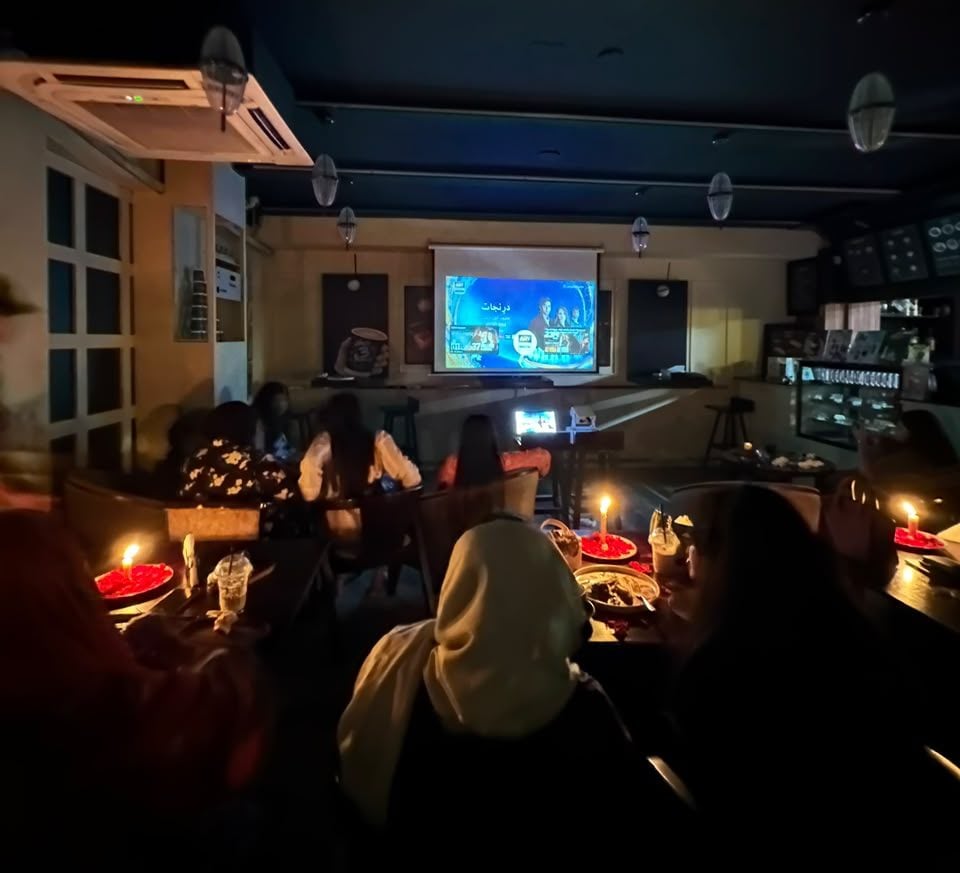
Watch parties are also taking place in people’s homes, particularly in joint families. Ibnat recalls a friend who watches the drama with every generation of her family on a large projector screen. She is planning her own screening of the final episode with close friends and family.
“The excitement around Dar-e-Nijaat is unlike anything I’ve witnessed with other Pakistani dramas. I’ve seen Pakistani television gain popularity over the years and have watched Zindagi Gulzar Hai as well, but this feels like a whole different level,” Ibnat said.
For her, the drama has also become a reason for people to reconnect. After university, when friends got caught up in their own lives, the screenings gave them an opportunity to meet again and connect with viewers from different parts of the world.
Written by Umera Ahmed and directed by Saqib Khan, the series explores the distinction between faith as a lived moral practice and religiosity as an increasingly rigid identity.
Two contrasting male characters embody this tension. Zamil, a young man from a wealthy family, is drawn towards a rigid interpretation of religion as he struggles with his identity. Abu Bakar, meanwhile, is the middle-class son of a single mother. His faith is expressed less through declarations and ideology than through his everyday conduct.
The distinction becomes particularly apparent when Abu Bakar discovers that his wife, Zaryab, had a premarital relationship with Zamil. Rather than condemn her, he responds with empathy, helping her navigate her guilt and emotional turmoil. His patience and tenderness become central to her journey towards redemption.
This portrayal of a Muslim man whose faith deepens his capacity for compassion has become one of the show’s defining features.
In an article for Arab News, Sahar Ali argues that the drama offers a counterpoint to familiar stereotypes about Islam. For audiences accustomed to seeing Muslim men represented through the lenses of extremism, repression or domestic violence, Abu Bakar presents a different image: a man whose religious convictions make him more considerate, not less. Ali describes this as a potentially effective form of soft diplomacy.
The character has also become an internet sensation in India. In a popular Instagram reel, creator Anshika expressed her fascination with him: “Pakistan walo’n ne gulam bana liya humei’N. Abu Bakar se pyaar ho jaey ga mujhe, mein ne kabhi socha nahi’n tha!”
For Fabiha Ibnat, much of the show’s appeal also lies in Sheheryar Munawar’s performance.
Shared history
But what makes Pakistani television so appealing to audiences in India and elsewhere in South Asia? The answer lies partly in a shared cultural and linguistic familiarity.
In her Arab News article, Ali points to a striking reversal in regional media consumption. For decades, Pakistani audiences consumed Indian popular culture, from Bollywood films to television serials. Now, social media is filled with anecdotes about Indian mothers incorporating Urdu and Islamic expressions into everyday conversations after watching Pakistani dramas.
Commenters joke that “Abboo” has replaced “Pita-ji” and “Assalam Alaikum” has edged out “Namaste”. Sons complain that their mothers now casually use expressions such as “Masha’Allah” and “Insha’Allah”. The jokes capture a shift in the regional media landscape, with Pakistani television increasingly influencing the vocabulary and cultural preferences of viewers across the border.
Language is perhaps the most immediate explanation. For Hindi-speaking audiences, Urdu occupies a familiar yet distinctive space. It is largely comprehensible, but its vocabulary and expressions can feel fresh and poetic.
Ibnat experienced this familiarity herself. Having grown up watching Hindi cartoons such as Doraemon and Bollywood films, she found Urdu relatively easy to understand. A visit to Kashmir in 2015, where she frequently heard the language, further strengthened that connection. After watching between 40 and 50 Pakistani dramas, she says she can now distinguish Hindi from Urdu. She has also developed an interest in learning languages and reading short Urdu poems in the Roman script.
Writing on Medium, cultural commentator Krati Gupta also identifies language as a major reason for Pakistani dramas’ popularity in India. “The beautiful fusion of Hindi and Urdu is a pleasant murmur to our ears,” she writes, recalling how expressions such as “toofan-e-badtameezi” and “jaam-e-mohabbat” drew her towards the language.
The familiarity makes the programmes accessible, while the poetic quality of their dialogue gives them a distinct identity.
The show’s appeal, however, exists against the backdrop of strained India-Pakistan relations. Popular culture does not entirely escape that political context, but for many viewers, the attraction lies in being able to appreciate a story without turning every cultural exchange into a political statement.
Ibnat says that online hostility does little to diminish her enthusiasm. What matters more, she says, is the affection the drama has received from viewers in Pakistan and elsewhere.
In Delhi, Sufiyan wants to build on that sense of community through more screenings, with a greater emphasis on conversation and cultural engagement.
“For us, culture is about dialogue and interaction. We want to create spaces where people can engage with the content, exchange perspectives and have meaningful discussions,” he said.