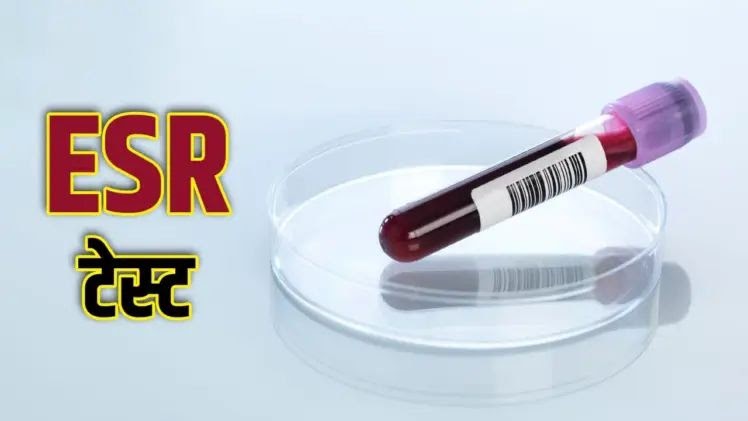
ESR, or Erythrocyte Sedimentation Rate, is a test that measures the speed of settling of red blood cells (RBCs) present in the blood. This test is very simple and can be done on a person of any age.
Doctors often prescribe it because it indicates ongoing inflammation or some abnormal process in the body. ESR itself does not name any disease, but it shows that there may be some disturbance inside the body. This is the reason why it is done as a preliminary investigation.
Let us know why ESR test is done, how it works and on what basis it is measured. Also, know what things should be kept in mind during the test.
Why is ESR test done?
Dr. Sunnakar Dutt, former head of Radiology Department at Delhi AIIMS It is said that ESR test is done because it gives early indication of internal inflammation going on in the body. When the body is affected by a virus, bacteria, autoimmune disease or injury, certain proteins increase in the blood. These proteins help the red blood cells to stick to each other and settle down faster. Due to this the ESR level increases.
This test gives doctors information about whether any active process is going on in the body like inflammation, infection, arthritis, fever, lung or intestinal problems. This test itself does not confirm any disease, but gives an indication of what tests the doctor should do next. Therefore, many times this test is prescribed in case of prolonged fever, joint pain, weakness or fear of infection.
How is ESR test measured?
Dr. Sunnakar Dutt Told that in ESR test, the blood sample is kept in a long, thin tube and it is left stationary for an hour. After the completion of time, it is seen how low the red blood cells are sitting. The faster they go down, the higher the ESR is considered.
If ESR is increased, it indicates inflammation, infection, tissue damage or autoimmune disease in the body. This can cause problems like fever, weakness, joint pain or fatigue. At the same time, low ESR is generally considered normal, but sometimes it can also decrease due to dehydration or some medicines. This test shows the changes taking place in the body.
What things should be kept in mind during the test
Before the test, tell the doctor if you are taking any medicines.
On an empty stomach or normal, follow as the doctor tells you.
Avoid excessive fatigue or stress before the test.
Always compare the reports with the doctor, do not guess yourself.
If repeated tests are required, keep sufficient gap between two tests.