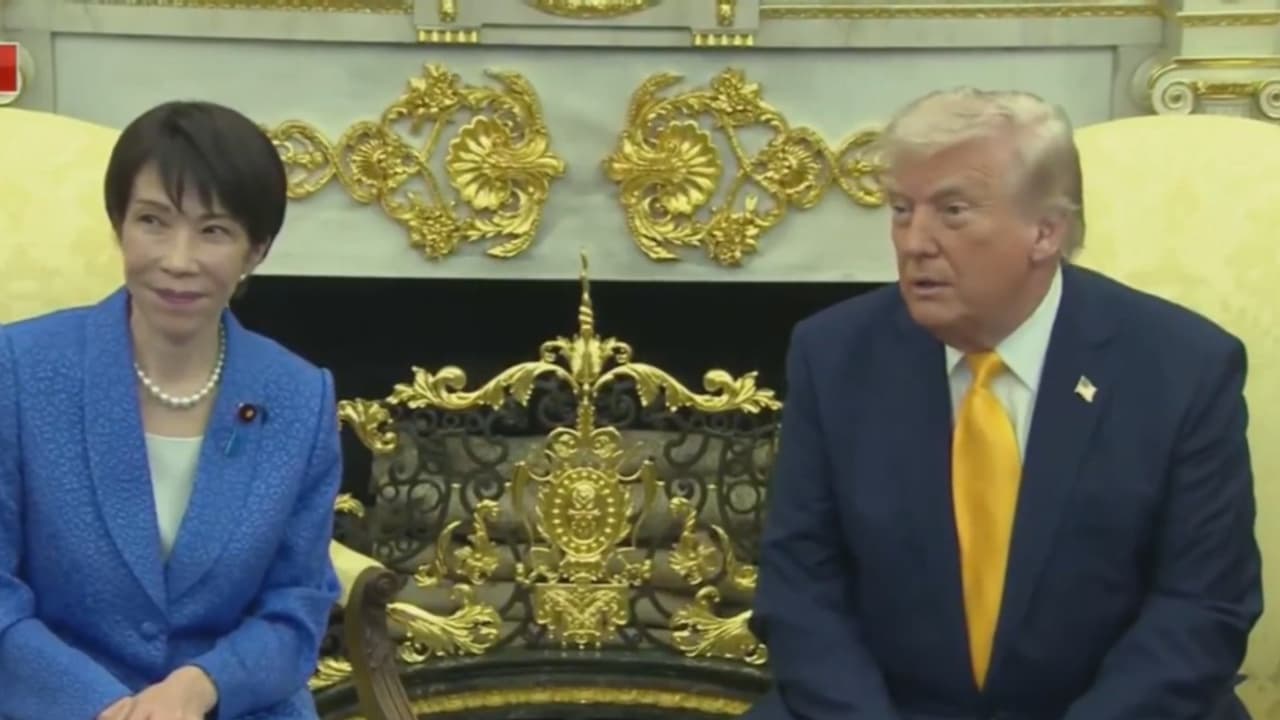
US President Donald Trump on Thursday made a remark about Pearl Harbor during a meeting with Japan’s prime minister Sanae Takaichi, drawing attention because of the sensitive history behind the reference.
Japan Prime Minister Sanae Takaichi was caught off guard when President Donald Trump drew a parallel between US-Israel strikes on Iran and Japan’s 1941 attack on Pearl Harbor during a bilateral briefing on Thursday, leaving the room visibly strained. The moment unfolded when Trump responded to a reporter’s question: “Why didn’t you tell US allies about the war before attacking Iran?”
Defending the secrecy surrounding US military strikes, Trump said, “We didn’t tell anybody about it because we wanted a surprise. Who knows better about surprise than Japan? Why didn’t you tell me about Pearl Harbor, OK?”
Scroll to load tweet…
The comment, referencing one of the most painful chapters in US history, instantly altered the tone of the meeting.
Takaichi chose silence over confrontation. Her reaction, however, spoke volumes. Observers noted her widened eyes and a brief break in her composed smile as she leaned back in her chair, a video of which went viral online.
Despite the awkward moment, the Japanese leader maintained diplomatic decorum. She refrained from addressing the remark directly and continued engaging with Trump, even praising him by calling him the only person who “can achieve peace across the world.”
Pearl Harbor (1941)
On December 7, 1941, Japan launched a surprise air assault on the US naval base, drawing America into World War II. The attack, carried out in two waves by over 350 aircraft, devastated US forces, damaging or destroying eight battleships and nearly 200 aircraft. 2,403 Americans killed and 1,178 injured.
Given this backdrop, references to Pearl Harbor remain highly sensitive, particularly in diplomatic settings involving the two nations.
“Just a joke,” say officials
Officials present at the meeting later downplayed the remark, describing it as a joke rather than a calculated statement. The White House has not issued any formal clarification on the comment.
The broader meeting, meanwhile, remained focused on strengthening US-Japan ties. The two countries, once wartime adversaries, now share a robust alliance spanning economic cooperation, defence collaboration, and regional security.
Strategic Talks Amid Rising Global Tensions
With escalating tensions involving Iran, Washington is actively seeking support from allies, including Japan.
Trump stated, “We’re undertaking this operation, and once it’s finished, the world will be much safer,” while adding that Japan’s prime minister aligns with his perspective.
He also urged Japan to consider deploying warships to the Strait of Hormuz—a critical artery for global oil supply that has been severely disrupted amid the conflict.
However, Japan faces a diplomatic tightrope. While maintaining close ties with the US, it has historically balanced relations with both Israel and Arab nations. Complicating matters further is its post-war pacifist constitution, which limits overseas military involvement, making any such deployment politically sensitive at home.