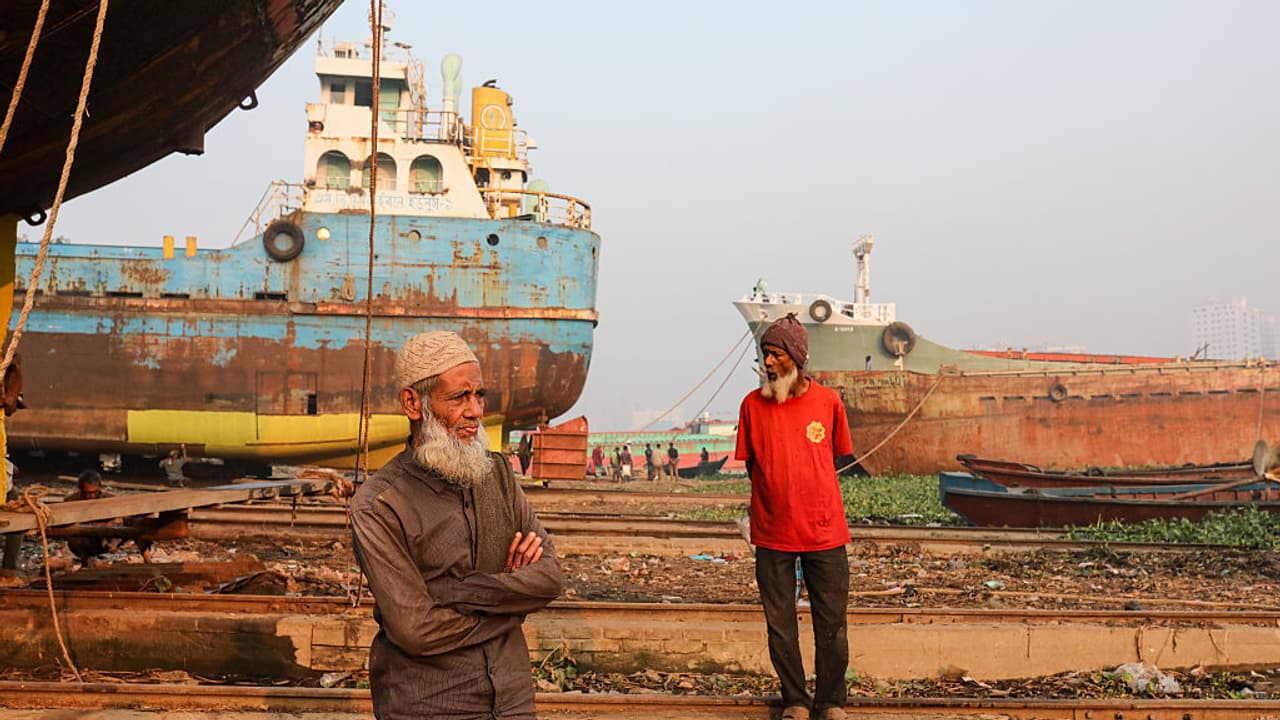
Bangladesh’s land ports along its border with India are struggling to handle rising trade volumes, causing long delays and higher costs. Key ports like Benapole face 24–72 hour clearance times due to poor infrastructure and limited digital systems. Experts say these delays are costing industries heavily.
New Delhi: Bangladesh has 4,156 kilometres of land border with India, one of the longest bilateral land borders in the world. Along that border sits a network of land ports and integrated check posts that handle commercial freight, passenger movement, and cross-border logistics.
Bangladesh’s land ports
The four with the most commercial relevance are Benapole in Jessore, Akhaura in Brahmanbaria, Tamabil in Sylhet, and Burimari in Lalmonirhat. All four are operating with infrastructure that has not kept pace with the bilateral trade volumes running through them.
Benapole is Bangladesh’s busiest land port. Under normal conditions, trucks wait 24 to 48 hours for customs clearance. When documentation issues arise or trade volumes peak, the wait stretches to 72 hours or more. Clearing agents and freight operators working the port routinely describe the delays as a structural problem rather than an occasional disruption.
The physical conditions at Benapole compound the clearance problem. Warehousing is limited, meaning goods that have cleared customs sit at the port while transport arrangements are made. Road links between the port and Dhaka’s main industrial zones are functional but were not designed for the current freight volumes. Customs technology is partially digitised but not integrated with the Indian side. Data that could be exchanged electronically between the two border systems requires manual re-entry instead.
Akhaura has received some investment through Bangladesh-India connectivity programmes aimed at improving access to India’s northeastern states. Commercial cargo volumes through Akhaura remain modest. The infrastructure does not yet support high-volume freight trade.
Tamabil in Sylhet handles mostly stone, sand, and construction materials coming from Meghalaya. Its trade profile is narrow and the port lacks the facilities to support diversified commercial cargo.
What experts say
Trade economists estimate that customs delays at Bangladesh’s land ports cost import-dependent industries hundreds of millions of dollars annually. The costs come through inventory holding expenses, production delays when materials arrive late, and spoilage of perishable or time-sensitive cargo. A 48-hour clearance delay for a perishable shipment at Benapole does not create a cost. It destroys the value of the shipment.
Asian Development Bank and World Bank assessments have documented the infrastructure requirements at Bangladesh’s key land ports: expanded warehousing, integrated bilateral digital customs systems, improved road and rail connections to industrial areas, and dedicated fast-track lanes for perishable and urgent freight.
Some funding has moved through Indian lines of credit. The pace of investment has not matched the scale of the gap those assessments identified.
Bangladesh-India bilateral trade exceeded $14 billion annually in recent years. The land port network that serves that trade corridor was built for a different era of trade volumes.
Upgrading that infrastructure to a level consistent with current and projected bilateral trade is, by the numbers the economists have put on the table, among the higher-return infrastructure investments Bangladesh could make.