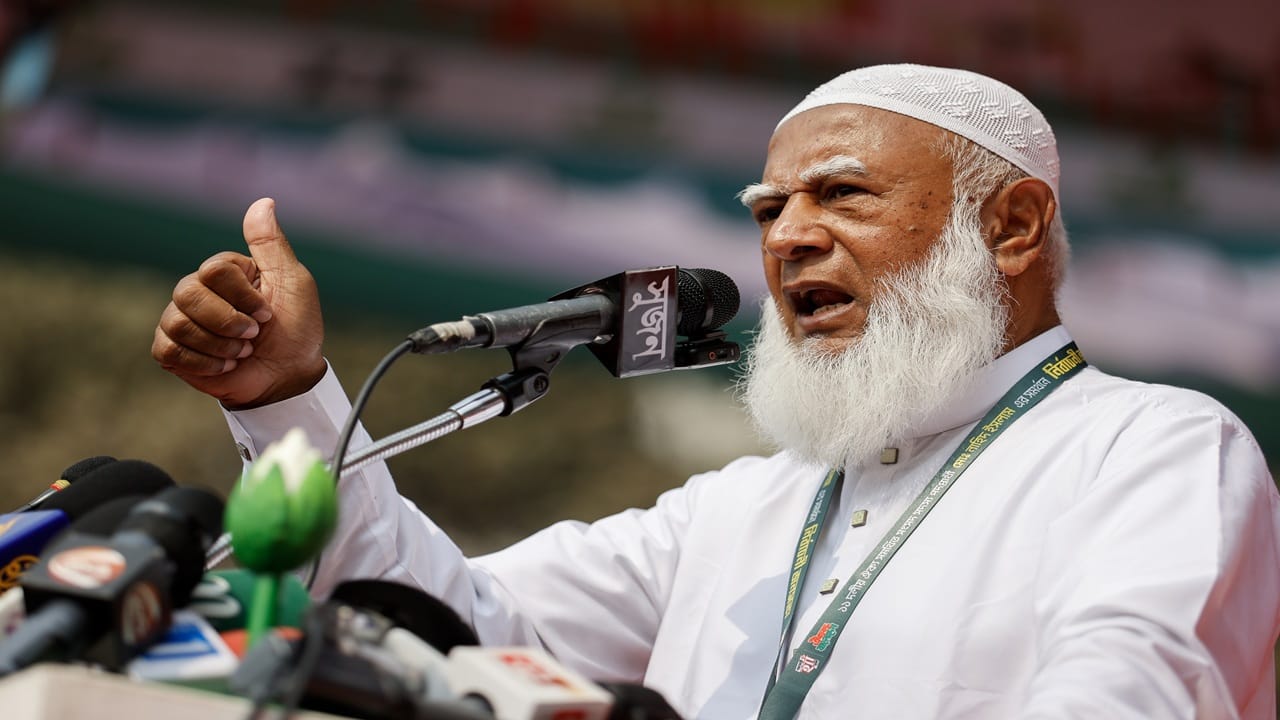
New Delhi: As Bangladesh prepares for its upcoming elections Shafiqur Rahman, chief of the Bangladesh Jamaat-e-Islami, unveiled their election manifesto on Wednesday. The manifesto caught many by surprise, a key promise of it being that if Jamaat-e-Islami wins, it would work to quadruple Bangladesh’s gross domestic product to $2 trillion by 2040. While announcing the manifesto, Rahman pledged investment in technology-driven agriculture, manufacturing, information technology, education and healthcare.This was perceived as going against his earlier image of a relatively hardliner who in his changed avatar and in the tricky situation the country finds itself now has come to prominence again in this election.
At crossroads
For years, critics have seen Bangladesh’s largest Islamist party, Jamaat-e-Islami, as more concerned with religious doctrine and dogma than modern democratic principles. Questions on their ability to govern a young and modern populace were often raised. It is not with the new forward-looking manifesto that the party and its leader have shaken Bangladeshi politics.
In this regard Shafiqur Rahman has become a central figure in Bangladesh’s upcoming 2026 general election as the leader (Ameer) of Jamaat-e-Islami. His Islamist party is now becoming a major player, slowly coming out from the margins of relative obscurity. Until recently, both domestic players and foreign diplomats shunned him and his party due to their extreme outlooks and controversial history, this seems to finally be changing.
Contentious issues associated with the party include its historical opposition to Bangladesh’s 1971 independence struggle. Other such issues have often led to past bans on the organisation. It is only in the current changed context after the ousting of long-time Prime Minister Sheikh Hasina and sidelined her Awami League after the 2024 mass protests in the country that Jamaat has regained prominence.
With Jamaat another such player that has come out strong is the Bangladesh Nationalist Party (BNP). Pre-election polls suggest Jamaat, under Rahman’s leadership, could emerge as a decisive force, in some scenarios even vying for power.
An enigmatic yet controversial leader
Rahman, born in what was then East Pakistan in 1958, trained as a doctor before fully entering politics. He began in student politics in the early 1970s and joined Jamaat-e-Islami in 1984. He then rose through the party’s ranks to become ‘ameer’ in 2019 and secured a third consecutive term as party chief for 2026–28.
Under him, Jamaat has attempted to rebrand itself as a forward-looking party based on governance, not religious rhetoric. With talks of tackling the corruption prevalent in Bangladesh, he has promised an “inclusive government” if elected. Rahman also projects a more statesmanlike image, which he compliments with bold assertions on changing Bangladesh’s economic and foreign standing.
However, controversies around his party and leadership remain. He has, for example, been criticised for statements opposing women in top leadership roles and for a lack of female candidates in Jamaat’s election slate. Tensions between Jamaat’s newfound modern and democratic outlook and deeply rooted Islamist identity are also questions. Despite this, as elections approach many see him as a viable and strong contender that has the potential to have a major effect on the upcoming polls, be it alone or in a coalition role, his current status and burgeoning popularity cannot be ignored.