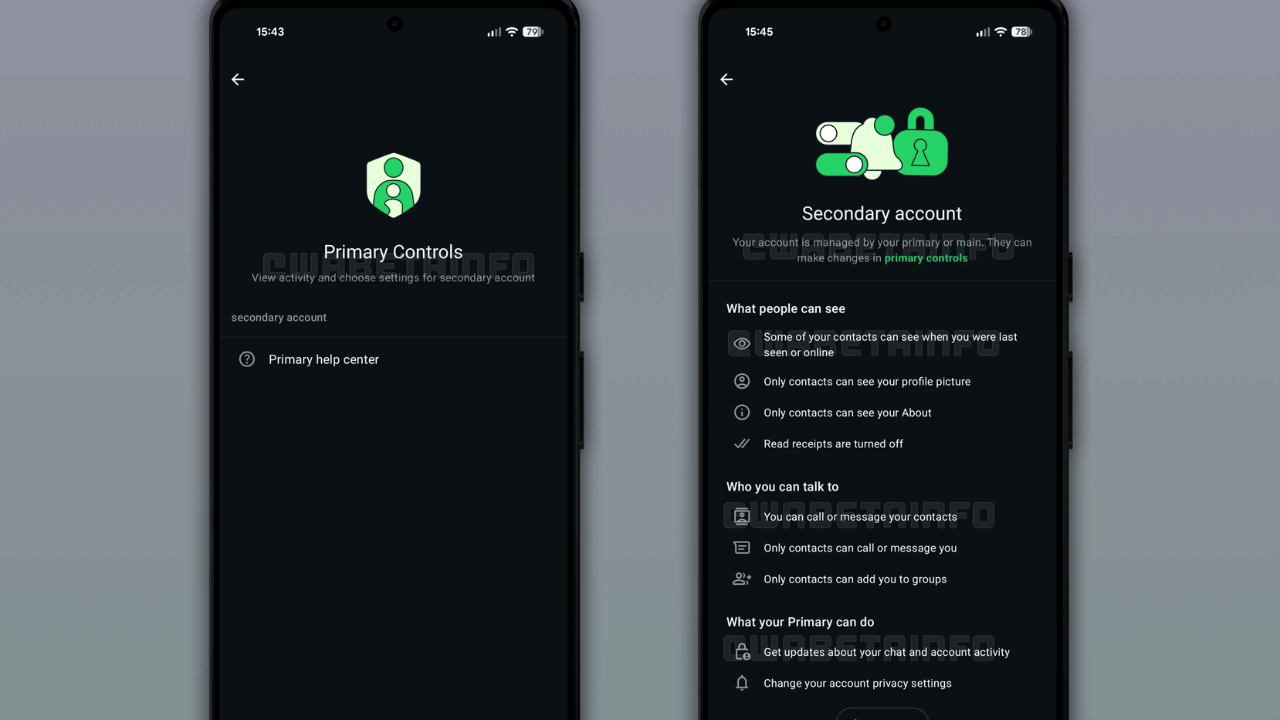
New Delhi: WhatsApp is working on new features that will allow parents more control over the usage of the messaging platform by their children. The step is consistent with the current Terms of Service of WhatsApp, which mandates that a user has reached a minimum age (usually 13, though it may be more in some locations) and that minors under the legal age fail to use the service unless they are able and legally old enough to consent.
The following modifications will imply increased emphasis on safety and appropriate use by age. As the number of children and teens spending more hours online grows, it seems that WhatsApp is arranging functions in a way that allows families to control their accounts properly, without compromising the privacy of personal conversations.
WhatsApp tests parental controls beta
After WhatsApp beta was released in Android version 2.26.1.30 on the Google Play Store, there has been evidence that the firm is in the process of developing secondary accounts that specifically target younger audiences. Such accounts would be connected to a main account of a parent, which would form a controlled environment with fewer functionalities.
As per the initial results, secondary accounts would limit the use of some WhatsApp features. This is aimed at providing the children with a safer experience without allowing complete control of the platform. Independent parent-child points would create control without revealing the content of messages or calls.
Limited features with privacy intact
WhatsApp is approaching supervision in a moderate way. Although the parents will be able to control settings and permissions, end-to-end encryption will still be available. This implies that parents will not be in a position to read messages or listen to calls.
Rather, the system will be supposed to concentrate on account-level controls. These can be in controlling profile settings and privacy. This arrangement gives it the chance to be led but not to overstep into intrusive surveillance.
Controls over who can contact a child
The ability to control more closely those people who can call or send a message to a secondary account is one of the major features under development. These accounts would by default only enable one to communicate with saved contacts. This minimises chances of getting undesired conversations with harmful parties.
At the moment, the WhatsApp app has no feature for blocking messages and voice calls with the contacts only. Suggesting this option to minors would be a solution to a long-standing gap primarily because of younger users who might not be quite aware of the dangers of private information.
Activity insights without message access
The secondary accounts can also post limited activity updates with the primary account of the parent. Although WhatsApp has not explained the contents of this report, it has made clear that the content of messages will not be exchanged.
The activity insights may be on the overall usage patterns or modification of significant settings. This would assist the parents to be informed and at the same time respect the personal space of the child.
Release timeline and what to expect
The parental control features are currently in development and will see the light of day in a later update. WhatsApp is also improving the interface to make sure that it is simple to create and control on the second account by parents.
These tools may simplify the process of making the messaging environment in families safer once released. They also promote the use of open discussions between parents and children regarding the safety of the digital environment and responsible communication.