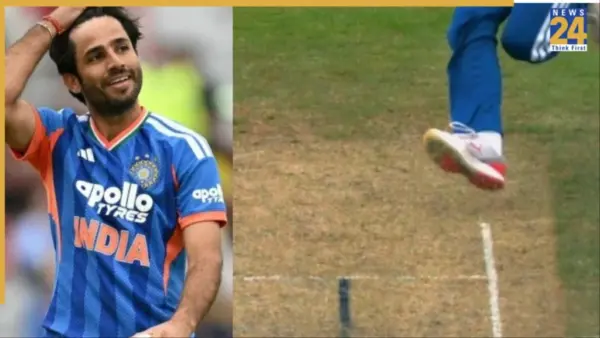
India lost the second T20I against England at Old Trafford, Manchester, by 4 wickets. The defeat put leg-spinner Ravi Bishnoi under the radar of criticism.
The 17th over went for 29 runs, which changed the game completely in favor of England. Bishnoi bowled two backfoot no-balls and conceded six on both the free hits. In total, India conceded 19 runs due to no-balls and free hits, which eventually made the difference between victory and defeat. Many fans and experts are now questioning his preparation and execution under pressure.
What went wrong for India in the 17th over?
The 17th over was the turning point of the match. Bishnoi struggled with his landing position and ended up bowling back-foot no-balls, which are very rare for a spinner. Instead of controlling the game, he lost rhythm and gave England easy scoring chances. The over completely shifted momentum towards the English side, and India could not recover after that.
What is a back-foot no-ball?
A back-foot no-ball happens when a bowler’s back foot lands outside the return crease while delivering the ball. This is unusual for spinners, as it shows poor control of foot placement. In Bishnoi’s case, repeated changes in his bowling approach and big jumps in his run-up seem to have caused the issue.

Experts believe such technical mistakes cannot be fixed during a match and come from poor preparation in training.
Confusion in team selection after World Cup win?
After winning the T20 World Cup earlier, India made several surprising changes. Senior players like Suryakumar Yadav were left out of the squad, while captain Shreyas Iyer tried new combinations. Decisions like dropping Sanju Samson and trying young players like Vaibhav Suryavanshi have created debate. Some experts also feel players like Rajat Patidar could have been better choices. The constant changes have affected team stability.
England conditions exposed India’s weaknesses
Playing in England is always challenging for visiting teams. The conditions help the home side, and mistakes are quickly punished. India’s poor execution, especially in bowling and fielding, made things worse. Unlike home conditions, there was no room to hide errors, and England used every opportunity to build pressure.
Pressure is increasing on captain Shreyas Iyer
Captain Shreyas Iyer is now facing growing pressure after consecutive poor results, including the earlier 0-2 series loss in Ireland. He has already admitted that the team is lacking proper planning and analysis. With criticism increasing, he will need to fix mistakes quickly before the third T20. India must improve discipline and execution if they want to stay alive in the series.