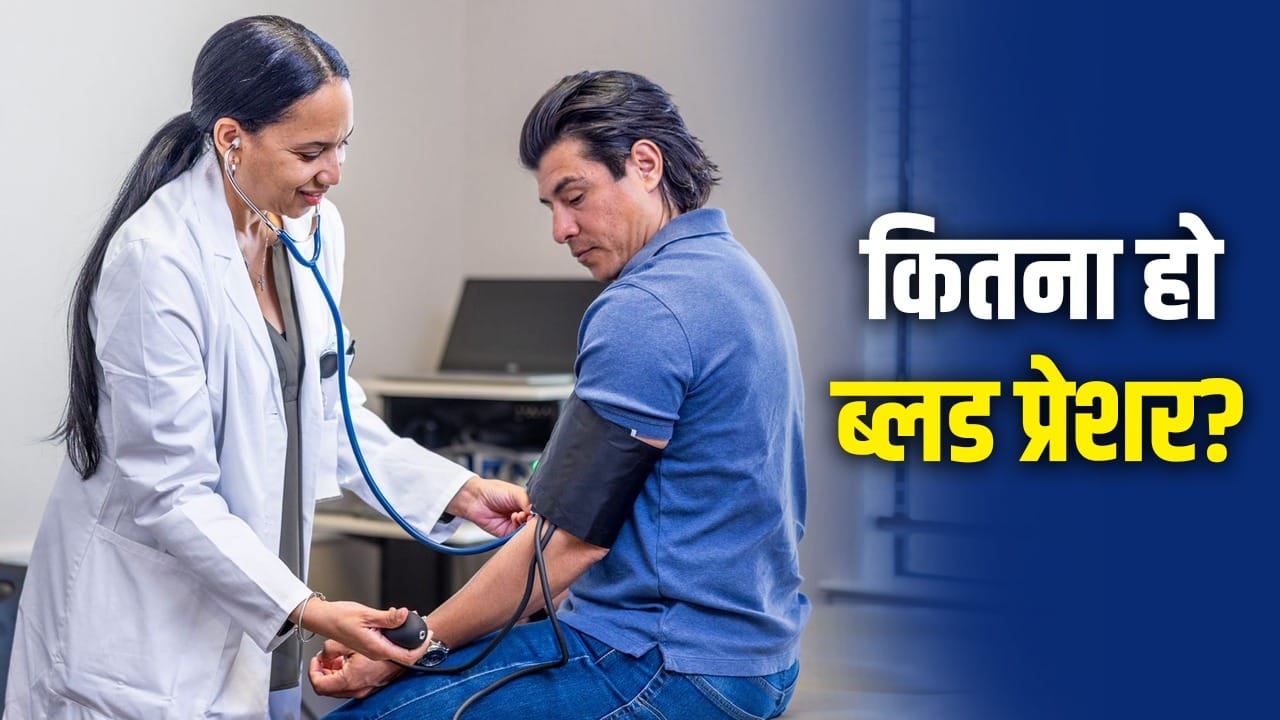
Blood pressure has become a rapidly growing health problem today. In such a situation, cases of high BP are increasing faster in the younger generation as compared to the elderly. The reasons for this are constant stress, poor sleep, junk food, lack of physical activity and increased screen time. In view of increasing cases AHA (American Heart Association) and ACC (American College of Cardiology) has issued its new guidelines, although it is largely similar to the previous guidelines, but there are some changes.
In such a situation, in these guidelines blood pressure New categories, risk signs and treatment methods have been made clearer than before. Let us know what changes have been made in these new guidelines and how they should be understood. First let us know what are the new categories of BP.
What are the new categories of BP?
Earlier the normal range of blood pressure was usually 120/80 mmHg and this was completely normal. People often did not take its slight fluctuations seriously, but now after the new guidelines of AHA and ACC, the range of blood pressure has been made more clear, so that high BP can be identified quickly. Now below 120/80 mmHg is normal, but readings above this are divided into different categories.
Like 120-129 is considered as elevated i.e. early warning of high BP, 130-139 is considered as Stage 1 Hypertension i.e. the first stage of high BP and above 140/90 mmHg is considered as Stage 2 Hypertension i.e. severe high BP. The advantage of the new range is that people can recognize the signs of increasing BP in time and make changes in treatment and lifestyle.
What are the 10 new guidelines for blood pressure?
1. Now normal BP below 120/80 mmHg.
The new guideline states that a range below 120/80 mmHg is considered completely healthy and safe. If BP goes even slightly above this, it is no longer ignored. The purpose of the new guideline is to identify changes in the beginning itself, so that the risk of developing high BP in future is reduced.
2. 120-129 Elevated BP said
This is a warning of the beginning of high BP. There is no need of medicines in this stage, only habits have to be improved. Like reducing salt, weight control and daily walk. If this is ignored then BP may increase further.
3. Stage 1 Hypertension at 130-139
BP has increased at this range and needs attention. Doctors first recommend changing lifestyle. If the patient is at high risk of heart disease, then medicines can also be started. This stage increases pressure on the heart and kidneys.
4. Stage 2 Hypertension above 140/90 mmHg
This is a serious level of high BP and needs immediate treatment. It requires strict monitoring with medicines. If not controlled, the risk of heart attack and stroke increases. Daily monitoring of BP becomes very important.
5. Medicines will be started quickly
The new guideline says that treatment should be started as soon as the risk is seen. There will be no waiting like the old guidelines. With this, serious problems can be prevented in advance. Especially in those people who are at high risk of heart disease.
6. Lifestyle change necessary
Exercise, weight control and reducing salt are said to be the most important steps. These changes are considered as effective as medicine. Walking or yoga for 30 minutes daily has been advised. Also, people have been asked to reduce packed and processed food.
7. BP monitoring at home is necessary
Now it is not considered right to rely only on clinic BP, keeping a BP machine at home and regular monitoring is necessary. This gives accurate readings and makes the treatment effective. Many people are also able to avoid the white coat effect.
8. It is important to reduce salt
Too much salt increases BP immediately and rapidly. The new guideline advises to limit salt in daily food. It is important to avoid packed snacks, pickles, chips and processed foods. Fresh and light food helps in keeping BP stable.
9. Stress management is part of the treatment
Stress is considered a major cause of high BP. In the new guidelines, improving sleep, meditation and deep breathing have been said to be important. By reducing stress, BP starts reducing automatically. Keeping the mood stable also reduces the pressure on the heart.
10. BP standards made more stringent for high-risk patients
Those who are at high risk of heart disease, diabetes or kidney disease, it is important to keep their BP lower than others, so that the risk of heart attack, stroke and kidney damage is reduced. Both monitoring and treatment of these patients are kept more strict.
What do experts say?
Dr. Ajit Jain in the Cardiology Department at Rajiv Gandhi Hospital. It is said that with the new guidelines, cases of high blood pressure will be identified earlier and this will significantly reduce the risk of heart disease, kidney disease and stroke. Now it is very important to make changes in lifestyle not only when there is very high BP, but also when there is a slight increase.
Stress and bad lifestyle are becoming the biggest reasons for high BP among the youth. Therefore, regular monitoring, healthy eating and physical activity are very important. In such a situation, the objective of the new guideline is clear, the sooner identification, the better control.
This is also important to control BP
Do brisk walk or yoga for 30 minutes every day.
Reduce salt and packed food.
Make sure to take 7 to 8 hours of sleep.
Avoid caffeine and smoking.
Drink adequate amount of water.
Do meditation to reduce stress.