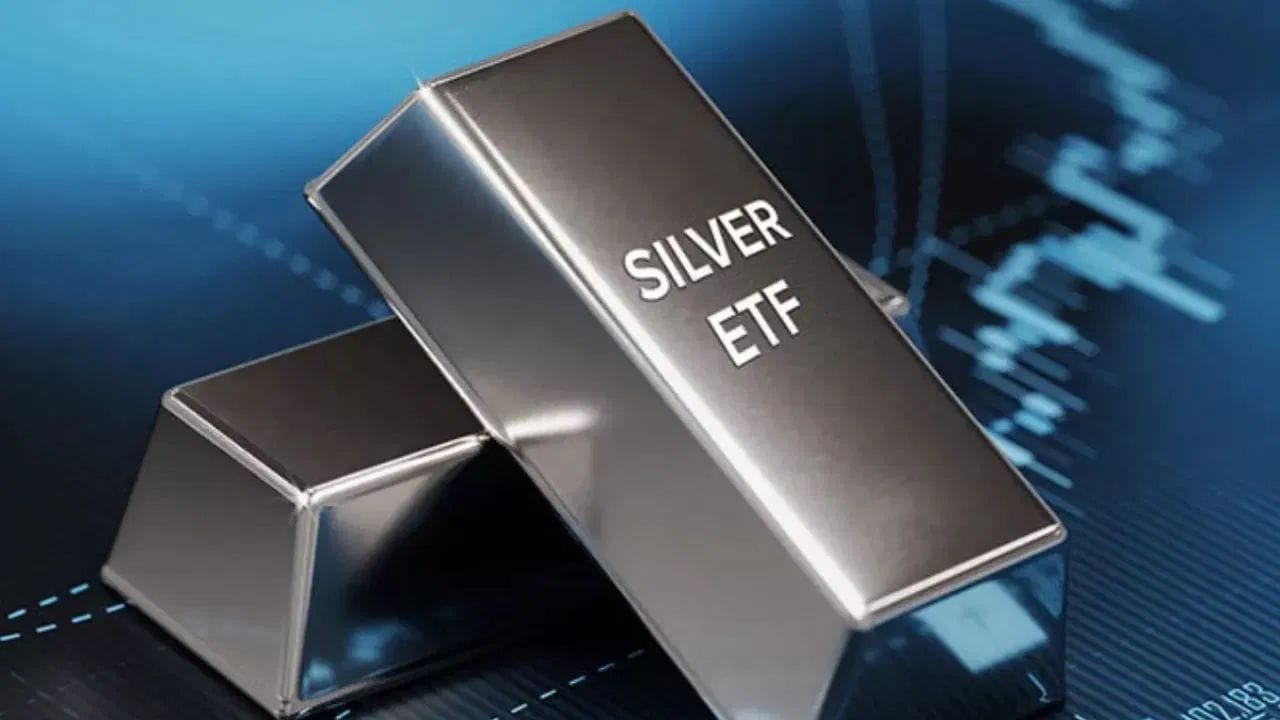
When it comes to investing in precious metals, gold is generally the most discussed. But in recent times, silver has also started attracting the attention of investors, especially because of its industrial demand and price growth potential. Buying physical silver sounds good, but handling it, storing it and worrying about its purity can be a bit difficult. For this reason, Silver ETFs emerge as an easy and sensible option, where you can invest in silver without keeping it with you. Now let us know what is Silver ETF, how it works and whether it should be included in your investment portfolio.
What is Silver ETF?
Silver ETF is a mutual fund that follows the price of silver and is traded in the stock market. Instead of purchasing bricks or coins of silver, you purchase units of an ETF that represents the value of silver. That means if the price of silver increases then the value of your ETF also increases. In simple language, Silver ETF lets you invest in silver without worrying about storage, security and purity, and you can easily buy and sell it from a demat account.
How does a Silver ETF work?
If you buy ETF units from a demat account, your money is invested in silver or its related instruments. If the price of silver increases, the value of your ETF will also increase and if needed, you can sell it in the market anytime. For example, if you bought 100 units at ₹ 70 per unit, that is, you invested ₹ 7000. In which if the price of silver increases by 10%, then your ETF can also be around ₹ 7700.
Benefits of Silver ETF
Silver ETF is especially beneficial for those investors who want to start investing with a small amount. While in physical silver one has to buy at least a few grams, in ETFs you can start with just a few hundred rupees. This is the reason why its craze is increasing among young investors and the new generation. The biggest feature of Silver ETF is its liquidity. You can buy and sell it anytime during market hours. Also, the price is absolutely transparent as it is directly linked to the market rate. This completely eliminates the risks associated with storage, theft and purity.
Risks in Silver ETFs
There are some risks associated with Silver ETFs. Silver prices can fluctuate sharply as it is used in industrial sectors. Additionally, ETF returns may differ slightly from the actual market price (tracking error) and by purchasing silver through an ETF, you do not have access to physical silver. Nevertheless, experts believe that this can be a good option for medium and long-term investors. This brings diversification in the portfolio and also helps in protecting against inflation.
Popular Silver ETFs
Nippon India Silver ETF, ICICI Prudential Silver ETF, Aditya Birla Sun Life Silver ETF, HDFC Silver ETF and Kotak Silver ETF. Overall, if you want to invest in an alternative metal other than traditional gold and want to avoid the hassles of physical silver, then Silver ETF can prove to be a reliable and easy option.