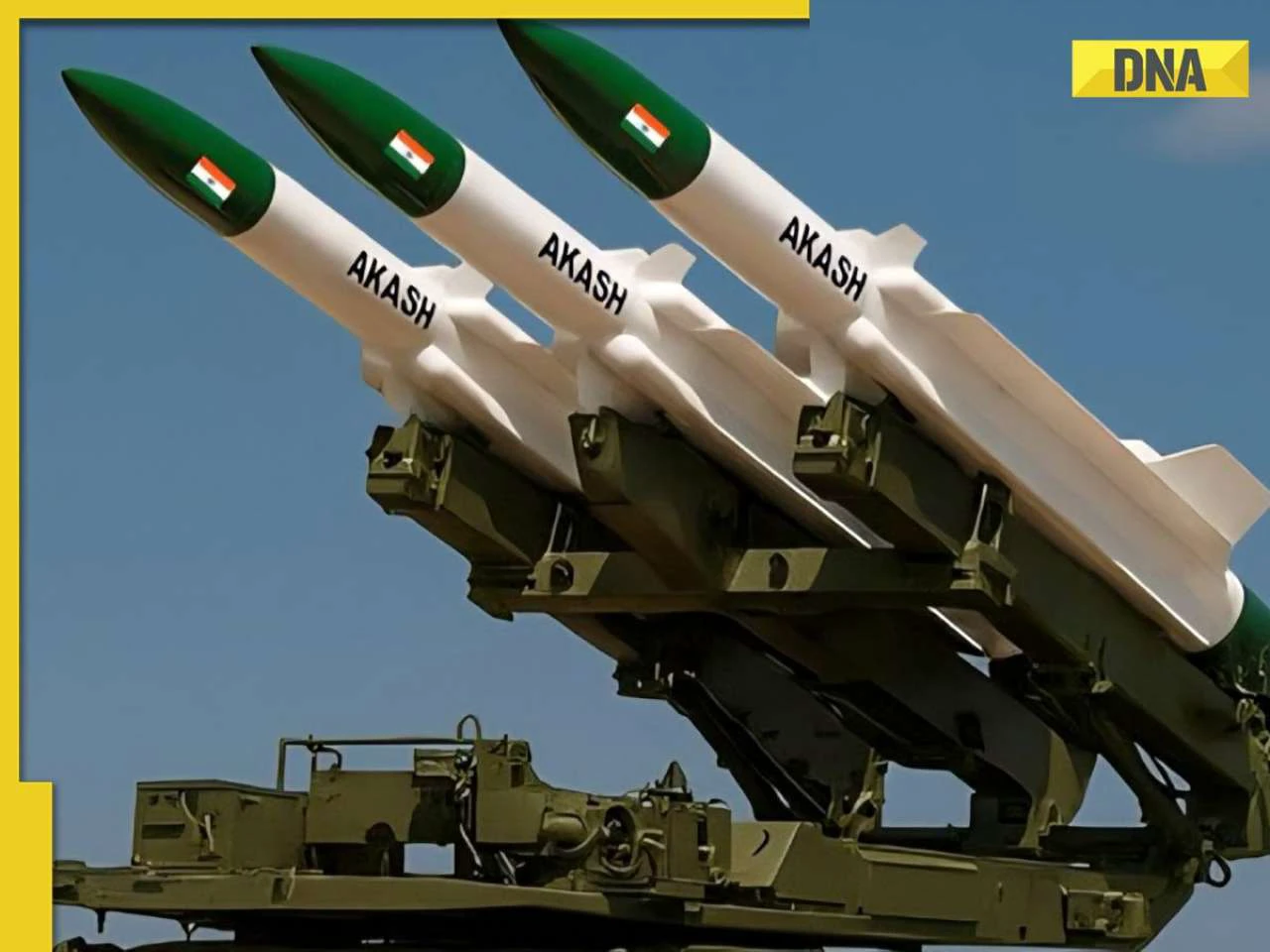
The successful completion of user evaluation trials of Akash-NG at the Integrated Test Range in Odisha is a clearance event with real operational meaning: the system has moved beyond developmental proving and is now judged fit, by the user service, for induction.
In air defence, that step matters because it is where a weapon is assessed as a complete chain – radar to command-and-control to launcher to missile – and not as a set of impressive subsystems. India’s air defence posture is being shaped by two realities: a more congested threat environment (drones, cruise missiles, stand-off weapons) and the need to field credible coverage at scale without permanent dependence on imports.
What DRDO cleared and what the PIB note actually indicates
The official confirmation is unambiguous: Akash-NG, equipped with an indigenous RF seeker and propelled by a solid rocket motor, has completed user evaluation trials witnessed by IAF representatives, with the multi-function radar, command-and-control unit and missile launch vehicle operating as an integrated system.
That last phrase is the key. Air defence failures usually emerge at the seams – track quality dropping under clutter, engagement orders arriving late, data-links lagging, launchers not keeping pace with radar picture updates. User evaluation trials exist to surface precisely those issues. Clearing them does not mean a system is perfect; it means it is operationally acceptable and can now be planned into force posture.
The hard specifications that change the ‘medium-range’ layer
Akash-NG is positioned as a next-generation medium-range surface-to-air missile system with a stated engagement range in the 70-80 km class and a radar picture that stretches further than the firing envelope. In open technical descriptions, the multi-function radar’s surveillance is described up to 120 km, with fire control up to 80 km, and the system is described as capable of engaging multiple targets concurrently.
Why these numbers matter: India’s air defence is layered, and the ‘middle layer’ is where modern conflicts are getting decided. Short-range systems defend point targets; long-range systems protect strategic depth. Medium-range systems are the workhorses that blunt aircraft raids, cruise missile runs and drone swarms before they get into the terminal zone.
Akash-NG also introduces a packaging and deployment change. The NG version is described as canisterised and road/rail/air transportable, with a deployment time measured in minutes rather than hours in many modern systems’ concepts of operations. Even without treating every performance claim as immutable, the direction is clear: faster shoot-and-scoot, more consistent readiness, better storage life, and reduced exposure of missiles and electronics to harsh field conditions.
What ‘active RF seeker’ really buys in operational terms
From an operator’s standpoint, an active RF seeker is not a brochure feature. It is about engagement flexibility and survivability in a contested electromagnetic environment.
Older engagement concepts in this class often rely more heavily on ground-based illumination and tight coupling between radar and missile through much of the flight. An active seeker pushes more of the terminal guidance burden onto the missile itself. Practically, this can reduce the number of constraints a battery commander faces when managing simultaneous tracks, decoys, jamming attempts and pop-up targets.
It also aligns with a broader trend: the adversary is increasingly using ‘cheap’ mass (drones, loitering munitions) to force defenders to either expend costly interceptors or accept leaks. India’s answer cannot be one system; it has to be a layered, networked approach where each tier can absorb pressure without breaking.
Where Akash-NG fits relative to S-400 and the rest
A useful way to interpret Akash-NG is as an indigenous strengthening of the medium-range tier, complementing long-range assets and enabling denser coverage across fronts. ORF’s primer on India’s air defence notes that systems such as the S-400 can track and engage multiple targets and are meant to integrate into wider networks – but long-range systems are not the right tool for every target set, and they cannot be everywhere at once.
Akash-NG therefore, matters less as a headline ‘range jump’ and more as a force-structure tool: it enables wider area defence without placing the entire burden on limited numbers of high-end long-range units.
Operational context: why the drone-and-UCAV threat has sharpened the requirement
The recent India-Pakistan crisis cycle in 2025, including the sequence around Operation SINDOOR, has kept the air domain under scrutiny. PIB’s post-operation note describes retaliatory drone and UCAV attempts against Indian airbases and logistics infrastructure and points to an integrated command-and-control approach enabling real-time identification and interception across domains.
Even allowing for the natural framing of an official account, the operational lesson is widely accepted: air defence is now as much about dealing with volume and ambiguity as it is about dealing with ‘high-end’ aircraft. Medium-range systems with credible anti-cruise missile and anti-drone performance are no longer optional; they are core to sustaining operations and preventing an adversary from creating political effects through persistent, low-cost aerial pressure.
The geopolitical frame: two-front planning and self-reliance as deterrence mechanics
Akash-NG’s clearance fits into India’s wider need to plan for two active fronts and a rapid, technology-driven evolution in China-Pakistan military capabilities. China’s role as a supplier of sensors, missiles, drones and electronic warfare tools to Pakistan has shaped the tactical environment that India must counter in real time. In such a setting, ‘self-reliance’ is not a slogan; it is a deterrence mechanic. Systems that can be produced, upgraded and sustained domestically reduce coercive leverage during crises.
Akash-NG also matters for signalling: induction of an indigenous medium-range layer reduces the perception that India must rely on a narrow set of imported solutions for its air defence backbone. That, in turn, complicates adversary planning because it increases the density and redundancy of the defensive grid.
What to watch next
The meaningful questions now are not whether the missile can fly, but how it will be fielded: the numbers ordered, the basing logic, how quickly squadrons are raised, and how effectively it is integrated into wider command-and-control networks. The trials indicate the door is open. The strategic value will be determined by induction tempo and deployment choices.
(Disclaimer: The views expressed above are the author’s own and do not reflect those of DNA)
(Girish Linganna is an award-winning science communicator and a Defence, Aerospace & Geopolitical Analyst. He is the Managing Director of ADD Engineering Components India Pvt. Ltd., a subsidiary of ADD Engineering GmbH, Germany.)