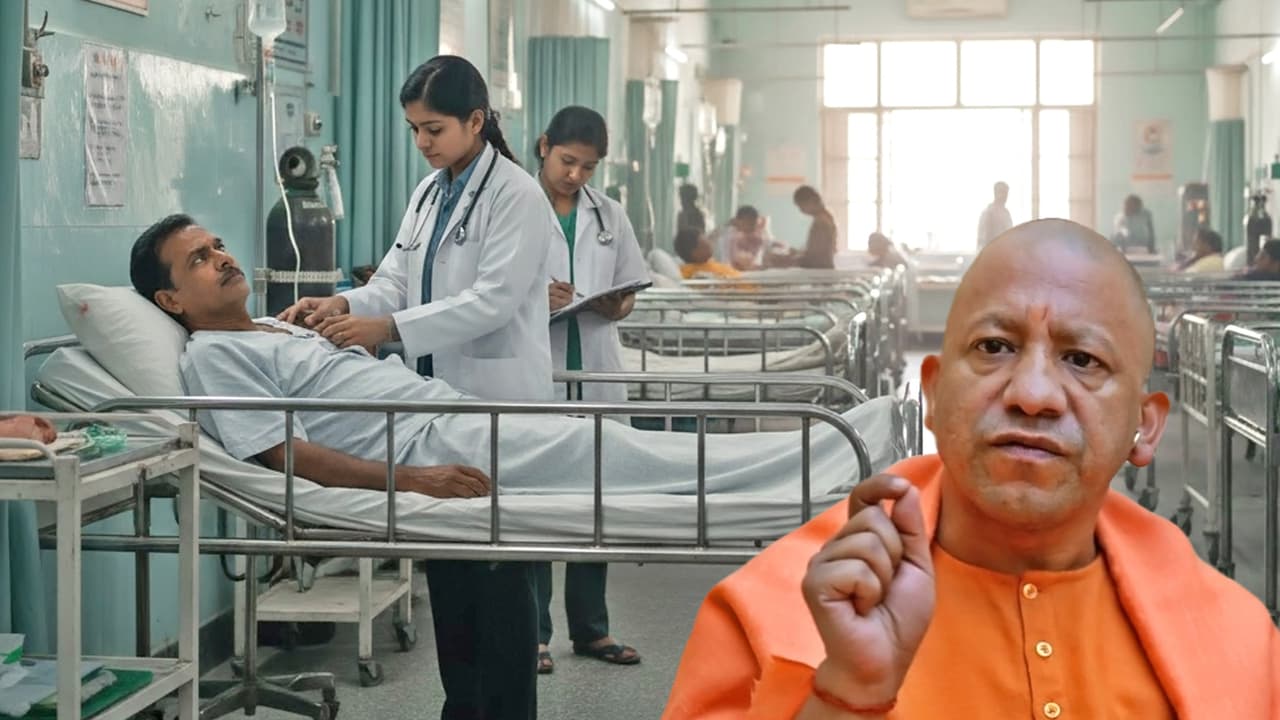
Uttar Pradesh Primary Healthcare Reforms: Primary health services have been strengthened in the state in the 9 years of Yogi government. 24-hour delivery, X-ray, pathology, digital surveillance, vaccination and telemedicine facilities have expanded in PHC-CHC.
Lucknow, 17 February. The real test of the health system of any state lies in the villages and remote areas. While earlier limited facilities and shortage of staff at primary health centers were common complaints, the last nine years have witnessed vast changes in the primary health infrastructure in Uttar Pradesh. Under the leadership of Yogi Adityanath, the state government has laid special emphasis on strengthening CHCs and PHCs, so that the rural population can get quality treatment at the local level.
24 hour facility from delivery to X-ray
After the year 2017, hundreds of new health sub-centres, Primary Health Centers (PHC) and Community Health Centers (CHC) were established and upgraded in the state. Now 24-hour delivery services, pathology tests, X-rays, ultrasound and availability of life-saving medicines have been ensured in centers where even basic facilities were not available earlier.
Special attention to maternal and child health in rural areas has increased the institutional delivery rate. The government claims that with the aim of providing health services to the last person, the recruitment of doctors and paramedical staff has been expedited so that the long vacant posts can be filled.
Also read: Good News! Delhi government will give Rs 1 lakh to your daughter, apply online like this
Digital surveillance on communicable diseases
Digital surveillance system has been strengthened to control diseases like dengue, malaria, AES and JE. With the increase in the number of testing laboratories, early detection and timely treatment of diseases has become possible. According to the Health Department data, a decline in the death rate has been recorded in many districts.
Under Ayushman Bharat Yojana and Mukhyamantri Jan Arogya Yojana, free medical facilities up to Rs 5 lakh are being provided to eligible families. Primary health centers have played an important role in the implementation of these schemes. The identification of beneficiaries and health card distribution process has been made transparent through digital medium.
Performance in vaccination and Covid management
The impact of strengthening the primary health infrastructure was visible during the Covid-19 pandemic. Screening, testing and vaccination campaigns were conducted at the village level. The state claimed to have a leading position in the country in vaccination coverage. The facilities like oxygen plants, ICU beds and ventilators established during this period are now strengthening the general health services as well.
Expansion of medical education and referral system
The government has also laid emphasis on the establishment of new medical colleges and strengthening of district hospitals. This has made the process of referring patients to higher institutions after screening them at the primary level more systematic. By strengthening 102 and 108 ambulance services, quick assistance in emergency situations has been ensured.
Distances reduced due to telemedicine
Telemedicine services have been started through e-Sanjeevani portal, enabling patients from remote areas to consult specialists. This has saved both time and expense and increased access to quality health services in rural areas.
Indicators such as decline in maternal mortality and infant mortality, increase in institutional deliveries, improvement in vaccination coverage and control of communicable diseases reflect the priority given to primary health. The continuous increase in the health budget is also being considered as a step in this direction.
According to Dr. Lily Singh, former DG, Health Department, equipping primary health centers with facilities like 24-hour delivery, pathology and X-ray is an important change for the rural health system. He believes that digital surveillance, expansion of lab networks and telemedicine services have made health services more accessible and effective.
Overall, the impact of the reforms made in the primary health infrastructure is visible at the ground level. However, the real success of any system depends on continuous monitoring, transparency and maintaining quality of service. Everyone will be watching to see how sustainable and effective this process of expanding health services in Uttar Pradesh proves to be in the coming years.
Also read: These 7 expressways of UP will be connected to each other, now direct connectivity from north to south.