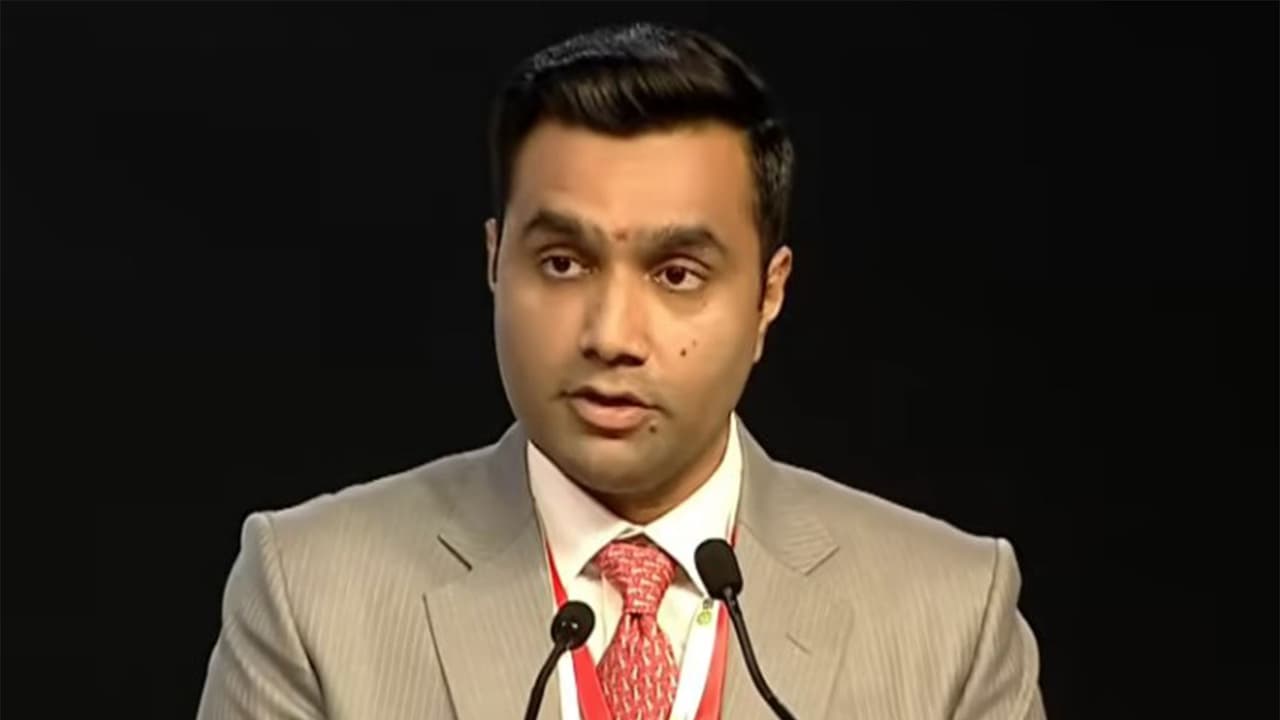
Speaking at the India Today conclave, APSEZ MD Karan Adani stressed on making India self-reliant in energy amid supply chain disruptions caused by the West Asia crisis, noting that any imported commodity like crude or gas will be impacted.
Amid disruptions of supply chains caused by the West Asia crisis, Karan Adani, Managing Director of Adani Ports and Special Economic Zone (APSEZ), has stressed on making India self-reliant in energy and said the country has a lot of resources.
Speaking at the India Today conclave here on Friday, he said any commodity which is imported, whether it is crude or gas, will be impacted if there is a supply disruption.
On Energy Self-Reliance Amidst Crisis
“Anything which is imported–I would say any commodity where the country is reliant from an import perspective–will get affected. Whether it’s crude, whether it’s gas, or whether it’s LPG. This kind of event affects all commodities across the board,” he said, answering a query.
“I think what we need to look at is how do we make ourselves self-reliant as a country from an energy import perspective. Do we have alternatives towards, let’s say, LPG? Do we have alternatives towards LNG? That’s where we’ll have to play our cards for what is right for us as a country. Because India has a lot of resources, whether it is coal, or whether it’s even our own production of crude or gas,” he said.
Karan Adani, who is the eldest son of Adani Group Chairman Gautam Adani, said India has to prioritize what is important and “where our strength is”.
“And I think this becomes a classic case where we have to further accelerate our energy independence, how we protect ourselves from that energy dependence,” he said.
He was asked about the challenge of oil and gas supply disruptions from Strait of Hormuz due to conflict in West Asia between US and Israel on one side and Iran on the other.
Navigating Persistent Supply Chain Disruptions
Answering another query, Karan Adani, who is also Director at Adani Cement, said there has been constant disruption on the supply chain for the last four to five years and spoke about COVID-19, Suez Canal obstruction and Russia-Ukraine conflict.
“There is always been something or the other which is going on which is affecting the supply chain. And if you see from 2020 onwards, most countries have moved from globalization of the supply chain to more of a regionalization of the supply chain. Even India did that as well. So that is number one. And in that, having your own infrastructure becomes extremely critical for a country to make sure that your supply chain is stable and reliable. From our perspective, given the current situation, we are fully geared up as a port to handle any and every cargo which comes into India,” he said.
“We’ve been able to prioritize what is important for the country, whether it’s energy, whether it’s LPG, or whether it’s crude. So we are fully geared up in terms of handling all of this cargo. I think it becomes extremely critical going forward: how do we make our supply chain even more resilient as a country? Obviously, we would love to play a part in that because this becomes a very critical part. It happens once in every two to three years, but whenever it happens, it does pinch a lot. So I think that becomes extremely important,” he added.
Adani Group’s Core Business Verticals
Answering a query, Karan Adani said the Adani Group is very focused and knows its strengths.
“If you look at the group, we are in three big verticals, if I have to club it. The first is the whole energy piece, where as a group we believe that we have to generate energy which is cheapest for the consumer. To prioritize what the government is looking from a long-term perspective. So, that’s where in the energy vertical, we are fully integrated–whether it’s the transmission, distribution, generation. In generation, it is thermal, we started renewable, now we are starting battery storage. So basically, we keep developing and focus on the energy that is our core competence and obviously next is the data center that we’ve just announced,” he said.
“The second big part of the group is the whole ports, logistics, transport utility…And the third big vertical for the group is the whole materials and science part…even the defence–that falls part of the materials business. That’s how you should look at the Group. We are very focused, we know where our core competency is, and that’s how we are structured,” he added.
‘Becoming Faster’: Adani Group’s Transformation Plan
Karan Adani also spoke about the need to cut management layers in the Group as it has grown in size.
“Today we have a Capex plan of two lakh crores annually for the next five years….so when we look at this kind of growth that we are doing, we looked at ourselves first: What is the risk? Where are we going? Are we doing it in the right way? Are we doing it in the best excellence way? And one of the things that we realised is, it was okay when we were smaller, but now as the Group, the kind of growth that we are envisaging, it is going to be unsustainable for us to continue the way we are operating,” he said.
“And when we look at ourselves in the mirror, we do feel that we’ve become quite slow. We’ve become quite heavy, we’ve become slow, decisions have become slower. So that’s where we are going through this whole transition or, I would say, transformation as an organisation, where it’s a unique transformation that we are going towards where we are looking at partnership models, where we are going to be partnering with multiple companies to help us in terms of Capex execution or O&M execution,” he added.
Karan Adani said the Group today has almost 10 layers from the Chairman all the way to the bottom-most person. “It is almost a 10-layer organisation. We want to reduce it to six layers–three at HO (Head Office), three at site. And basically, the idea is: focus on what we are good at as an organisation, which is, you know, ability to take decisions much faster, giving trust at the bottom-most person on the ground because they are the ones who are running the assets. And third, to bring in transparency and accountability for the people.” (ANI)
(Except for the headline, this story has not been edited by Asianet Newsable English staff and is published from a syndicated feed.)