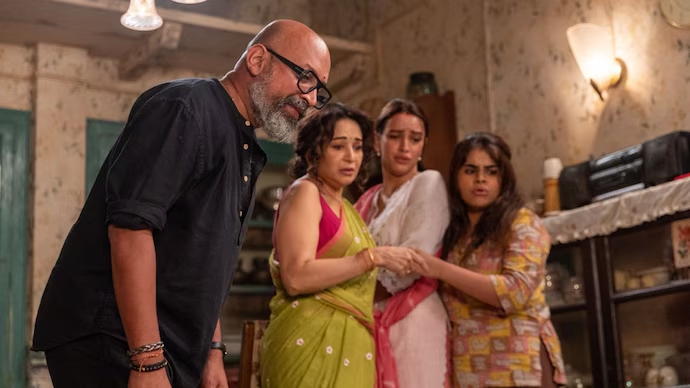
The sleeveless blouse worn by Madhuri Dixit’s character in Maa Behen has sparked considerable discussion online, with many viewers interpreting it as a symbol of resistance against patriarchy. However, director Suresh Triveni says the intention was never to make a direct political statement.
In Maa Behen, Madhuri Dixit plays a woman who is constantly judged for the choices she makes. One of the things that is her decision to wear a sleeveless blouse. While it may seem like a small thing, people around her, even her daughters, repeatedly comment on it and question her choice. As the story moves forward, the blouse comes to represent her desire to live life on her own terms and make her own decisions.
In an exclusive conversation with India Today, Triveni addressed the discourse around the garment, which becomes a recurring point of contention within the film and is often commented on by the people around Madhuri’s character.
“See, you don’t start writing a film saying that this is for patriarchy or against patriarchy. That’s the biggest disservice you can do to your own craft,” Triveni said.
“The blouse stands for her choice”
While he acknowledged that the sleeveless blouse carries symbolic weight within the narrative, he stressed that it is fundamentally about personal agency.
“Yes, the sleeveless blouse stands for her choice in life. It is not just about the blouse,” he explained.
The filmmaker also responded to arguments suggesting that wearing sleeveless blouses is quite common today and therefore should not be viewed as a significant issue. According to him, such readings overlook the realities faced by many women in different social settings.
“People are disconnected from real life”
“I was reading some arguments saying, ‘Everyone wears sleeveless blouses now, what’s the big deal?’ I’m saying these are people who are disconnected from real life,” Triveni said.
He noted that the blouse functions both as a narrative device and a symbol, but only because it emerges organically from the story. “The blouse is a choice that she makes. It is also a plot device and a symbol, but the symbol alone cannot justify a film. The plot is important, and then the symbol comes out of it,” he said.
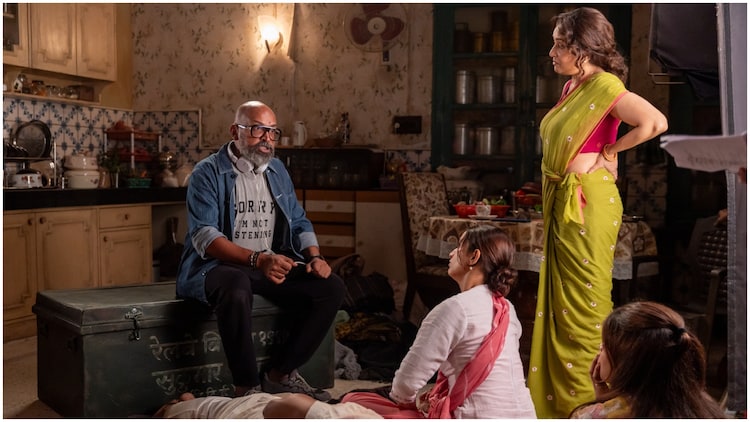
He added that neither he nor writer Pooja Tolani set out to create a symbolic object that audiences would decode. Instead, their primary goal was to tell an engaging story.
“Most important is that, amongst all these deep conversations, our attempt was to make an entertaining film. Whatever people decipher from it is great,” he said.
, Maa Behen stars Madhuri Dixit, Triptii Dimri, Dharna Durga and Ravi Kishan. The film has drawn praise for its exploration of everyday sexism and the ways women negotiate personal choices within restrictive social environments.