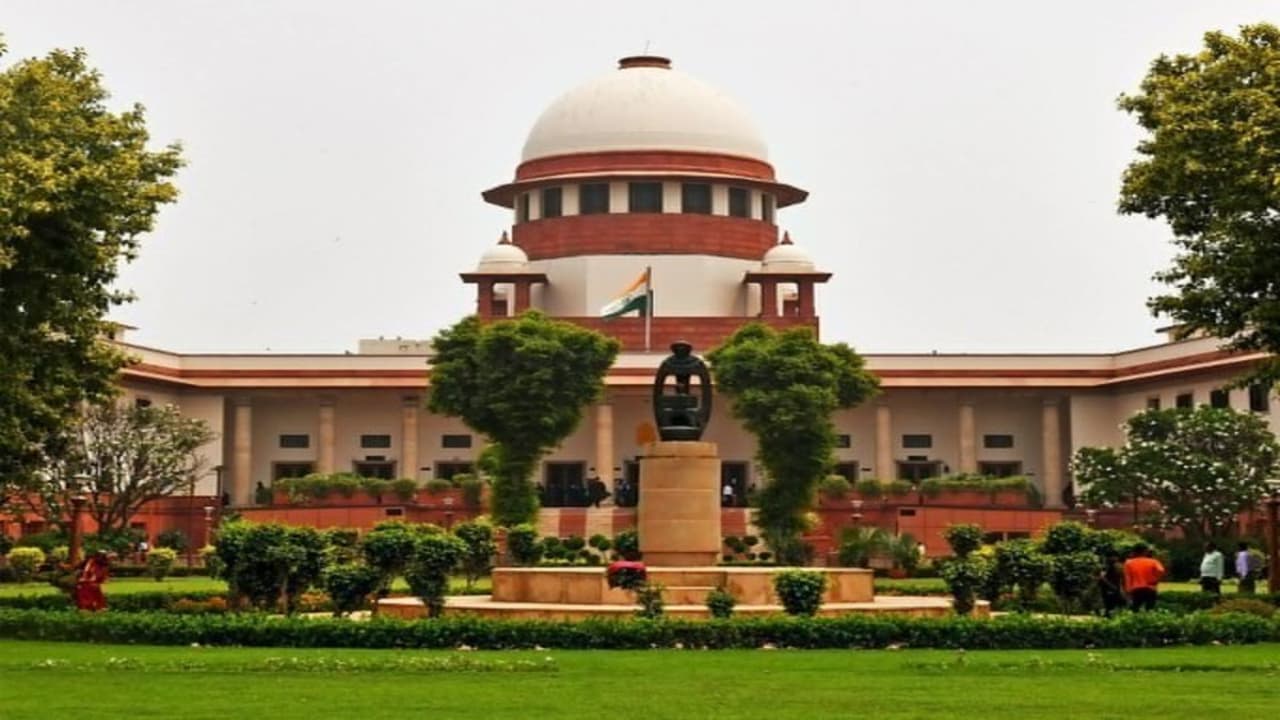
The Supreme Court said that a father can evict a daughter who has married against her will from her self-earned property. The father has every right to give his property to whomever he wants. This decision does not apply to ancestral property.
New Delhi: The Supreme Court has given a decision which is like a lesson for those daughters who marry in other religions against the wishes of their parents. It is true that the law now gives equal rights to both the son and the daughter in ancestral property, but there is also a law that the father can give his self-earned property to whomever he wants. However, sometimes daughters may have the right to raise questions on such property also. But, now the Supreme Court has said that it is right not to give the father’s property to a daughter who marries a boy of another religion against the wishes of her parents and to evict her from the property.
evicted from property
Justice Ahsanuddin Amanullah and K. Vinod Chandran’s bench has issued this order. A woman named Shaila Joseph had married a man outside her community, due to which her father N.S. Sreedharan had evicted him from his property. He divided his property equally among the remaining eight children. Shaila challenged this decision in the lower court, where the decision came in her favor. But, the father did not agree with this decision and approached the High Court. The High Court also said that everyone should get equal property and it is not right to evict someone from the property because of marriage against one’s will. There also the decision came in favor of the daughter.
Supreme Court’s stance
But the father did not agree with this decision at all and he approached the Supreme Court. The Supreme Court, while canceling the decisions of the lower court and the High Court, said that the will made by Sreedharan is correct. The court ruled that Shaila had no right in her father’s property. The father has written this will of his own free will and it is correct. If property had not been given to any of the children, the court could have intervened. But the property has been distributed among the remaining children. It is his own choice to keep his daughter Shaila away from the property. Therefore, the judges said that he had no right to question it.
Supreme Court made it clear
It is true that women also have equal rights in property. But this is self-earned property, and to whom to give one’s property depends entirely on the father’s wishes. If the property was ancestral, one would get a share in it. But the bench has made it clear that the court will not interfere in this matter.