A reported Iranian missile strike on Diego Garcia, a key US-UK military base in Indian Ocean, signals a shift in the conflict beyond West Asia. Experts say Iran is using a mix of military and economic pressure to spread risk without full war. This move raises concerns for global energy supply, shipping costs, and security.
By Dr Aparaajita Pandey
It is hard to describe the reported strike by the Iranian missile in the conventional sense of a conflict, it is however indicative of the shift in the geographical connotations of this conflict. This possible spill over from West Asia t the Indo – Pacific needs to be studied.
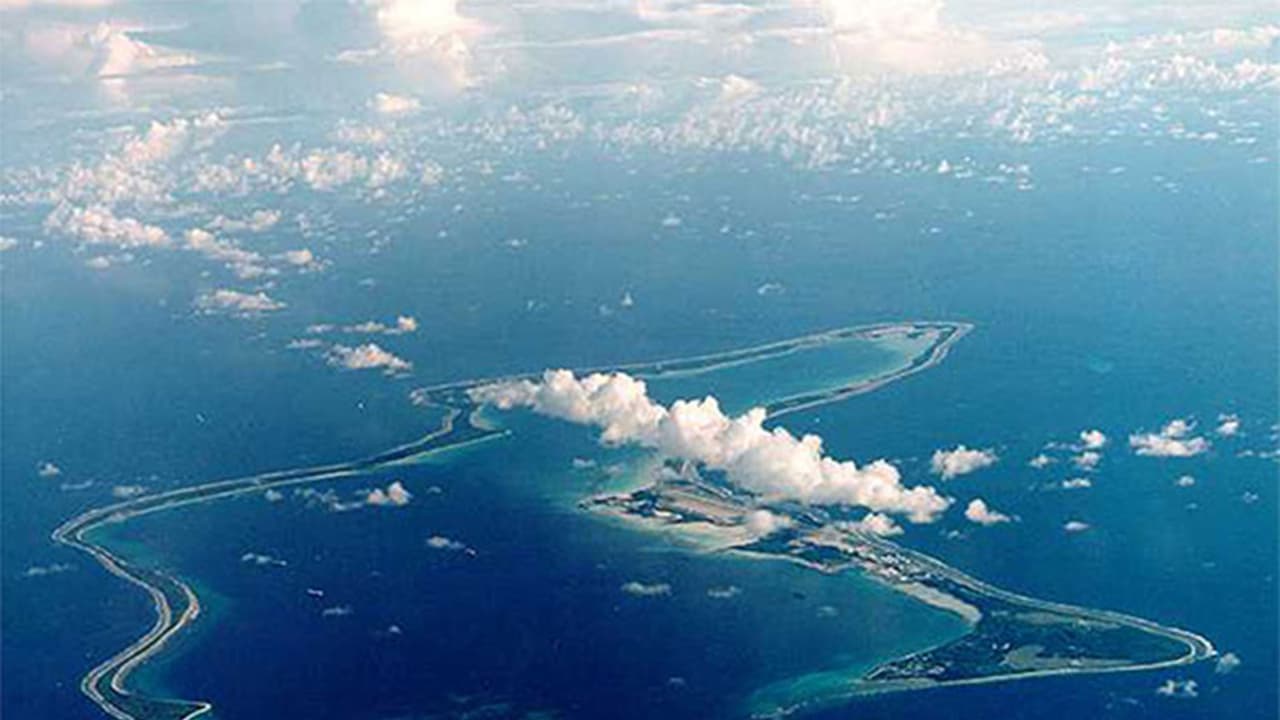
Diego Garcia is a coral atoll a little south of the Maldives in the central Indian Ocean. While the geographical description makes it sound like an idyllic vacation paradise, it is important to note that this island acts as a joint military base for the US and the UK. Its geographical position bestows it with strategic importance.
As the missile hit this tropical paradise, it became clear that Iran was signalling something significant; it underlined the permeability of the US’ defence and security infrastructure, that was previously assumed to be insulated because of it. However, at the moment this action alone is not symbolic of a new front opening in the war rather it signals towards an addition of geographical zones to the ongoing conflict. Instead of an attempt at some decisive confrontation, at the moment Iran is more interested in spreading the US to this, by making such controlled disruptions.
Iran is using a multi-approach; while the traditional armed conflict lingers on, at first the blockade of the Strait of Hormuz was used to create both a panic in the international market and also an understanding as to what countries stood to lose in case this conflict was to become protracted and the Strait were to close for long. Now, as the nation states dependent on the Strait for their energy needs are scrambling for supplies, and trying to find alternative routes to meet their energy needs, Iran has begun to allow maritime passage at a premium, thereby making this time of extreme dread and anxiety possibly quite profitable for themselves. This also plays well with shipping companies worldwide as an assurance from Iran of safe passage for a premium keeps the additional risk cover by shipping insurance firms relatively low.
Iran’s has plucked a page out of the play book of empires that have historically weaponised their geography as a leverage to attain monetary or strategic benefit. Much like the corsair economies of the Mediterranean or even an ode to the use of chokepoints during the Cold War; Iran has found a way of turning global insecurity into a steady revenue stream. Only now these tactics are even more effective as in this globalised era where all sectors are intrinsically related with each other; the ramifications of even the slightest of disruptions are multi-fold.
Missile strike on Diego Garcia
The strike on Diego Garcia must therefore be read alongside this maritime strategy. It is a display that Iran can cause destruction and mayhem in not just proximate adversaries, but the structural mainstay of US power projection. Critically, it accomplishes this without crossing the threshold into full-scale war. This is escalation designed to compel, not to explode.
The Indian Ocean region or the Indo – Pacific is now turning into an extended battlespace, where signalling, supply chains, and strategic infrastructure intersect. While the conflict remains concentrated in West Asia, its effects are however, no longer geographically contained.
For India, this is a structural challenge. As a state deeply contingent on maritime energy flows, it is vulnerable to precisely this kind of calibrated instability that Iran is manufacturing. Nevertheless, India is unlikely to abandon its longstanding strategic posture in the Indo – Pacific.
The United States on the other hand, faces a more profound dilemma. Even as the conflict’s spills over to the Indo-Pacific, the US along with NATO has been clear in their stance that it is not a net security provider in the region. They have recently emphasised the transatlantic nature of NATO and with the deepening of the fissure between the US and NATO, it is becoming hard to estimate as to what their reaction would be. This question is complicated enough without the addition of another power in the mix, but the spill over into the Indo – Pacific brings with it, China and challenges posed by it to western supremacy. A challenge that is a little too vast to be dealt with by a NATO style security architecture.
The conundrum for the US has become unavoidable, a disengagement from West Asia comes with obvious risks of escalation from Iran; and yet a continued engagement puts strain on its presence in the Indo – Pacific, specifically in terms of Taiwan. The situation begs for an invocation of the classic realist theory. Power balancing, deterrence, and actions centred around sphere- of – influence, are all reminiscent of the classical theory, however, the manipulation of energy flows, creation and monetisation of risks, and leveraging trade routes have added an economic element to the conventional military focus of the conflict.
Iran’s strategy captures this leap from military to economics. By neither escalating definitively nor de-escalating significantly, it engages a grey zone that confounds conventional reactions. It is not at the moment pursuing victory in the traditional sense; it is seeking influence within a structure that amplifies disruption. The economic outcomes are already detectable. Energy markets are tightening, shipping costs are increasing, and insurance premiums across key maritime routes are snowballing. Over time, this will enforce a general shift toward economic securitisation. Defence spending, particularly in maritime domains, is likely to follow.
The deeper consequence, however, is strategic. The strike on Diego Garcia shows a world in which insecurity is widespread, but security guarantees are limited. Conflicts can project power across regions, whereas alliances endure geographically constrains. The Indo-Pacific is less likely to be a conventional theatre of this conflict. However, it will progressively act as its strategic echo; absorbing shocks, recalibrating alignments, and exposing the limits of existing security frameworks.
Author is a Professor at Amity Institute of Defence and Strategic Studies, Amity University NOIDA.
(Disclaimer: The opinions expressed are solely those of the author and do not reflect the views or stance of the organization. The organization assumes no responsibility for the content shared.)