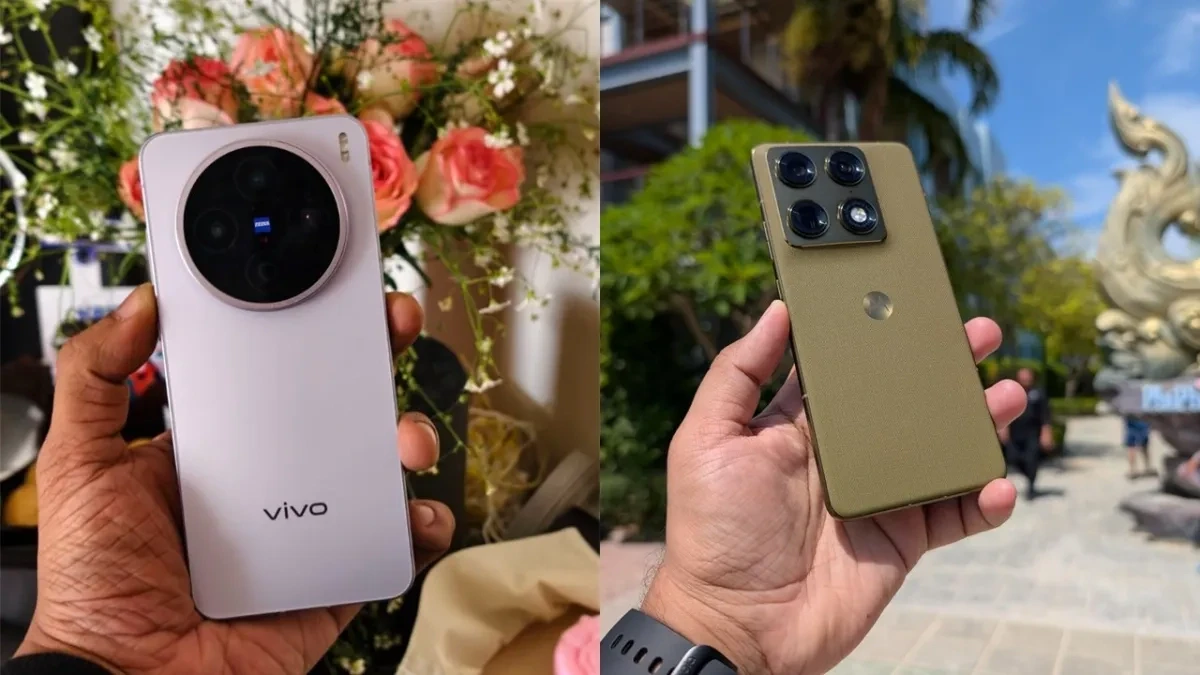
However, the Vivo X200T isn’t the only value flagship to make its debut in 2026, with the Motorola Signature being its chief opposition. So let’s find out how the Motorola Signature fares when pitted against the newly launched Vivo X200T.
Vivo X200T vs Motorola Signature: Specifications Comparison
| Specification | Motorola Signature | Vivo X200T |
| Chipset | Snapdragon 8 Gen 5 | MediaTek Dimensity 9400+ |
| Display | 6.8″ 1.5K LTPO AMOLED, 1Hz – 120Hz, 6200 nits Peak Brightness, HDR10+, Dolby Vision | 6.67″ 1.5K AMOLED, 120Hz, 5000 nits Peak Brightness, 1600 nits (HBM), HDR10+ |
| RAM | 12GB/16GB LPDDR5X | 12GB LPDDR5X |
| Storage | 256GB/512GB/1TB UFS 4.1 | 256GB/512GB UFS 4.1 |
| Rear Cameras | 50MP (Main) + 50MP (Telephoto) + 50MP (Ultrawide) /8K @30fps, 4K @120fps, 4K Dolby Vision Recording @60fps | 50MP (Main) with OIS + 50MP (Ultrawide) + 50MP (Telephoto)4K @60fps |
| Front Camera | 50MP Front Camera | 4K @60fps | 32MP Front Camera | 4K @60fps |
| Battery | 5,200 mAh Battery, 90W Wired Charging, 50W Wireless Charging | 6200mAh mAh Battery, 90W Wired Charging, 40W Wireless Charging |
| IP Rating | IP68/IP69 Rating | IP68/IP69 Rating |
| Software | Android 16, Hello UI (7 Years OS, 7 Years Security) | Android 16, OriginOS 6 (5 Years OS, 7 Years Security) |
| Price | Starting Price: Rs 59,999 | Starting Price: Rs 59,999 |
Vivo X200T vs Motorola Signature: Design & Durability
The Signature’s design is reminiscent of past Motorola smartphones, with its curved screen and rounded sides. On the other hand, the Vivo X200T boasts a more traditional design with a box-shaped frame, round edges, and a flat display. At first glance, the Signature’s design exudes style, while the X200T favors comfort and practicality.
Unlike design, build quality isn’t as subjective. Both phones use glass protection on the front and an aluminum frame, although the Signature uses top-notch Gorilla Glass Victus 2. Moving on to the back panel, and the X200T comes in two options with a glass or fiber-reinforced plastic back.
The Motorola Signature features a textured back panel, which doesn’t feel as tough as glass but gives the phone an elegant look. Both phones feature an IP68+IP69 rating for resistance to dust and water, although the Signature is MIL-STD-810H certified for military-grade durability.
Motorola Signature vs Vivo X200T: Display, Performance, and Software Experience
The Motorola Signature gains a slight edge in the display department, with a 165Hz LTPO AMOLED display as opposed to a 120Hz AMOLED screen on the Vivo X200T. Additionally, the Signature also has a brighter display and supports the Dolby Vision format. Moreover, the Signature’s dual stereo speakers are fine-tuned by Bose and Snapdragon, offering louder and crisper audio.
The Vivo X200T and Motorola Signature don’t quite use flagship chipsets, although they offer few compromises when it comes to overall performance. The MediaTek Dimensity 9400+ SoC on the X200T can effortlessly handle just about anything you throw at it, and the same can be said of the Snapdragon 8 Gen 5 chip on the Motorola Signature. So far as battery life is concerned, the X200T appears to have a clear edge with a nearly 20% larger cell, while charging speed is identical for both phones.
Both phones are touted to surpass an AnTuTu score of 3 million points, although we were able to validate Motorola’s claims. In terms of software, the Motorola Signature offers a clean and refined experience with minimal bloat and a strong suite of AI features. On the other hand, the Vivo X200T’s OriginOS 6 skin leaves more room for customization with a wealth of AI features but lacks the clean minimalist aesthetics.
Motorola Signature vs Vivo X200T: Balanced Imaging vs Flagship Ambitions
For optics, the Vivo X200T features a triple rear camera setup that includes a 50MP Sony IMX921 primary sensor (1/1.56″) with OIS, and an f/1.57 aperture, a 50MP Samsung JN1 ultrawide lens (1/2.76″) with an f/2.0 aperture, 15mm FOV, and autofocus, and a 50MP Sony IMX882 telephoto unit (1/1.95″) with an f/2.57 aperture, OIS, and 3x optical zoom.
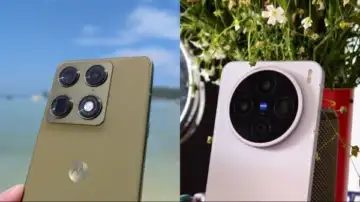
The Motorola Signature boasts a flagship-grade triple-camera setup complete with a 50MP Sony LYTIA-828 primary sensor (1/1.28″) with an f/1.6 aperture and OIS, a 50MP ultrawide Samsung JN1 lens (1/2.76″) with macro support and an f/2.0 aperture, and a 50MP Sony LYTIA-600 periscope-telephoto shooter (1/1.95″) with OIS and 3x optical zoom. Finally, a 50MP selfie camera sits up front with PDAF and an f/2.0 aperture.
Both the Signature and X200T support 4K video recording at up to 60fps on the front and rear cameras. However, the Motorola Signature also supports 8K video recording at 30fps as well as Dolby Vision video recording at 4K (60fps).
The Vivo X200T and Motorola Signature both pack versatile triple rear camera systems, but they cater to slightly different priorities. The Vivo X200T focuses on balanced performance, led by a 50MP Sony IMX921 primary sensor with OIS for stable everyday photography. It is complemented by a 50MP ultrawide lens with autofocus, enabling close-focus and wide landscape shots, and a 50MP telephoto camera offering 3x optical zoom with OIS for portrait and zoom photography.
The Motorola Signature, on the other hand, leans more towards flagship-grade imaging. Its larger 50MP Sony LYTIA-828 main sensor promises better light capture and improved dynamic range. The ultrawide camera adds macro capabilities for close-up shots, while the 50MP periscope telephoto delivers 3x optical zoom with enhanced stability. Motorola also gains an edge in selfies with a high-resolution 50MP front camera featuring PDAF. Finally, the Signature also offers more versatility and headroom for video creators.
Vivo X200T vs Motorola Signature: Conclusion
The Vivo X200T and Motorola Signature are closely matched value flagships, with both devices delivering strong performance, premium design elements, capable displays, and versatile camera systems. In day-to-day usage, there are few clear-cut compromises on either side, making the choice largely dependent on individual priorities.
The Vivo X200T gains a tangible advantage in battery life, thanks to its significantly larger battery, making it a better pick for users who value longer endurance. Its ZEISS-tuned cameras also shine in portrait and street photography, producing consistent colors and pleasing subject separation.
That said, the Motorola Signature edges ahead in overall imaging. Its larger main sensor, periscope telephoto, stronger selfie camera, and advanced video features, such as 8K and Dolby Vision recording, give it greater versatility and creative headroom. While both phones are excellent all-rounders, Vivo focuses on reliability and longevity, whereas Motorola delivers a more complete and future-ready camera experience.