The incident underscores the need for responsible tourism to protect wildlife and fragile ecosystems, as feeding animals can disrupt the ecological balance.
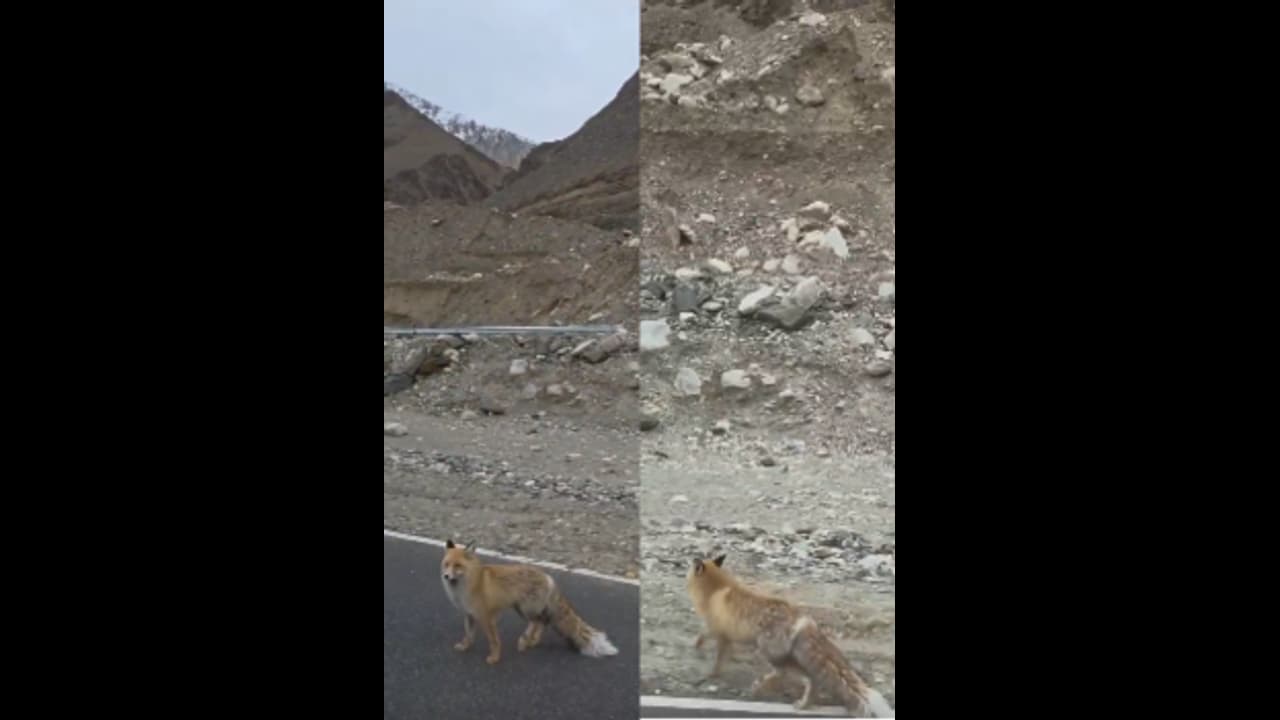
A chance wildlife encounter near Pangong Tso in Ladakh has captured widespread attention online after a group of tourists recorded a rare Himalayan red fox approaching their vehicle during a scenic stop at the high-altitude lake. The viral video, shared by X (formerly Twitter) user Sidharth Shukla, shows the striking fox calmly walking along a roadside against the stark landscape, leaving those present — and viewers on social media — “speechless” at the beauty of the moment.
Scroll to load tweet…
The footage quickly spread across platforms, with many users praising the travellers for observing the animal without attempting to feed it, and expressing amazement at encountering such an elusive species in the wild. Some initially mistook the animal for a wolf due to its appearance, but it was later confirmed to be a red fox, a common but typically shy resident of Ladakh’s cold desert region.
However, the reaction to the video hasn’t been all admiration. Indian Forest Service (IFS) officer Parveen Kaswan highlighted a conservation concern behind the footage, suggesting that the fox’s willingness to roam near human activity and roads could be the result of prior feeding by people. He cautioned against “sympathy-based conservation”, explaining that feeding wild animals can alter their natural foraging behaviour, reduce their fear of humans, and increase the risk of accidents and human-animal conflict.
Scroll to load tweet…
Wildlife experts echo this warning, noting that habituation to humans can disrupt ecological balance even for species not currently endangered. The red fox plays a vital role in controlling rodent populations and maintaining the health of high-altitude ecosystems, and encounters like this underscore the need for responsible eco-tourism in fragile environments like Ladakh.