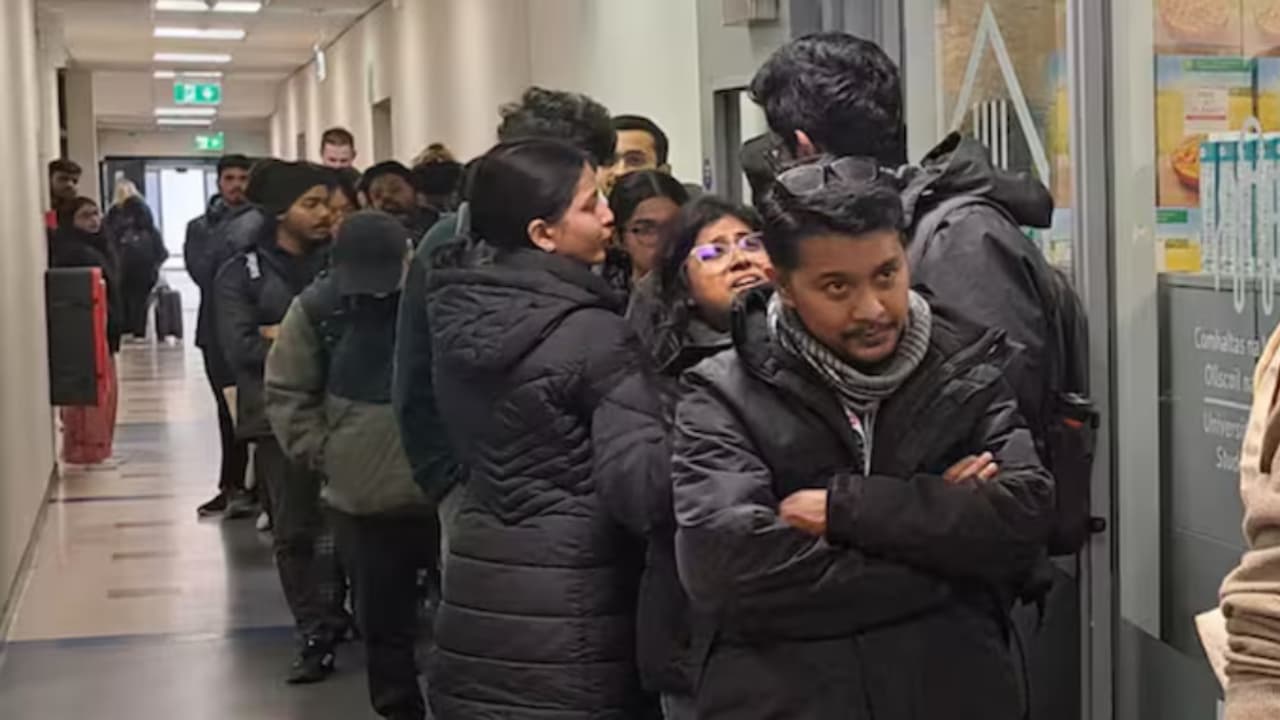
A viral photo of people, many appearing Indian, at an Irish food bank sparked intense online hate. The image was used to spread misinformation, falsely claiming Indian migrants were straining Ireland’s welfare system.
A seemingly ordinary photograph taken outside a food bank in Ireland has ignited a disturbing wave of online hate, exposing the growing challenges faced by the Indian community in the country.
The image, which showed a queue of people—many of whom appeared to be of Indian origin—waiting for food assistance, quickly went viral across social media platforms. What followed was a surge of racist commentary targeting Indians, raising serious concerns about xenophobia, misinformation, and the safety of immigrants in Ireland.
Scroll to load tweet…
According to reports, the photo was shared widely with misleading narratives suggesting that Indian migrants were overburdening Ireland’s welfare system. Social media users, particularly from fringe groups, used the image to push anti-immigrant rhetoric. Many posts contained derogatory remarks, stereotypes, and calls for stricter immigration controls, unfairly singling out Indians and other South Asian communities.
The backlash reflects a broader pattern of rising anti-immigrant sentiment in parts of Ireland. While the country has long been considered welcoming, recent years have seen growing tensions fueled by economic pressures, housing shortages, and increased migration. In this environment, misinformation can spread quickly, often turning isolated incidents into flashpoints for hate.
Importantly, there is no verified evidence to support claims that Indians or any specific community are disproportionately dependent on food banks. Charitable organisations in Ireland have repeatedly stressed that food banks serve a diverse population, including Irish citizens, migrants, students, and families facing temporary financial hardship. However, such facts were largely ignored in the online discourse, where emotional reactions and bias took precedence over reality.
The Indian community in Ireland, which has grown significantly in recent years due to education and employment opportunities, has expressed concern over the incident. Many Indians living in the country reported feeling targeted and unsafe after seeing the volume of hate directed at people who looked like them. Students and professionals alike have taken to social media to share their experiences, highlighting the emotional toll of such incidents.
This is not an isolated case. Reports and advisories in recent months have pointed to an increase in racially motivated incidents involving Indians in Ireland. These range from verbal abuse and online harassment to, in some cases, physical intimidation. Community leaders have warned that unchecked online hate can translate into real-world threats, making it crucial for authorities to act swiftly.
Experts argue that the incident underscores the role of social media in amplifying prejudice. A single image, when stripped of context, can become a powerful tool for misinformation. In this case, the absence of verified details about the individuals in the queue allowed false narratives to flourish. Algorithms that prioritise engagement further contributed to the spread of inflammatory content, reaching a global audience within hours.
Irish authorities and civil society groups have condemned racist behaviour and emphasised the importance of inclusivity. They have urged people to verify information before sharing it and to avoid making assumptions based on appearance or nationality. Advocacy groups are also calling for stronger measures to tackle hate speech online, including stricter moderation and accountability for those spreading harmful content.
The incident has also sparked conversations about the responsibilities of host countries and communities in ensuring the well-being of migrants. As Ireland continues to attract international students and skilled workers, fostering an environment of mutual respect becomes increasingly important. Incidents like this risk damaging the country’s reputation as a welcoming destination and may deter future migrants.
For the Indian diaspora, the episode serves as a reminder of the vulnerabilities faced by immigrant communities worldwide. While many Indians have successfully integrated into Irish society, contributing to its economy and cultural diversity, moments of backlash reveal underlying tensions that cannot be ignored.
At a broader level, the controversy highlights how economic anxieties can sometimes manifest as hostility toward outsiders. When resources such as housing or public services appear strained, immigrants often become easy targets, regardless of the actual causes of the problem. Addressing these root issues—through better policy, communication, and community engagement—is essential to preventing similar incidents in the future.
Ultimately, the viral food queue photo is more than just a social media controversy. It is a reflection of deeper societal challenges, including the spread of misinformation, the persistence of racial bias, and the need for stronger safeguards against hate. As discussions continue, both online and offline, the focus must shift toward promoting understanding, combating false narratives, and ensuring that all communities feel safe and respected.
The incident stands as a cautionary tale of how quickly perceptions can be shaped—and distorted—in the digital age. It also underscores the importance of responsible sharing, critical thinking, and empathy in an increasingly interconnected world.