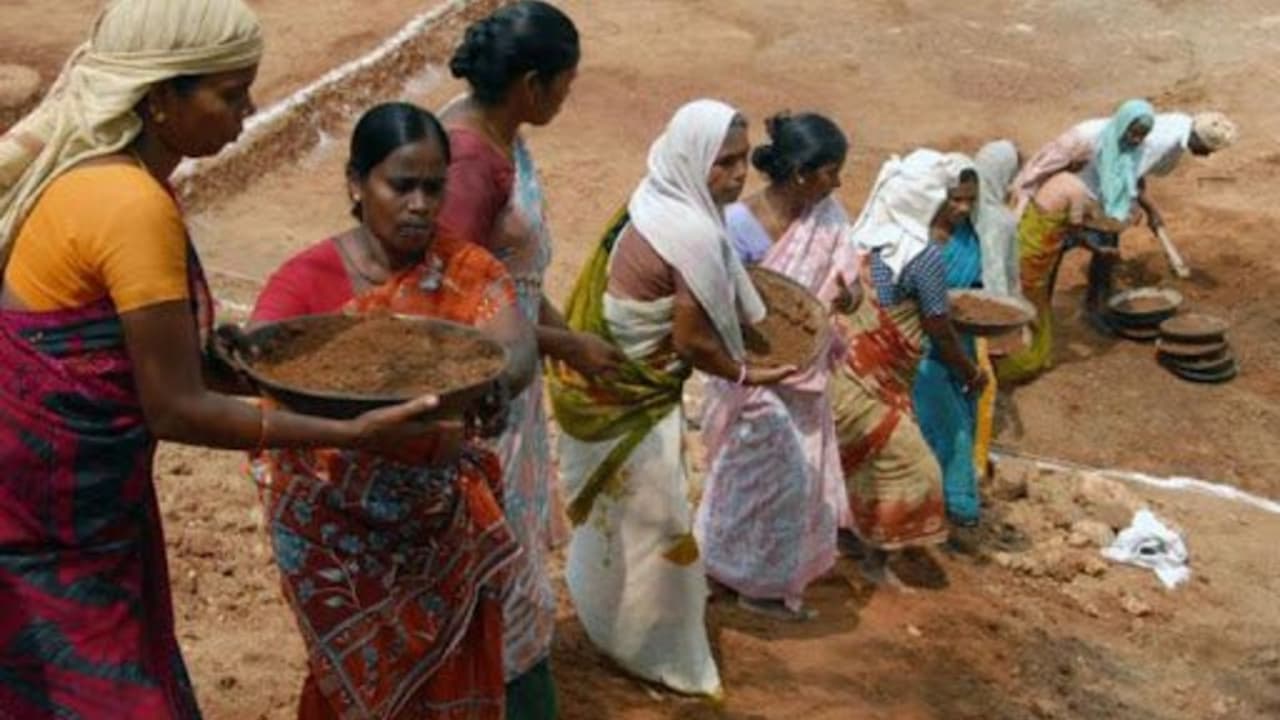
Viksit Bharat Rozgar Bill 2025: The government is preparing to bring a new rural employment law in place of MNREGA. Know what the Vikas Bharat Guarantee for Employment and Livelihood Mission (Rural) Bill 2025 is and how employment will be guaranteed in it. How is this scheme different from MNREGA?
VB G RAM G Bill 2025: The Central Government is going to make a historic change for rural India. The government is preparing to bring a new rural employment law by removing the MNREGA scheme which has been running for almost 20 years. The name of this new law is Vikas Bharat Guarantee for Employment and Livelihood Mission (Rural) i.e. VB-G RAM G Bill 2025. The government says that this change is not just in name, but in both thinking and system, so that rural employment can be linked to the goal of Developed India 2047. Know what is VB G RAM G Bill 2025 and what will be the benefit of it?
What is VB–G RAM G law?
Vikas Bharat Guarantee for Employment and Livelihood Mission (Rural) will be a new and modern rural employment law. Under this, the government will give a legal guarantee of providing 125 days of wage employment to every rural family who wants to work. The government’s focus will no longer be only on providing temporary work, but such work will be done in the villages which will be beneficial in the long run. That means, along with employment, strong rural infrastructure will also be created.
Which works will get priority in the Vikas Bharat Guarantee for Employment Scheme?
In the new law, the work has been divided into four clear parts so that the money is spent in the right place. First, there will be works related to water security, such as ponds, water conservation, irrigation and groundwater improvement. Second, core rural infrastructure, which will include roads, connectivity and basic amenities. Third, livelihood-related infrastructure, such as warehouses, markets and production-related structures. Fourth, weather and disaster management work to protect villages from floods, drought and soil erosion. All these works will be linked into a national digital system, which will make monitoring and planning easier.
How is the new employment guarantee law different from MGNREGA?
The guarantee of work in MNREGA was 100 days, which is now being increased to 125 days. Earlier the works were scattered and not connected to any big plan, but in the new law the works will be done with a clear plan and target. Now every village will make its own developed Gram Panchayat Plan, which will be linked to the national infrastructure plans. This will increase accountability in both expenditure and work.
How will the rural economy benefit from VB-G RAM G?
This law will not only increase employment in villages, but will also strengthen the entire economy. Agriculture will benefit from water conservation, roads and connectivity will make access to the market easier. People will get earning opportunities apart from farming through livelihood related structures. When more money comes to the village, expenditure will increase and migration will reduce. The farming season has been kept in mind in the new law. State governments will be able to stop government work at the time of sowing and harvesting, so that laborers are available in the fields. With this, wages will not increase suddenly and farmers’ costs will remain controlled. Also, assets related to water, irrigation and storage will directly benefit the farmers.
Read this also- What is Aapka Paisa Aapkar Adhikar initiative, know on which portals unclaimed money will be available in 2025?
What benefit will the workers get from VB-G RAM G?
Rural laborers will now get 25% more employment. The work will be planned in advance, so that the workers will know when and where they will get the work. Payment will be completely digital, which will reduce the scope for wage cuts or scams. If work is not found on time, it will be mandatory to pay unemployment allowance.
Read this also- Ayushman Bharat PMJAY 2025: What is the eligibility for extra Rs 5 lakh top-up?
Why was there a need to change MGNREGA?
The government says that rural India has changed a lot after 2005. There has been a major decline in poverty, digital payments have become common and new means of livelihood have emerged in villages. In such a situation, the old structure of MGNREGA was not matching with today’s needs. At the same time, government investigation revealed fake work, violation of rules and money irregularities in many states. Digital attendance was bypassed and wages were shown using machines. Irregularities worth about Rs 193 crore were detected in 2024–25. Very few families were able to work for the full 100 days.
How will the new job guarantee law increase transparency?
There will be more use of technology in the new law. Fraud will be detected through AI, work will be monitored through GPS and mobile. Social audit will be mandatory in every panchayat twice a year. Information about work and expenses will be made public. Now this scheme will be a centrally sponsored scheme. In normal states the expenditure will be in the ratio of 60:40. North-eastern and hilly states will get more central assistance. The government claims that this will not put additional burden on the states.