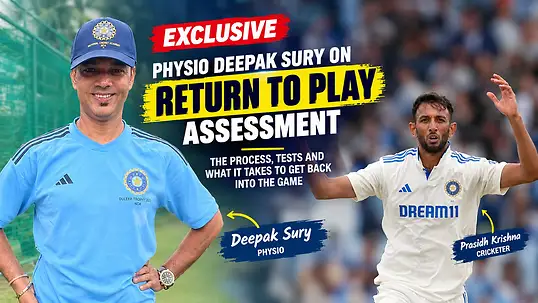
India suffered a blow before the ODI series against New Zealand as Prasidh Krishna was ruled out of all five games. The right-arm pacer was always a doubtful contender for the series.
He will now play one unofficial Test match for India A against New Zealand A prior to joining the Test team for the two-match series. Before that, he will have to clear the Right to Play assessment. Sports Now spoke to veteran physio Deepak Sury, who explained the RTP assessment in detail. “After rehabilitation, when a player feels that he is ready to play again, there are some specific tests for that, depending on the body part involved. The physio will check his (Prasidh’s) leg movement and compare it with the other leg to see whether the range of movement is complete and whether there is sufficient strength. Even in terms of strength, we look at whether there is a difference of around 10%. There should not be a difference greater than that,” Sury told Sports Now.
“Now, in the case of a fast bowler, like this particular player, he probably had an injury in his left leg. He is a right-arm bowler. The left leg of a right-arm bowler takes around 8 to 10 times more load. For example, if someone weighs 60 kg, that leg can take a load of nearly 500 to 600 kg. When you land after taking a jump, that is the kind of load we are talking about. This also depends on the height of your jump and the force with which you land, but it is around 8 to 10 times your body weight. So, in his case, they would have checked whether he was experiencing any pain or whether pain was occurring during any particular movement. Along with that, training continues,” he added.
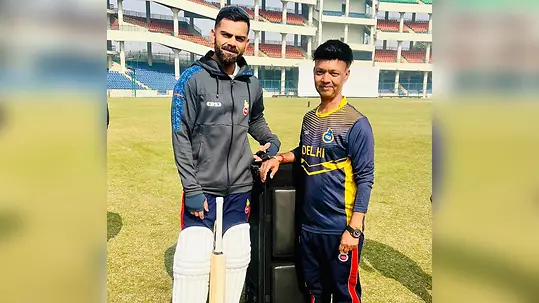
Sury, who works as the Chief of Sports at DDCA, further explained that there are several tests in RTP. “There are several tests involved in this process. These include checking the range of movement and conducting strength tests. The BCCI had introduced RTP, which stands for Return to Play. As part of this process, they have also included hop testing. First, we check whether there is any pain when the player performs a double-leg jump. Then, he is asked to perform hop tests on a single leg. After that, he is asked to hop in a straight line. Then, he has to hop in a zigzag pattern, crossing from one side of the line to the other. There is also a test in which he has to perform four to five consecutive long-distance hops without placing the other leg on the ground. This is how the process works,” Sury explained.
“After that, the trainers get involved. This is the physio’s part of the assessment. The physio observes the player and then gives his clearance, saying that he is fit from his side and can now move on to the trainer. What does the trainer do? He gets the player to perform sprints and acceleration drills. He also conducts tests to assess high-speed running tolerance.
“After the trainer’s job is done, the coaches are also involved in the RTP. They also perform some specific movements related to batting, bowling and fielding. Coaches are involved in this process as well, and they assess these movements. Sudden changes of direction are also tested. For example, we make players run in figure-of-eight patterns. They have to run through these patterns and suddenly change direction while maintaining their speed. Along with this, the coach also gets involved. If the player is a bowler, the bowling coach will be involved in the process. What happens next is that the player is taken through match simulations. Initially, they start by getting him to bowl a certain number of overs. For example, a player might be told to bowl around 30 balls at 60% intensity in the beginning. Gradually, the intensity is increased,” Sury added..
“However, when we talk about RTP, or Return to Play, we want the player to be able to bowl at the same level as he was bowling before his injury. It should not be below that level. Ideally, he should be able to perform even better, but at the very least, we need him to reach his previous level. The bowling coach then assesses him according to the format he is preparing for. Whether he is preparing for ODIs, T20Is or multi-day cricket, the requirements will differ. For example, if he is preparing for ODIs, can he bowl 8 to 10 overs in a day? Sometimes, coaches also ask the player to bowl one over and then take a break. Essentially, it is done exactly like a match. After that, they make the player participate in matches. Right now, the plan is for him to play matches. India have these matches lined up.
“His fitness will be assessed through that one match. He will play one match, and that will help assess his fitness. After that, they also ask the player about his RPE, which stands for Rate of Perceived Exertion. After playing the match, we give him a rating on a scale of zero to 10. How much fatigue are you experiencing? Are you feeling any pain or not? How are you feeling? Sometimes, a player might say that he got very tired or that his particular leg feels very heavy. In that case, we assess whether he needs physiotherapy or not. Or the player might say, No, no, everything is fine. I am not feeling anything. So, RPE is also assessed after the match. The player gives his own feedback, and then the coaches assess him. Finally, the physio gives his clearance, confirming that the player is fit to play.”
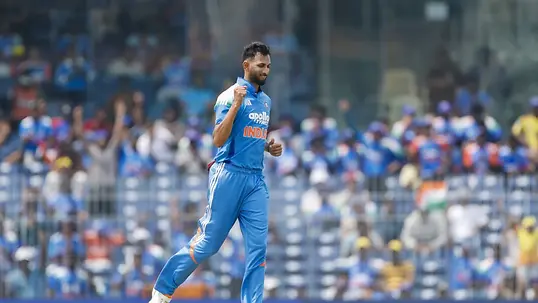
Sury further revealed that a player who has suffered a hamstring injury once has a higher chance of sustaining it again. A player has to keep training and rehabilitating until he plays.
“Anyone who has suffered a hamstring injury once has a 60% higher chance of sustaining it again. So, he will have to continue training that hamstring and keep working on his rehabilitation until he plays. Otherwise, the injury can happen again. The second thing is that if you fail a test once, it depends on how you are feeling after a week, 10 days or 15 days. You can inform your physio or trainer yourself when you feel that you are ready and available to return. Then, the entire process will start again for you,” he signed off.