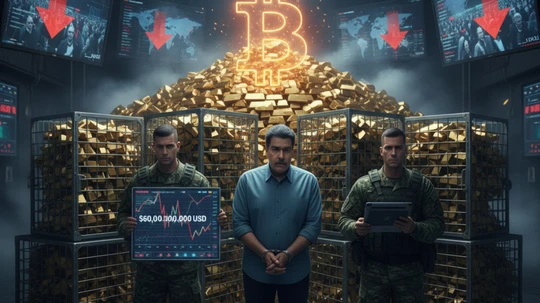
Following the removal of President Nicolás Maduro last weekend, global attention has turned to Venezuela’s oil reserves. But experts say the country may also be sitting on another valuable and far less visible asset – bitcoin.
Venezuela is believed to hold a significant amount of the cryptocurrency, potentially worth billions of dollars, according to experts who spoke to CNBC. The exact figure, however, remains highly uncertain.
“It’s very fair to assume Venezuela had meaningful exposure to bitcoin,” Gui Gomes, founder and CEO of Latin America-based bitcoin firm OranjeBTC told the outlet. “Given that they were excluded from the global financial system, probably they had gold, bitcoin and some dollars under their mattress.”
Years of US sanctions severely restricted Venezuela’s access to international financial markets. To bypass those limits, experts say the Maduro regime likely experimented with cryptocurrencies. Bitcoin’s decentralised and private nature makes it nearly impossible to determine how much the country may hold or where those assets are stored.
Speculation intensified after digital publication Project Brazen claimed Venezuela could hold as much as $60 billion worth of bitcoin, citing unnamed sources. That figure has not been confirmed through blockchain analysis.
By contrast, Bitcointreasuries.net estimates Venezuela’s holdings at just 240 bitcoin, worth around $22 million, based on third-party blockchain data. That would still place Venezuela among the top government bitcoin holders globally, though experts caution that all such estimates should be treated carefully.
“There are so many [solutions] for bitcoin off the shelf, it is actually very easy for you to meet the threshold of high security” using covert methods, said Diogo Mónica, general partner at Haun Ventures.
According to Gomes, any bitcoin held by Venezuela is likely spread across thousands of wallets controlled by military officials and political insiders, making tracking extremely difficult.
“If they’re willing to send a guy on a private jet with a ton of gold on board, it would make a lot of sense that they would also seek to utilise crypto assets for both store of wealth and also for cross-border trade,” said Andrew Fierman, head of national security intelligence at Chainalysis.
Venezuela has a long history with crypto. It launched the state-backed “petro” token in 2018, which ultimately failed and was discontinued in 2024. Authorities also cracked down on bitcoin mining, arresting miners and seizing assets before banning the practice entirely.
What happens to any bitcoin holdings now is unclear. “Anytime you have a chaotic regime change, the assets of that country become unstable,” said Sebastian Pedro Bea, president and CIO of ReserveOne.
Bea added that US authorities could also seize bitcoin linked to sanctioned Venezuelan officials. “And when they do that, that bitcoin can go right to Treasury,” he said.
Whether sold, seized or held, Venezuela’s potential bitcoin stash could have ripple effects across global crypto markets.