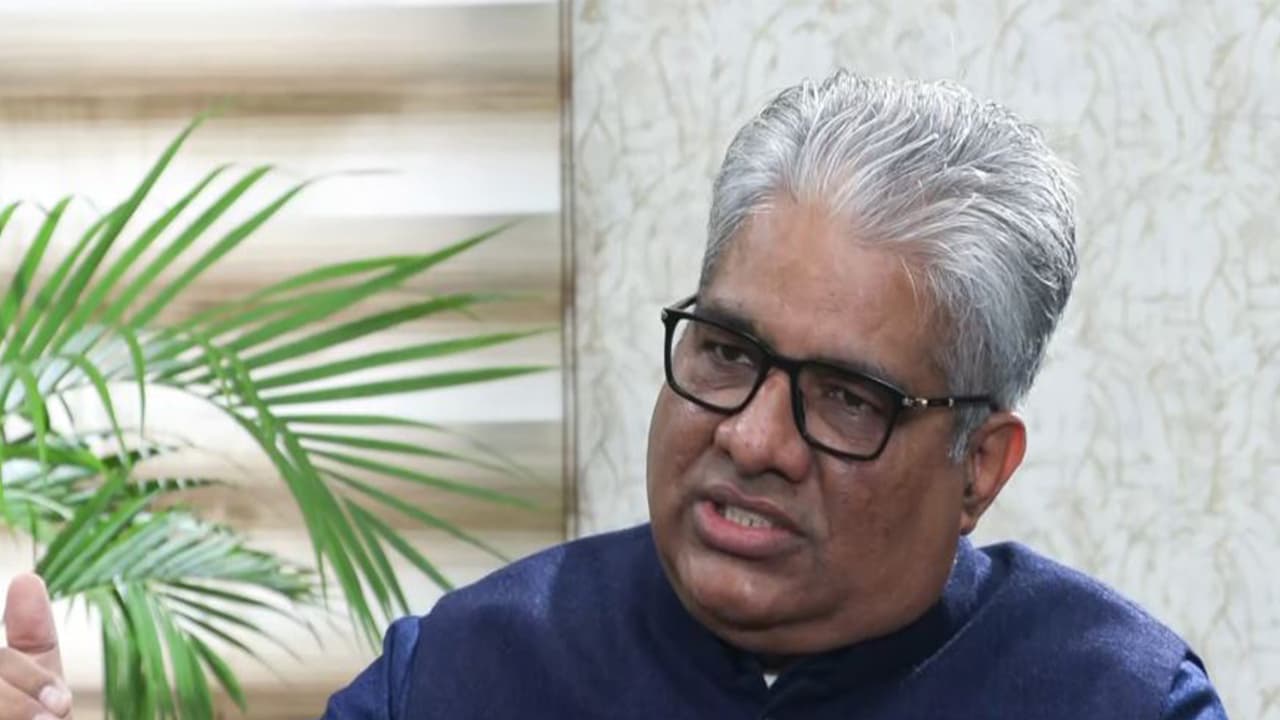
Union Minister Bhupender Yadav stated that Delhi-NCR’s air pollution is primarily due to PM2.5 and PM10 from vehicles, industry, and dust, exacerbated by adverse weather and traffic. GRAP-IV measures have been invoked to tackle the issue.
Primary Causes of Delhi-NCR Air Pollution
Union Environment Minister Bhupender Yadav said that air pollution in Delhi-NCR is primarily caused by two key parameters–PM2.5 and PM10–with emissions from vehicles, industries, construction dust, and adverse meteorological conditions playing a major role.
In an exclusive interview with ANI, Yadav explained that PM2.5 pollution increases due to higher carbon emissions, as micro-particles containing ozone, lead, carbon and sulphur enter the air because of industrial activity, vehicular emissions and other human activities. “Then in PM10, dust and its larger particles are involved. When these mix and meteorological conditions worsen, the situation becomes more serious. When the wind stops blowing, and continuous emissions keep happening, pollution settles in the air,” he said.
Impact of Traffic Congestion
He also emphasised the importance of traffic management, noting that congestion significantly increases pollution levels. “We have emphasised smart traffic management. There are about 60 locations with severe congestion. During peak hours — from 8 to 10 in the morning and 4 to 7 in the evening — when mist and fog are more, if thousands of vehicles remain idle in long queues, pollution from vehicles increases sharply,” he added.
Role of Meteorological Conditions
Bhupendra Yadav said that air quality has shown improvement on several days, but adverse meteorological conditions during December continue to pose challenges. He explained that Western Disturbances during this period sometimes lead to rainfall, which helps improve air quality. However, when these systems pass without rain, wind speed drops, causing particulate matter such as PM 2.5 and PM 10 to remain suspended in the air, leading to deterioration in air quality.
Government Implements GRAP-IV Measures
In response to the deteriorating air quality, the Commission for Air Quality Management (CAQM) has invoked all measures under the Graded Response Action Plan (GRAP) Stage-IV across Delhi-NCR. The restrictions under GRAP-IV include a ban on non-essential construction activities, the entry of certain diesel vehicles, and enhanced enforcement to curb pollution sources.
Enforcement Drives and PUCC Checks
The Government has also stepped up its campaign on vehicular emissions, with over 1 lakh PUCC (Pollution Under Control Certificates) issued in the past four days as enforcement drives intensified across Delhi.
Multi-agency checks by Delhi Traffic Police, Transport Department (Enforcement), and ANPR-based teams resulted in a substantial number of challans against vehicles without valid PUCC and for GRAP violations. In total, over 12,000 challans were issued in three days, and over 16,000 vehicles were checked to ensure compliance.
MCD Imposes Fines on Violators
Meanwhile, the Municipal Corporation of Delhi (MCD) has imposed a total of Rs 54.98 lakh in fines on those engaging in biomass burning, illegal dumping of construction and demolition waste, and other violations during December.
According to the release, a total of 7,023 challans, totalling Rs 43.26 lakh in penalties, have been issued during the enforcement drive to check illegal dumping of construction and demolition waste, causing air pollution across Delhi. The fines were imposed in accordance with the Provisions of the DMC Act, Solid Waste Management Regulations and the NGT directions. MCD also issued challans totalling approximately Rs 11.72 lakh to 420 violators for burning biomass and garbage across its zones during this period; hence, in total, fines of Rs 54.98 lakh were imposed on violators, it said.
(Except for the headline, this story has not been edited by Asianet Newsable English staff and is published from a syndicated feed.)