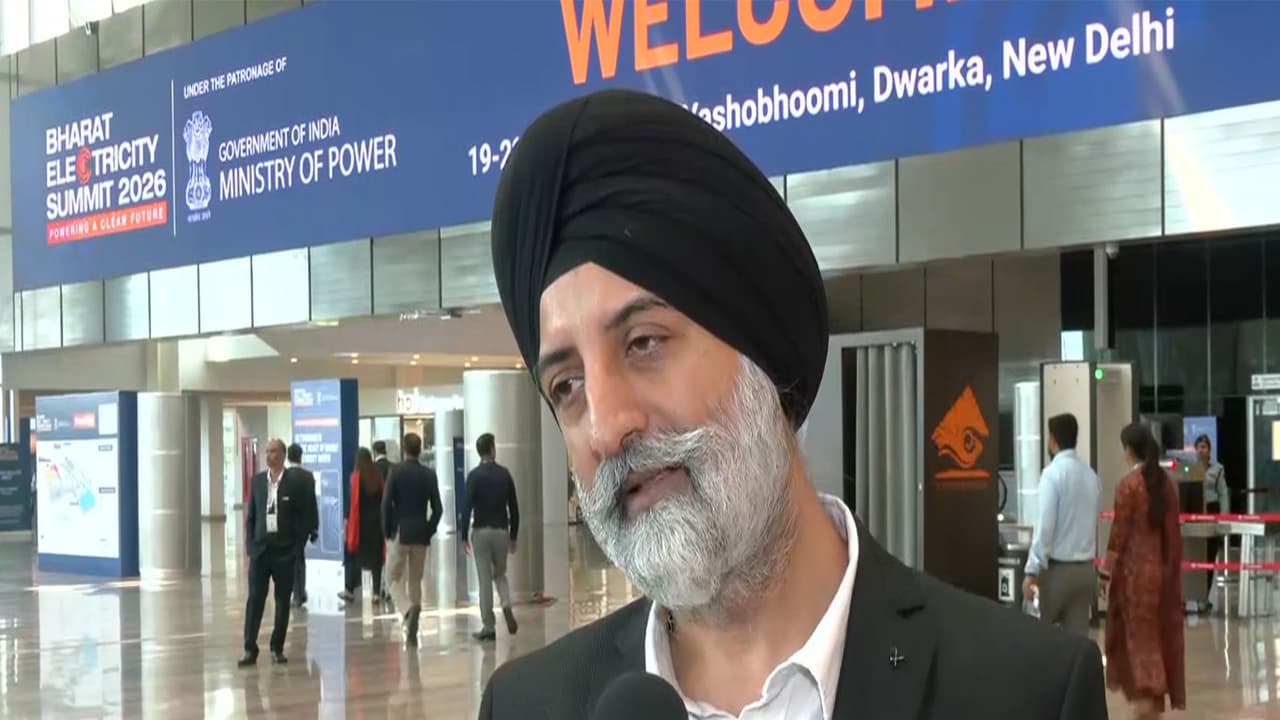
Vedanta Power’s CEO, Rajinder Singh Ahuja, said reliance on domestic coal insulates the company from global tensions and price volatility, ensuring operational stability, despite challenges from rising imported coal and crude-linked fuel costs.
Reliance on domestically sourced coal has shielded Vedanta’s Power operations from global geopolitical disruptions, mainly in recent conflicts in the Middle East, Vedanta Power’s CEO Rajinder Singh Ahuja told ANI today at the Bharat Electricity Summit 2026. “Most of our plants are based on Indian coal, which largely insulates us from global tensions and supply-side uncertainties seen in international energy markets,” Ahuja said on the sidelines of the Bharat Electricity Summit held in the national capital, adding that domestic sourcing ensures stability in both fuel availability and pricing.
Mitigating Imported Coal Price Impact
However, he acknowledged that certain assets remain exposed to international price movements. The Meenakshi plant in Andhra Pradesh, designed to run on imported coal, has been impacted by rising global coal prices. “With all this tension, the imported coal prices have flared up,” he said.
To mitigate this, the company has reworked its fuel mix. “We have now started using 80 per cent of Indian coal in that plant, which was designed for imported coal,” Ahuja said, adding that the shift supports operational continuity while balancing costs.
He described the situation as both a challenge and an opportunity for the company. “That is an opportunity for us to have sustainability of operations,” he said.
Pressure from Rising Crude-Linked Fuel Costs
Rising crude-linked fuel costs are adding pressure on operations at Vedanta’s power business, even as the company works to manage broader input cost volatility, he said. “We need start-up oil, which is LDO, and since the fuel prices have gone from USD 68 per barrel to USD 120 per barrel, that is definitely an impact which is coming on us,” Ahuja said.
He explained that Light Diesel Oil (LDO), used during plant start-up and stabilisation, has become significantly more expensive due to the surge in crude prices, increasing operational costs for power producers.
Ahuja said that while such auxiliary fuel costs are rising, the company’s dependence on domestic coal for most of its plants has helped limit exposure to global market volatility. “Fortunately, most of our plants are Indian coal-based, so that immunes us from the global tensions,” he said.
He said that the summit is a great congregation of industry and policymakers, and it provides opportunities for collaboration across domestic and international stakeholders.
Future Outlook and Expansion Plans
Vedanta’s power business, which is set to be demerged into an independent entity following regulatory approvals, aims to capitalise on India’s growing electricity demand. “We would love to be among the top five players,” Ahuja said, outlining the company’s expansion ambitions.
Call for Policy Improvements
On the policy front, he called for improvements in the operating environment. “We are looking for an environment where ease of doing business is further improved,” Ahuja said, while emphasising the need for timely payments from government buyers.
Biomass Co-firing Compliance Challenges
He also highlighted challenges related to regulatory compliance, particularly biomass co-firing requirements. “Last year they said 5 per cent biomass has to be used… but there was no one in the market who could supply,” he said, adding that this year we are one of the top companies who have used 5 per cent and above biomass, but now government is looking at penalising for the last year.
“We want government to look at these policy changes as a win-win… rather than penalising,” Ahuja said.
Despite near-term pressures, Ahuja expressed confidence in the sector’s long-term growth, citing strong demand fundamentals and policy support. (ANI)
(Except for the headline, this story has not been edited by Asianet Newsable English staff and is published from a syndicated feed.)