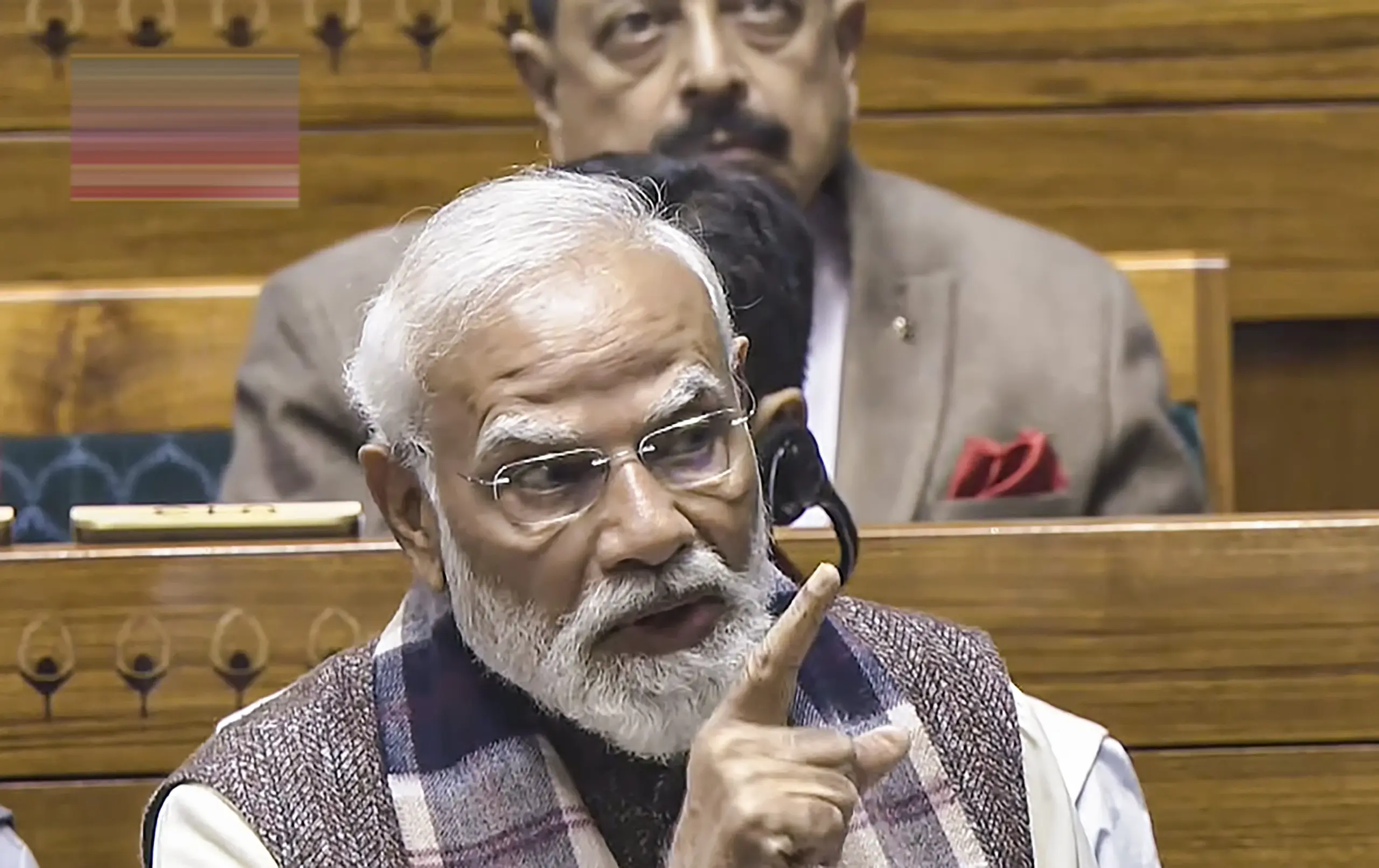
PRIME Minister Narendra Modi’s decision to open the Lok Sabha debate on Vande Mataram on its 150-year mark is significant. Bankim Chandra Chatterjee’s composition played a historic role in inspiring Bengal’s revolutionaries and galvanising the freedom struggle.
Yet, the political context in which the government has chosen to spotlight it cannot be ignored, particularly with West Bengal heading into a high-stakes Assembly election. Modi’s speech celebrated Vande Mataram as a unifier, but it also carried familiar political undertones. By repeatedly invoking the Congress’s past positions and resurrecting historical controversies, the PM seemed intent on not only honouring a national song but also sharpening ideological divides. In West Bengal, the land where the song was born, cultural identity is interwoven with politics. Vande Mataram is an emotive symbol and, therefore, a strategic one.
The concern lies in the Modi government’s tendency to turn cultural icons into political battlegrounds. A debate meant to reflect on shared heritage risks being used to score electoral points. The timing is deliberate as polls are due in West Bengal in a few months. Even as the Trinamool Congress is entrenched in the state, it faces anti-incumbency. Mamata Banerjee’s endorsement of the song’s discussion in Parliament shows that she does not intend to cede that terrain. Unfortunately, lost in this competition is the need for sober reflection: Bengal today grapples with unemployment, migration and political violence. Cultural pride, while essential, cannot be a substitute for governance.
At 150, Vande Mataram should have been an opportunity to reinforce unity and acknowledge the plurality in nationalism. Instead, the debate risks becoming another flashpoint in a polarised climate. The country deserves commemorations that rise above electoral compulsions. The leadership must use history to unite, not divide.