New Delhi: Uttarayan is one of the most important solar events in the Hindu calendar and holds deep cultural and spiritual meaning, especially in Gujarat, where Makar Sankranti is popularly known as Uttarayan. The festival marks the moment when the Sun changes its direction and begins its northward journey, a transition associated with positivity, renewal, and growth.
In 2026, Uttarayan will be celebrated with great enthusiasm, blending devotion, tradition, and community celebration.
Uttarayan 2026: Date and Time
- Uttarayan Date: Wednesday, 14 January 2026
- Uttarayan Sankranti Moment: 03:13 PM
- Makar Sankranti: Wednesday, 14 January 2026
All timings are based on local time in India, calculated as per Panchang, where the day is considered from sunrise to sunrise.
What Is Uttarayan?
Uttarayan refers to the six-month period when the Sun moves northward after entering the Capricorn (Makara) zodiac sign. This solar shift marks the end of the Sun’s southward journey (Dakshinayan) and is considered highly auspicious in Hindu belief.
In Gujarat, the day of Makar Sankranti itself is celebrated as Uttarayan, while the following day is known as Vasi Uttarayan.
Rituals Observed on Uttarayan
1. Worship of Lord Surya
Uttarayan is dedicated to Lord Surya, the Sun God. Devotees wake up early, bathe, and offer water to the rising Sun while praying for health, strength, and clarity in life.
2. Charity and donations
Giving food, clothes, grains, or money to the needy is considered highly auspicious on Uttarayan. Charity performed on this day is believed to bring lasting merit.
3. Holy bath
In many parts of India, people take a ritual bath in rivers or water bodies, symbolising purification and renewal.
4. Preparing seasonal foods
Traditional foods made from sesame seeds, jaggery, peanuts, and winter vegetables are prepared. In Gujarat, dishes like undhiyu and chikki are essential to the celebration.
5. Kite flying
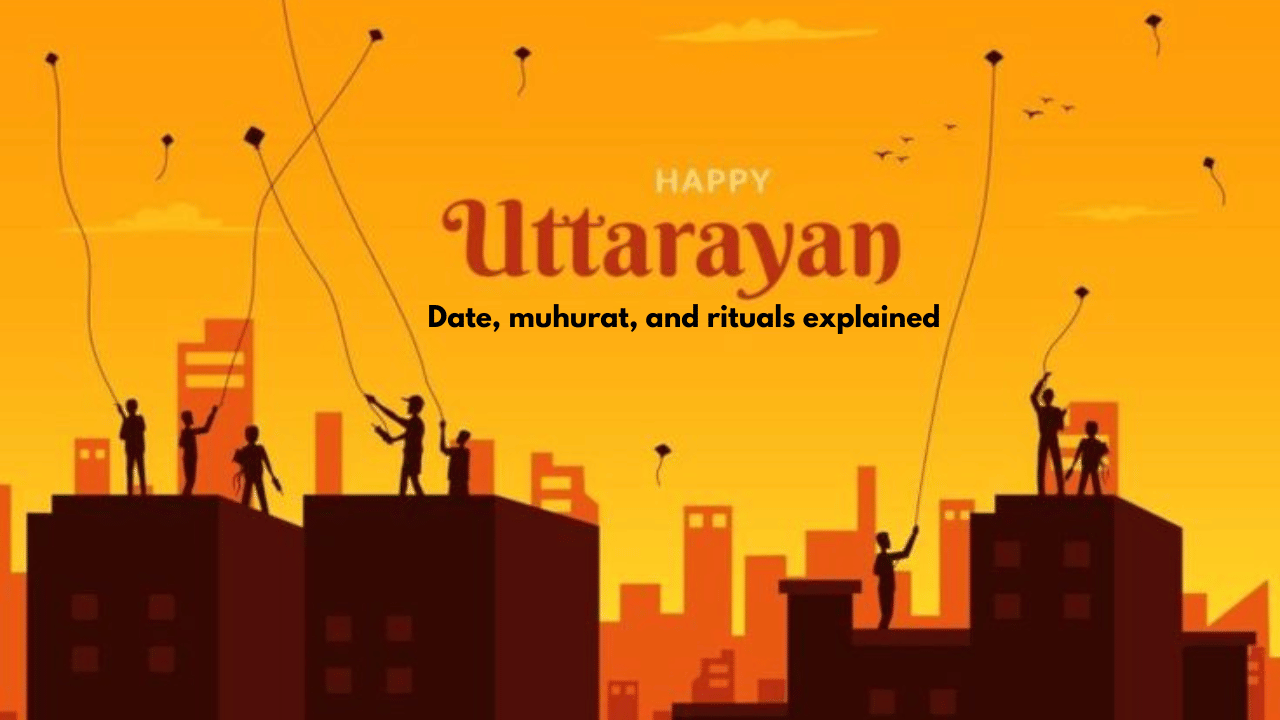
In Gujarat, kite flying is the most visible ritual of Uttarayan. Families gather on rooftops, and the sky fills with colourful kites, symbolising joy, freedom, and the welcoming of longer days.
Spiritual Significance of Uttarayan
Spiritually, Uttarayan marks a shift toward light, growth, and awareness. It is believed that:
- Positive energies increase during Uttarayan
- Efforts made during this period yield better results
- The mind becomes more receptive to spiritual practices
Ancient texts describe Uttarayan as a favourable time for meditation, discipline, and setting new intentions.
Uttarayan and life symbolism
Uttarayan is often seen as a reminder that:
- Darkness gives way to light
- Effort leads to progress
- Discipline brings stability
The Sun’s northward movement symbolises moving forward with purpose, leaving behind stagnation and confusion.
Cultural importance in Gujarat
In Gujarat, Uttarayan is not limited to rituals. It is a state-wide cultural celebration where:
- Families reunite
- Communities gather on rooftops
- Neighbours share food and laughter
Cities like Ahmedabad, Surat, and Vadodara come alive with festive energy, making Uttarayan a unique blend of devotion and joy.
Uttarayan vs Makar Sankranti
While the festival is called Uttarayan in Gujarat, it is known as Makar Sankranti across most of India. Despite different names and customs, the underlying meaning remains the same: celebrating the Sun’s transition and the promise of renewal.
Uttarayan 2026 is more than a festival. It is a powerful reminder of balance between nature and life. Whether observed through prayer, charity, food, or kite flying, the essence of Uttarayan lies in gratitude, hope, and moving forward with clarity.
Written by: Tanya Singh, Astropatri.com. For feedback, please write to [email protected].