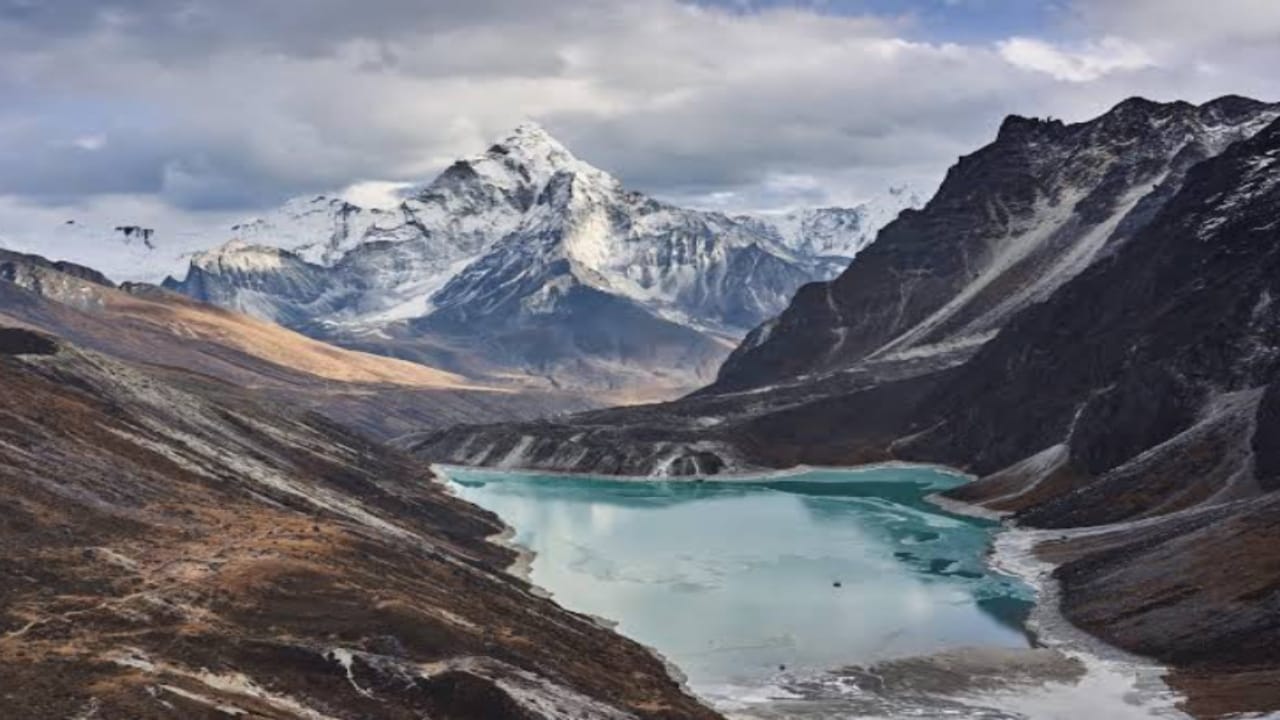
Dehradun: Climate change is rapidly altering the cryosphere — the system of glaciers, snow, and permanent ice — in the Hindu Kush-Himalayan region.
A recent study warns that rising temperatures are driving glacier retreat, expanding glacial lakes, and increasing the risk of disasters across Uttarakhand and neighbouring areas.
Findings of the Study
The research, conducted by Professor Biswambhar Prasad Sati of Mizoram University and Surajit Banerjee from Chamoli, was published in the international journal ‘Earth Science Reviews’. It highlights that between 1980 and 2020, temperatures in the region rose by 0.2 to 0.3 degrees Celsius per decade. This rate is nearly double the global average. In some parts of the Eastern Himalayas, warming has been even faster.
Impact on Glaciers and Lakes
Rising temperatures and changing rainfall patterns are causing glaciers to retreat rapidly and snow cover to decline steadily. As glaciers melt, glacial lakes are expanding at an alarming pace. This increases the risk of glacial lake outburst floods (GLOFs), which can cause sudden, destructive flooding downstream.
Professor Sati warns that if current trends continue, nearly 68 percent of the Himalayas’ snow cover could disappear by the end of the 21st century. The Karakoram region may lose around 26 percent. Such losses would destabilize the fragile mountain ecosystem and threaten millions of lives.
Permafrost and Mountain Stability
The study also points out that warming is affecting permafrost — permanently frozen ground in high-altitude areas. The active melting layer of permafrost is increasing by 2 to 23 centimeters each year. This weakens mountain slopes, leading to more landslides, rockfalls, and slope collapses.
Impact on Rivers and Water Security
Glacier meltwater is crucial for Asia’s major rivers, including the Indus, Ganges, Brahmaputra, Tarim, and Amu Darya. Around 33 to 42 percent of their annual flow comes from glaciers and snowpacks. These rivers provide water to nearly 869 million people.
However, rapid glacier melt is changing the timing of river flows. Water levels are rising earlier in the pre-monsoon period, increasing flood risks. This shift could severely affect agriculture, hydropower, and water security in South and Central Asia.
Local Impacts in Uttarakhand
In Uttarakhand, expanding glacial lakes and unstable slopes pose a direct threat to communities living in high-altitude regions. Past disasters, such as the Kedarnath floods of 2013, have shown how vulnerable the state is to climate-driven hazards. Experts warn that without urgent action, such events could become more frequent.
Need for Monitoring and Action
The researchers emphasize the need for improved monitoring of the Himalayan cryosphere. Regional cooperation among South Asian countries is vital, as rivers and ecosystems cross national boundaries. They also call for climate-resilient infrastructure and local adaptation strategies to reduce risks.
Professor Sati and Banerjee stress that scientific research must be combined with community-level awareness and preparedness. Without timely action, the degradation of glaciers, snowpack, and permafrost could destabilize one of the world’s most vital water systems.
The study serves as a warning that the Himalayas, often called the “Third Pole” and “Water Tower of Asia,” are warming faster than the global average. The expansion of glacier lakes, rising disaster risks, and threats to water security highlight the urgent need for climate action.