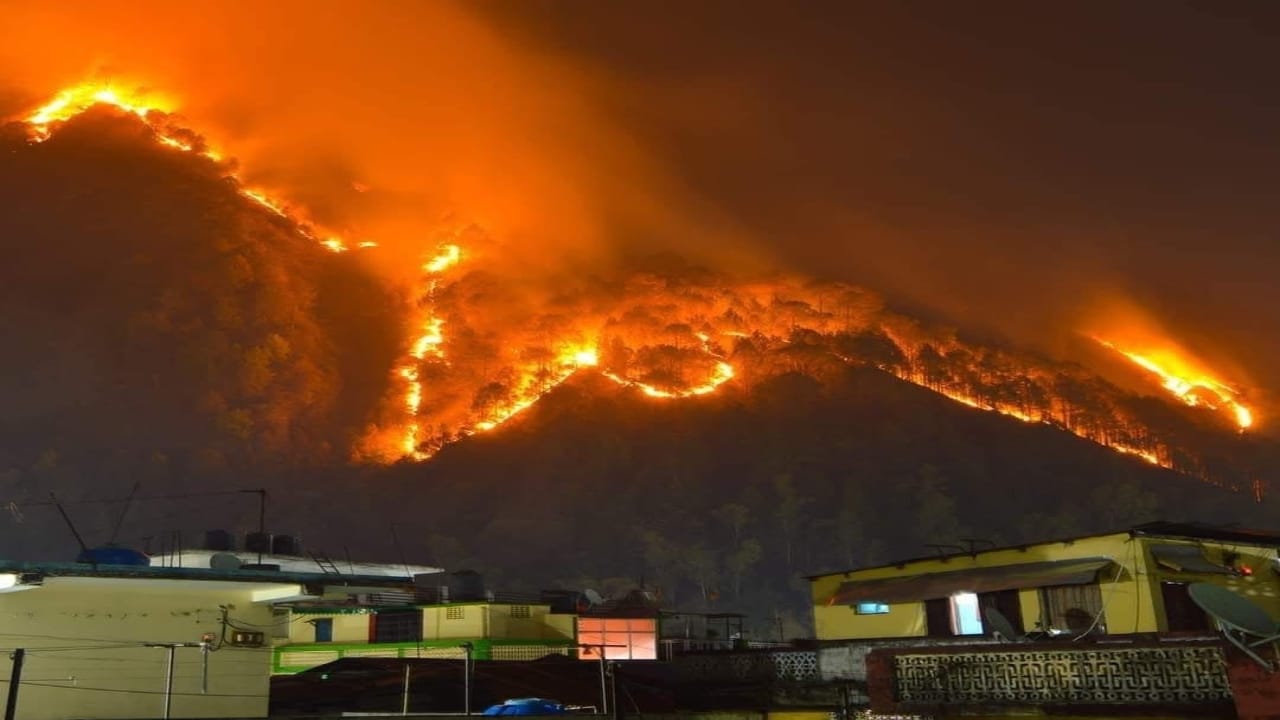
Almora: Forest fires are generally considered a major natural disaster. They burn trees, destroy animal habitats, and fill the air with smoke that harms human health.
Wildlife is killed, and the environment suffers long‑term damage. Despite these dangers, villagers in Uttarakhand point out that forest fires also bring some indirect benefits, especially in hilly and forested areas.
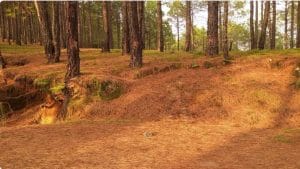
Clearing Pirul and bushes
When a forest fire breaks out, dense bushes and dry grass are destroyed. These bushes often serve as hiding places for wild animals, posing a threat to nearby villages. Their destruction reduces animal movement around human settlements, giving villagers some relief.
Another impact is the burning of “Pirul,” a thick layer of dry leaves, twigs, and pine needles that accumulates on the forest floor if no fire occurs for a long time. Pirul prevents new grass and small plants from growing. Local resident Prakash Chandra Joshi explained that when Pirul burns during a fire, the ground is cleared. After rains, fresh green grass quickly grows, which is highly beneficial for livestock.
Benefits for villagers
Pastoralists benefit the most from this new grass. Villagers take their cattle to graze in the forest, and the nutritious grass improves animal health and increases milk production. In this way, forest fires indirectly support rural livelihoods.
Some farmers also believe that the ash left behind after a fire adds minerals to the soil, increasing fertility. This helps grass and small plants grow faster. Though this benefit is limited, villagers view it positively.
Harm caused by forest fires far outweighs the benefits
However, experts warn that the harm caused by forest fires far outweighs the benefits. Uncontrolled fires destroy large trees, kill wildlife, and damage the ecosystem. The smoke pollutes the air, affecting both humans and animals. Long‑term environmental damage reduces biodiversity and weakens the natural balance.
Therefore, while villagers may see short‑term relief from Pirul and new grass growth, forest fires remain a serious threat. Preventing and controlling them in time is crucial. Only safe forests can ensure the safety of villages, people, and nature.
Forest fires in Uttarakhand are disasters that harm forests and wildlife, yet they also clear Pirul and bushes, allowing new grass to grow and indirectly supporting villagers. The challenge lies in balancing these limited benefits against the far greater risks to the environment.