The acronym GOAT has been in currency for a few decades, often to describe athletes whose on-field achievements have transcended generations.
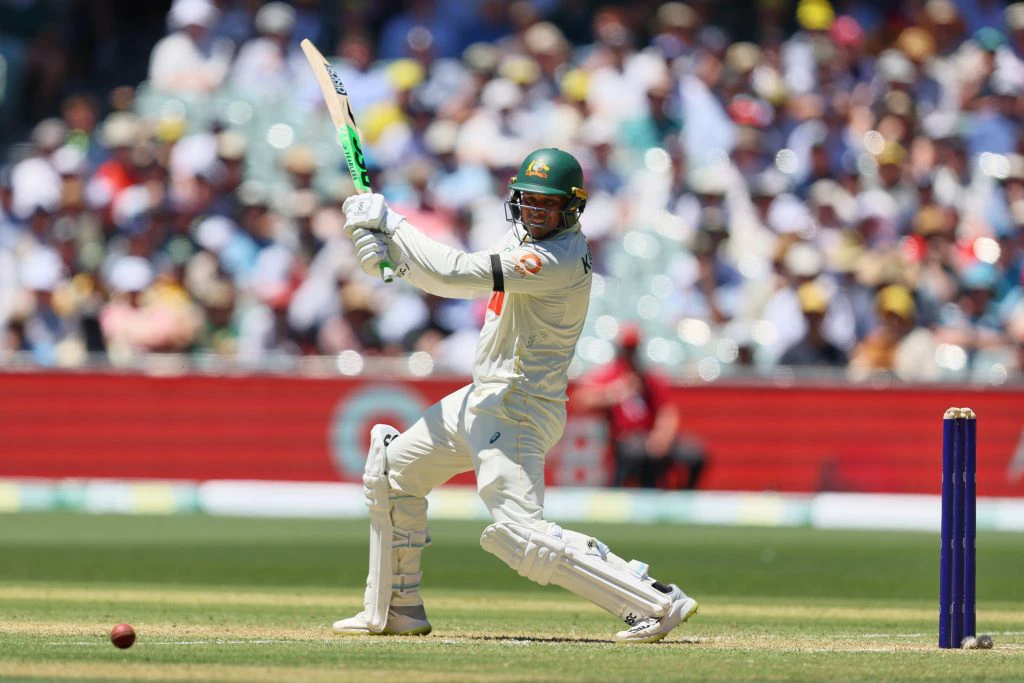
If there was a category for retirement speeches that go beyond the sport and offer a mirror to society, Australian cricketer Usman Khawaja would be a strong contender to top the list.
Historically, retirement speeches and press conferences have always been feel-good, emotional, and sometimes heartbreaking. Players get nostalgic and express gratitude, while hard-nosed journalists asking softball questions. Everyone moves on in a few days.
But some speeches linger. For fans earnestly invested in a sport, such speeches invariably bring heartache, even grief. The great American baseball player Lou Gehrig announced he has ALS (now known as Lou Gehrig’s Disease). It was a cultural turning point when Magic Johnson stunned the world by announcing he was retiring immediately after testing positive for HIV. Kobe Bryant broke the mould by announcing his retirement through a poem titled ‘Dear Basketball’. More recently, Roger Federer’s retirement became internet-famous not just for his words, but for the visuals of him and his greatest rival, Rafael Nadal, sitting on the bench crying together. And closer home, Sachin Tendulkar’s meticulously written retirement speech, scribbled on a piece of paper, brought a one-sport nation to tears.
In terms of skills, Khawaja doesn’t belong to this league of elite sportspersons, but his retirement press conference is arguably the most searing sociological critique. It included polarising keywords like Gaza, Islamophobia, and right-wing politics. He was openly critical of the media, former players, and – even if indirectly – the people of his adopted country, Australia.
It’s important to understand why.
Khawaja was born in Islamabad, before moving to Australia at the age of five. In 2011, he became the first Muslim and first Pakistani-born player to wear the much-romanticised Baggy Green (a term to describe the hat the Australian Test team wears). He has had a distinguished career, punctuated by the most stunning comebacks. He has courted controversy, and repeatedly copped it for speaking up. While his importance stems from being a first in multiple categories, his legacy has been built on his refusal to simply fit in – something he tried in his younger days. It’s worth watching the press conference to understand the many moments he felt let down.
Culturally, everything Khawaja said felt out of place given the moment he chose, and definitely given how we, as an audience, are conditioned. He makes deliberate references to Allah, speaks of their hardship as a family, how he couldn’t find social acceptance growing up, how he would hang out late to fit in with his teammates while they drank (and he didn’t), and how white players who drink and get injured were lads, while he was lazy. “If you want to talk about integration, I’ve got a white wife who I love and cherish, and I’ve got half-Australian, half-Pakistani kids.” Listening to him is both disturbing and refreshing.
Yet, in saying what he did, and even invoking Indian-origin cricket journalist Bharat Sundaresan, who has faced discrimination and been asked for his ID at cricket grounds while white colleagues weren’t, Khawaja has set the bar for what free expression can look like. Over the years Sundaresan has spoken openly about the micro-aggressions he has experienced as a reporter, and found support from many Australian cricketers including Khawaja.
It’s not hard to find old social media posts from India’s most prominent sportspersons complaining about administrative matters. But for over a decade they have stayed famously quiet on topics that could be perceived to be critical of the administration, and hurt their personal interests in any way. Though they’ve been happy puppets, forming a cross-sport hashtag team to condemn Rihanna for bringing up the farmer protest.
When Mohammed Shami was targeted for his religious identity, silence from within Indian cricket was near total (Virat Kohli was among the few notable exceptions). When Indian players such as Mohammed Siraj reported racial abuse from spectators at the Sydney Cricket Ground in 2021, the response from the Australian camp largely took the form of official regret and condemnation. Well before that series, however, Usman Khawaja had already spoken publicly and in detail about racial stereotyping in Australian cricket, arguing that abuse and exclusion are sustained by media narratives and assumptions about who belongs, rather than being isolated lapses of behaviour.
Is it a sportsperson’s prerogative to speak up? Do they need to choose the path of activism, or should they simply hone their craft? The easy argument: there are consequences everywhere, not just in countries with authoritarian regimes. Which is why they refrain from anything that can be polarising. Michael Jordan explained it most succinctly by saying “Republicans buy sneakers, too”.
Khawaja is not Jordan. His priority is not selling shoes. If Jordan’s era was about the commodification of the athlete, Khawaja’s legacy will be about the reclamation of the athlete’s humanity. And for that – beyond his runs, the commercial pilot license, and recent MBA enrolment – his press interaction has to count among the Greatest Of All Time.
Rahul Fernandes is a Mumbai-based writer who covered cricket from the maidans to the World Cup before spending nearly a decade in Silicon Valley Big Tech.