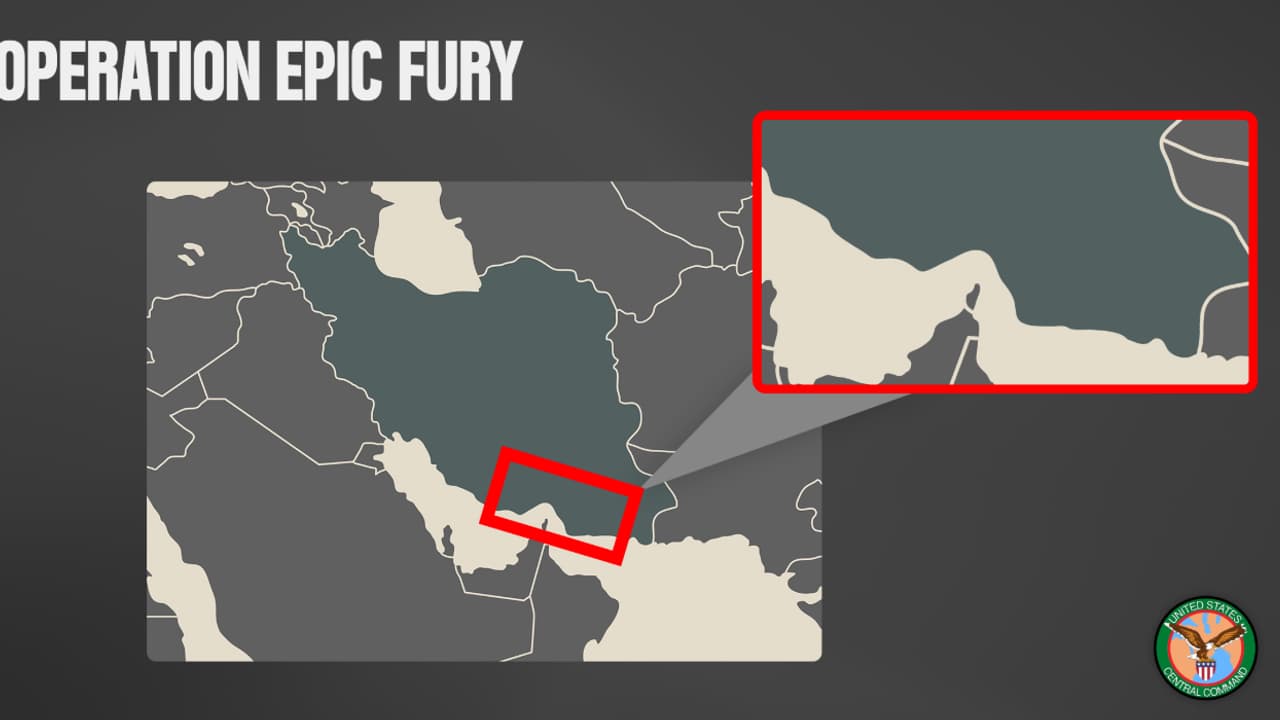
The United States launched major airstrikes on Iranian military infrastructure near the Strait of Hormuz, using powerful 5,000-pound “bunker-buster” bombs. The operation targeted hardened missile sites that officials claimed threatened international shipping in the vital oil transit corridor.
Tensions in the Middle East escalated sharply after the United States carried out major airstrikes on Iranian military infrastructure near the strategic Strait of Hormuz, using some of the most powerful weapons in its arsenal. According to US military officials, the operation targeted hardened missile installations believed to threaten international maritime traffic in the crucial oil transit corridor.
The strikes reportedly involved deep-penetrator “bunker-buster” bombs weighing around 5,000 pounds, designed to destroy underground or reinforced military facilities. Such munitions can punch through thick concrete and earth before detonating, making them effective against concealed missile launch sites and storage bunkers.
In a statement posted on social media, US Central Command said, “US forces successfully employed multiple 5,000-pound deep penetrator munitions on hardened Iranian missile sites along Iran’s coastline near the Strait of Hormuz.” Officials added that “the Iranian anti-ship cruise missiles in these sites posed a risk to international shipping in the strait.”
Scroll to load tweet…
The Strait of Hormuz is one of the world’s most strategically significant waterways, handling a substantial share of global energy shipments. Any disruption in the region can trigger sharp fluctuations in oil prices and threaten economic stability across multiple countries. Analysts say the US strikes were aimed at deterring further Iranian actions that could endanger commercial vessels navigating the narrow maritime route.
Also Read: PM Modi condemns attacks on UAE in call with President Mohamed bin Zayed
The military action comes amid broader regional hostilities involving Iran, Israel and several Gulf states, with missile and drone attacks reported across different locations. The latest escalation has deepened fears of a prolonged conflict that could draw in additional international players and intensify geopolitical rivalries.
US officials have defended the strikes as a necessary step to safeguard freedom of navigation and prevent further threats to shipping lanes. However, the operation has also drawn criticism from some global leaders and allies, who remain reluctant to participate in direct military action in the region.
Security experts warn that Iran may still retain mobile missile systems and underground stockpiles capable of launching retaliatory attacks, highlighting the fragile security situation around the Persian Gulf. The risk of miscalculation or further escalation continues to loom large, with global markets closely watching developments.
The unfolding crisis underscores the strategic importance of the Strait of Hormuz and the broader Middle East, where military operations, energy security concerns and diplomatic tensions are increasingly intersecting. As both sides signal determination to defend their interests, the possibility of wider confrontation remains a key concern for the international community.
Also Read: Iranian ballistic missile strike kills two in central Israel: Report