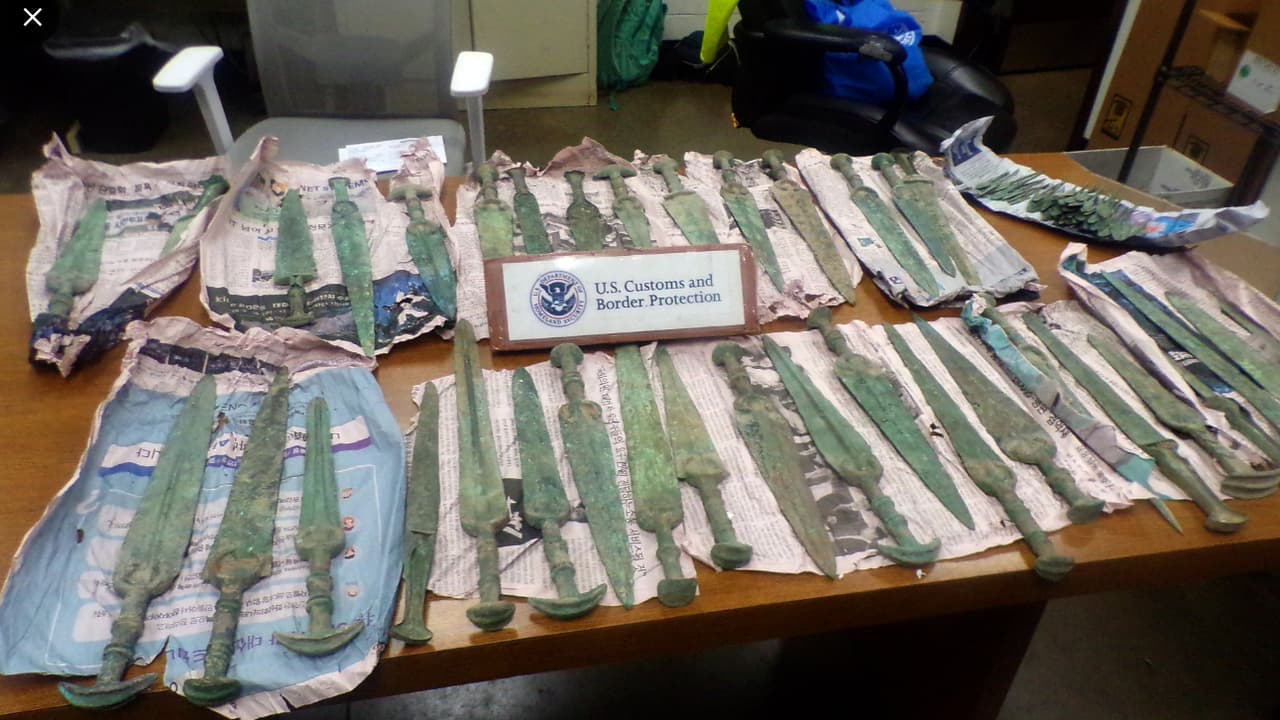
<p>A US seizure of 4,000-year-old swords linked to Iran highlights its deep-rooted weapons legacy, now reflected in advanced missiles, drones, and military strength amid the escalating regional conflict.</p><img><p>A cache of 36 Bronze Age swords, dating back nearly 4,000 years, was seized by US authorities at the Port of Philadelphia. Investigators say the artifacts originated in ancient Iran and were likely destined for the illegal antiquities market.</p><p><strong>What it reveals: </strong>Iran’s deep-rooted history in metallurgy and warfare dates back millennia.</p><img><p>The ancient swords, along with 50 arrowheads, were misdeclared and routed through multiple countries to evade detection. Experts believe the items were illegally excavated, highlighting a growing global trade in stolen cultural heritage.</p><p><strong>What it reveals: </strong>Iran-linked artifacts remain highly valued, signalling enduring cultural and strategic significance.</p><img><p>Archaeologists confirmed the weapons date back to 1600–1000 BCE, offering rare insight into early Iranian metallurgy and warfare. Officials say such seizures are crucial to protecting historical artifacts from being lost to private collectors.</p><p><strong>What it reveals:</strong> Advanced weapon-making skills existed in ancient Iran, shaping its long military tradition.</p><img><p>Iran’s growing drone arsenal represents a modern extension of its military strategy. These unmanned systems are increasingly central to its regional and asymmetric warfare tactics.</p><p><strong>What it reveals: </strong>Iran is investing heavily in asymmetric and cost-effective warfare technologies.</p><img><p>Ballistic missiles, drones, and air defence systems displayed in Tehran highlight Iran’s integrated military arsenal. The showcase underscores its preparedness for multi-domain conflict amid rising tensions.</p><p><strong>What it reveals:</strong> Iran maintains a diversified, multi-domain military arsenal for modern warfare.</p><img><p>Iran’s Zolfaghar and Zolfaghar Basir missiles are showcased in Tehran, symbolising the country’s evolving strike capabilities. These weapons reflect a shift from ancient arms to precision-guided modern warfare systems.</p><p><strong>What it reveals: </strong>Iran has transitioned from ancient arms to precision-guided missile capabilities.</p><img><p>Imagery of weapons and leadership, signalling regional influence. Such visuals highlight how Iran’s military identity extends beyond its borders.</p><p><strong>What it reveals:</strong> Iran projects power beyond borders through ideology and allied networks.</p><img><p>Missiles displayed at a defence exhibition in Tehran highlight decades of indigenous weapons development. Iran’s focus on self-reliance has strengthened its strategic deterrence.</p><p><strong>What it reveals:</strong> Iran prioritises self-reliance to sustain long-term military strength.</p><img><p>IRGC personnel operating anti-aircraft systems during a Tehran rally reflect Iran’s layered defence network. The force plays a central role in both domestic security and regional operations.</p><p><strong>What it reveals: </strong>Iran’s military structure is built for both internal control and external threats.</p>