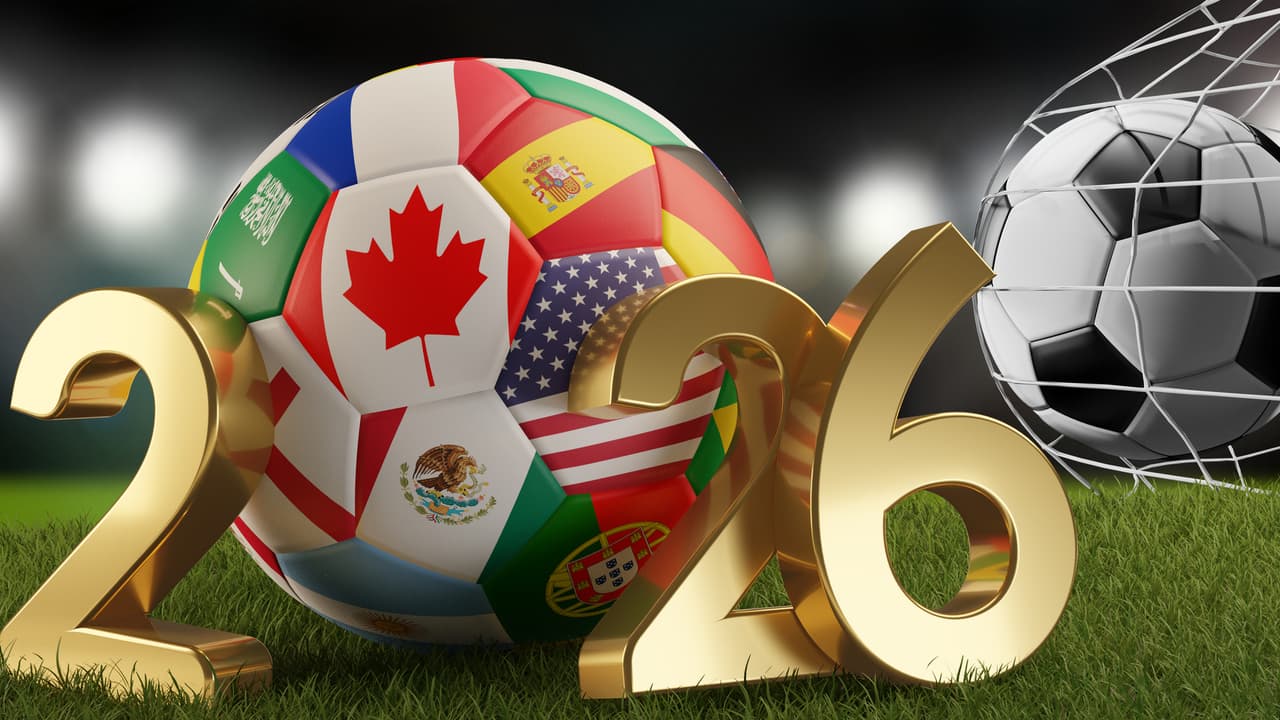
Calls to boycott the 2026 FIFA World Cup are growing amid political tensions, immigration concerns in the US, and security worries in Mexico, even as FIFA insists the tournament will go ahead.
The next edition of football’s biggest spectacle is still months away, but the conversation around it has already taken an unexpectedly political turn. As preparations continue for the tournament across North America, calls to boycott the FIFA World Cup 2026 has gathered steam in political and sporting circles.
With the United States set to host the majority of matches alongside Canada and Mexico, tensions tied to global politics, immigration policy, and security concerns are shaping an unusual debate around a competition that traditionally brings the world together.
Scroll to load tweet…
Growing calls for a boycott
The idea of a boycott gained momentum after recent remarks by US President Donald Trump about annexing Greenland from Denmark. The comments triggered discussions among football officials in Germany and France about whether their nations should consider staying away from the tournament.
For now, both countries’ football federations have pushed back against the idea of a boycott. But the conversation itself reflects how political tensions are spilling into sport.
Concerns have also intensified following recent developments in Minneapolis and wider debates about immigration enforcement in the United States. Many international fans rely on tourist visas to attend major tournaments, and immigration enforcement could become a sensitive issue during the event.
Security responsibilities are expected to involve US Immigration and Customs Enforcement (ICE), whose director has declined to commit to pausing operations during the World Cup. Human rights groups fear that visitors who participate in protests or express criticism of the US government could potentially face detention.
Former FIFA president Sepp Blatter has also weighed in on the atmosphere surrounding the tournament. Blatter, who was suspended by FIFA in 2015 before being replaced, voiced concerns about what he described as the marginalization of political opponents and violent crackdowns on immigration in the United States.
Also read: FIFA Reassures Fans After Cartel Violence Sparks Concerns Over Mexico’s World Cup Hosting Safety
A World Cup already under scrutiny
Despite the controversy, tournament organizers continue to project confidence. FIFA president Gianni Infantino recently insisted that preparations are moving forward smoothly and that interest in the competition is unprecedented.
Infantino said the demand for tickets has been extraordinary.
“The demand is there. Every match is sold out,” Infantino told CNBC.
According to him, there were 508 million ticket requests in just four weeks for roughly seven million available tickets. Requests came from more than 200 countries, a sign that global enthusiasm for the tournament remains strong despite political debates.
Infantino also highlighted the scale of the event, estimating that the expanded 48-team tournament could generate more than $11 billion in revenue for world football and have an economic impact of around $30 billion in the United States alone.
Still, critics argue that record demand does not necessarily erase concerns about civil liberties, security policies, and geopolitical tensions.
Violence fears in a host nation
While boycott discussions have centered mainly on politics in the United States, security concerns have also emerged in Mexico, another host country.
Recent violence linked to the killing of Mexico’s most wanted man shook parts of the country, including areas near World Cup host cities. Despite the alarming images broadcast worldwide, Infantino sought to reassure fans.
“Very reassured, everything’s good. It’s going to be spectacular,” he said in Barranquilla.
The violence erupted after the army killed Nemesio “El Mencho” Oseguera, leader of the powerful Jalisco New Generation Cartel. Cartel members responded with widespread attacks, blocking roads in multiple states and setting vehicles and businesses on fire.
At least 74 people were killed during the operation and subsequent clashes, according to authorities. Residents described chaotic scenes as gunmen moved through several regions.
Scroll to load tweet…
“It feels like we’re in a war zone,” Javier Perez, a 41-year-old engineer, told AFP in Puerto Vallarta while standing near burnt-out cars in a grocery store parking lot.
Mexican officials insist the situation is stabilizing and say there is “no risk” to fans attending the tournament. Guadalajara, Mexico City and Monterrey remain scheduled to host matches.
Still, some federations are watching closely. The Portuguese Football Federation said it was “closely monitoring the delicate situation currently unfolding in Mexico,” emphasizing that player and fan safety would determine whether scheduled fixtures go ahead.
Shocking discovery near a World Cup stadium
In January, boycott calls intensified after a disturbing discovery in Mexico. Authorities searching suspected clandestine burial sites in and around Guadalajara — a host city for the tournament — had uncovered more than 500 bags containing human remains. Investigators say the remains were found across multiple grave sites scattered around the city.
The discoveries are particularly alarming because some of the sites lie just miles from Estadio Akron, one of the stadiums scheduled to host World Cup matches.
Officials say at least 20 suspected grave locations have been identified so far, though authorities have only searched four of the 22 sites to date. Its worth noting that the area is closely associated with El Mencho.
Jaime Aguilar, of the Guerreros Buscadores de Jalisco — a group dedicated to locating disappeared persons — described the grim reality in the state.
“In Jalisco, the missing are made to vanish.”
“This is so it won’t be known; they want to erase all traces of the disappeared,” Aguilar said.
Members of the group noted that the findings gained wider international attention largely because of the upcoming World Cup.
“It’s several miles away, but this is happening near a World Cup stadium,” the Guerreros Buscadores said.
Nearby in Zapopan, authorities previously found 270 bags containing human remains at Las Agujas, a large property spanning 54 acres. Investigations in the area have continued since October, with additional discoveries — including 48 more bags of remains — reported later.
Scroll to load tweet…
Scroll to load tweet…
Also read: Mexico Boosts Security As Cartels Eye Colombian Recruits for Drugs Infiltration Before FIFA World Cup
Officials insist the tournament is safe
Mexican authorities, however, remain confident that the tournament can be hosted without risk to visitors.
President Claudia Sheinbaum said she had “every guarantee” that there was “no risk” for fans and tourists planning to travel for the event.
Infantino echoed that confidence.
FIFA, he said, has “complete confidence in Mexico” and in Sheinbaum to ensure everything will “turn out for the best”.
Although FIFA continues “analysing and monitoring the situation in Mexico”, tournament preparations remain on track. That includes upcoming events such as the inauguration of the renovated Estadio Azteca.
Local authorities also insist there are no plans to remove host cities from the tournament lineup.
Jalisco Governor Jesus Pablo Lemus said he had spoken with FIFA officials who confirmed there was “absolutely no intention of removing any venues from Mexico. The three venues remain completely unchanged.”
Guadalajara is currently scheduled to host four matches, including Mexico vs South Korea and Uruguay vs Spain, as well as other fixtures involving teams from Europe, South America and beyond.
Boycotts in sports: rare but powerful
While calls to boycott the 2026 FIFA World Cup are gaining attention, history shows that such actions are relatively uncommon in international sport. More often, governing bodies have chosen bans or disqualifications rather than nations voluntarily staying away.
In the aftermath of the First World War, several countries — including Austria, Bulgaria, Germany, Hungary and the Ottoman Empire — were excluded from the 1920 Summer Olympics because they had been on the losing side of the conflict. It was an early example of politics shaping who could participate on the world’s sporting stage.
Decades later, apartheid-era South Africa became one of the most prominent cases of exclusion from global sport. The country was initially invited to the 1964 Summer Olympics, but the invitation was withdrawn due to its racial segregation policies. South Africa remained out of Olympic competition for decades and only returned in 1992 after apartheid ended.
A similar situation unfolded ahead of the 1972 Summer Olympics, when Rhodesia’s invitation was revoked because of its white minority regime. In both cases, the pressure came largely from African nations, which warned they would boycott the Games if those countries were allowed to compete.
The most famous example remains the 1980 Moscow Olympics, when more than 60 countries stayed away following the Soviet invasion of Afghanistan. The move was led by the United States under President Jimmy Carter.
Four years later, the Soviet Union and several allies retaliated by boycotting the 1984 Los Angeles Olympics.
At the World Cup level, however, political boycotts by qualified teams have never really materialized.
There have been protests and withdrawals in the past. Uruguay declined to travel to the 1934 World Cup in Italy after several European teams had earlier refused to participate in the inaugural tournament in 1930. African nations also withdrew from qualifying ahead of the 1966 tournament over allocation disputes.
More recently, boycotts have taken on a more symbolic form. Several governments staged diplomatic protests during the 2022 Winter Olympics, choosing not to send official delegations while still allowing their athletes to participate. The move was aimed at highlighting concerns over China’s treatment of Uyghur Muslims.
Activists and some officials also urged Norway to consider skipping the FIFA World Cup 2022 due to human rights concerns surrounding the host nation. However, the debate ultimately remained theoretical because Norway did not qualify for the tournament.
Meanwhile, Russia has been barred from most major sporting competitions following its invasion of Ukraine in 2022 — another example of international sport responding to geopolitical conflict through bans rather than collective boycotts.
But a full-scale World Cup boycott by participating nations would be unprecedented.
Why a boycott still looks unlikely
Despite rising rhetoric, a coordinated boycott of the World Cup 2026 appears improbable for now.
No major football federation has formally endorsed the idea. For a boycott to materialize, it would likely require strong political backing or decisive action from national federations—something that has not happened yet.
Another factor is the close working relationship between Infantino and Trump. Infantino attended Trump’s inauguration and even awarded him FIFA’s inaugural Peace Prize. More recently, he signed an agreement with Trump’s Board of Peace on behalf of FIFA.
Given those ties, many observers believe threats of a boycott may have limited impact on policy decisions or tournament logistics.
Infantino’s approach in previous controversies has also been noted. During the World Cup 2022 in Qatar, he defended the host nation amid criticism over labour conditions and agreed to last-minute changes to accommodate local restrictions on alcohol sales.
All of this suggests that, while the debate is intensifying, the tournament itself is unlikely to face mass withdrawals.
A tournament caught between football and politics
For decades, the World Cup has been marketed as a unifying global event—one that temporarily transcends geopolitics. Yet the buildup to the 2026 tournament is showing how difficult it has become to separate sport from the broader political climate.
If tensions escalate further, calls for a boycott could grow louder. But for now, the world’s most watched sporting event appears set to proceed as planned—amid intense scrutiny, political debate, and the ever-present question of whether football can truly stay above global politics.