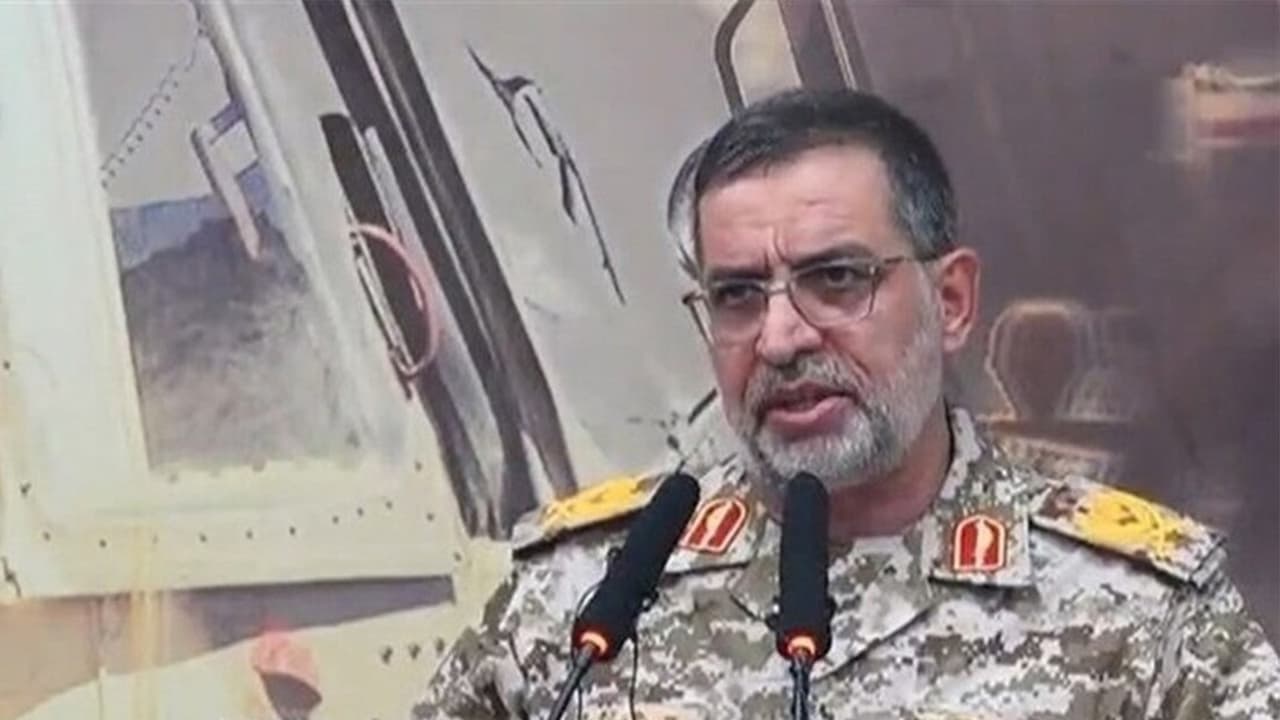
US-Israeli strikes have killed several top Iranian officials, including IRGC spokesperson Ali Mohammad Naeini and Intelligence Minister Esmaeil Khatib. The eliminations follow the recent death of Ayatollah Ali Khamenei on February 28.
Iranian state media Press TV said on Friday that the spokesperson of the Islamic Revolutionary Guard Corps, Brigadier General Ali Mohammad Naeini was killed in US-Israeli strikes. This comes after several leaders of the Iranian top brass have been eliminated in US-Israeli strikes since the death of Ayatollah Ali Khamenei on February 28.
Senior Officials Targeted in Strikes
On Thursday, the Israel Defense Forces announced that they killed Esmaeil Khatib, the Iranian Minister of Intelligence. The IDF said that Khatib operated against Iranian citizens during the Mahsa Amini protests (2022-2023).
In a post on X, the IDF said on Wednesday, “ELIMINATED: Esmaeil Khatib, the Iranian terrorist regime Minister of Intelligence, in a targeted strike in Tehran. Khatib played a significant role during the recent protests throughout Iran, including the arrest & killing of protestors and led terrorist activities against Israelis & Americans around the world. Similarly, he operated against Iranian citizens during the Mahsa Amini protests (2022-2023). The Iranian Ministry of Intelligence possesses advanced intelligence capabilities, overseeing surveillance, espionage, and the execution of covert operations worldwide, particularly against Israeli and Iranian citizens.”
Earlier this week, Iranian security chief Ali Larijani and Gholamreza Soleimani, head of the Basij paramilitary force, were also killed in Israeli air strikes on Tuesday. Pezeshkian condemned the “cowardly assassination of my dear colleagues,” saying they “left us heartbroken”. In a post on X, he added that their “path will continue stronger than before”, as per Al Jazeera.
The death of the 67-year-old Larijani, a close associate of the late Ali Khamenei and his successor, Mojtaba Khamenei, occurred following an attack on Monday night. This represents the loss of the most senior figure in Tehran’s leadership since the conflict began 19 days ago.
Soleimani had led the internal security force for six years and was considered a key figure in the military response.
Tehran Asserts Political Stability
Iranian Foreign Minister Abbas Araghchi earlier this week in an interview asserted that the political infrastructure of the nation remains a “very solid structure” and will not suffer a “fatal blow to Iran’s leadership” following the confirmed killing of Ali Larijani.
“I do not know why the Americans and the Israelis still have not understood this point: The Islamic Republic of Iran has a strong political structure with established political, economic, and social institutions,” Araghchi said.
The Foreign Minister emphasised that the “presence or absence of a single individual does not affect this structure.” He noted that while “individuals are influential, and each person plays their role–some better, some worse, some less–but what matters is that the political system in Iran is a very solid structure.”
Araghchi highlighted the earlier loss of the country’s former supreme leader, Ayatollah Ali Khamenei, who was killed during the initial phase of US-Israeli strikes on 28 February. He remarked that despite the immense national loss, “the system continued” to function.
(Except for the headline, this story has not been edited by Asianet Newsable English staff and is published from a syndicated feed.)