New Delhi: As the horizon of the Middle East remains clouded by the smoke of escalating conflict between the US-Israel, and Iran, the human cost for the Indian diaspora has come into sharp, tragic focus. On Monday, the Ministry of External Affairs (MEA) provided an update on the citizens caught in the crossfire of a region under siege.
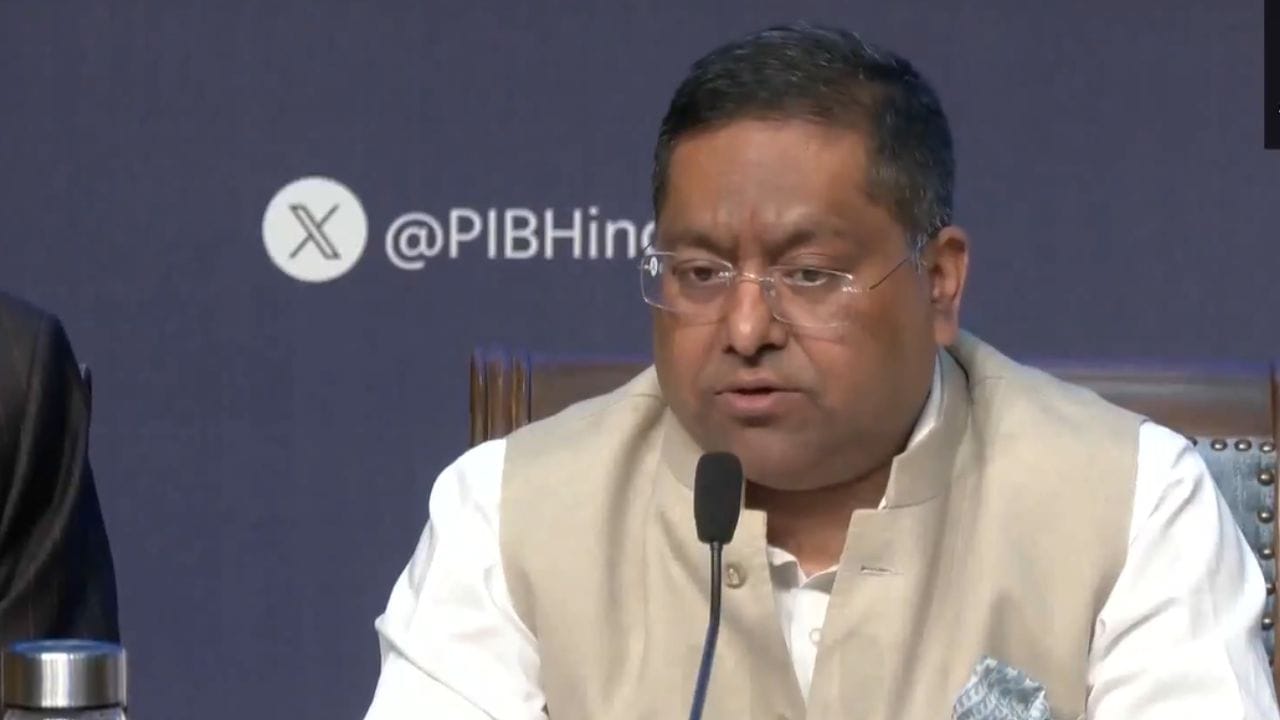
The toll of the ongoing warfare has now reached a grim milestone. According to the ministry, eight Indian nationals have been confirmed dead across various incidents in the Middle East. Among the most recent tragedies is a death in a Kuwait oil refinery. While the specific cause remains under investigation, Additional Secretary (Gulf) Asim R. Mahajan confirmed that the Indian Embassy is working around the clock with local authorities to repatriate the victim’s mortal remains, offering deepest condolences to the grieving family. “Our Embassy in Kuwait is in touch with the family members of the deceased and is working with the local authorities to do everything possible to bring his mortal remains back to India at the earliest,” he said.
While eight are dead, one Indian civilian remains missing. The government has launched an intensive tracing operation, with officials vowing to leave no stone unturned until the missing citizen is located.
Amid the instability in the Middle East, a massive movement of people is underway. The MEA revealed that nearly 5.5 million Indians have returned to India from the Middle East since February 28. This mass homecoming shows the anxiety felt by the millions of Indians living in the Gulf, as the threat of regional spillover grows.
On the political front, New Delhi is pushing for “restraint and de-escalation.” MEA Spokesperson Randhir Jaiswal emphasised that dialogue and diplomacy are the only exits from this labyrinth of violence.
In a high-stakes move, Prime Minister Narendra Modi engaged in direct talks with Saudi Arabia’s Crown Prince and Prime Minister, Mohammed bin Salman, on March 28. Their discussion centred on two critical pillars, ending the conflict through diplomatic channels, ensuring the safety of merchant vessels and maintaining the “freedom of navigation” in volatile waters.
With millions of Indians still residing across the Middle East, the MEA has shifted into a permanent “crisis mode.” To keep a constant Vigil on the situation, Indian embassies are operating 24 hours a day.
The MEA has also launched a separate 24×7 emergency line for the families of the people stuck in the Middle East. Also, the government is issuing frequent safety updates to ensure the community is never left in the dark.