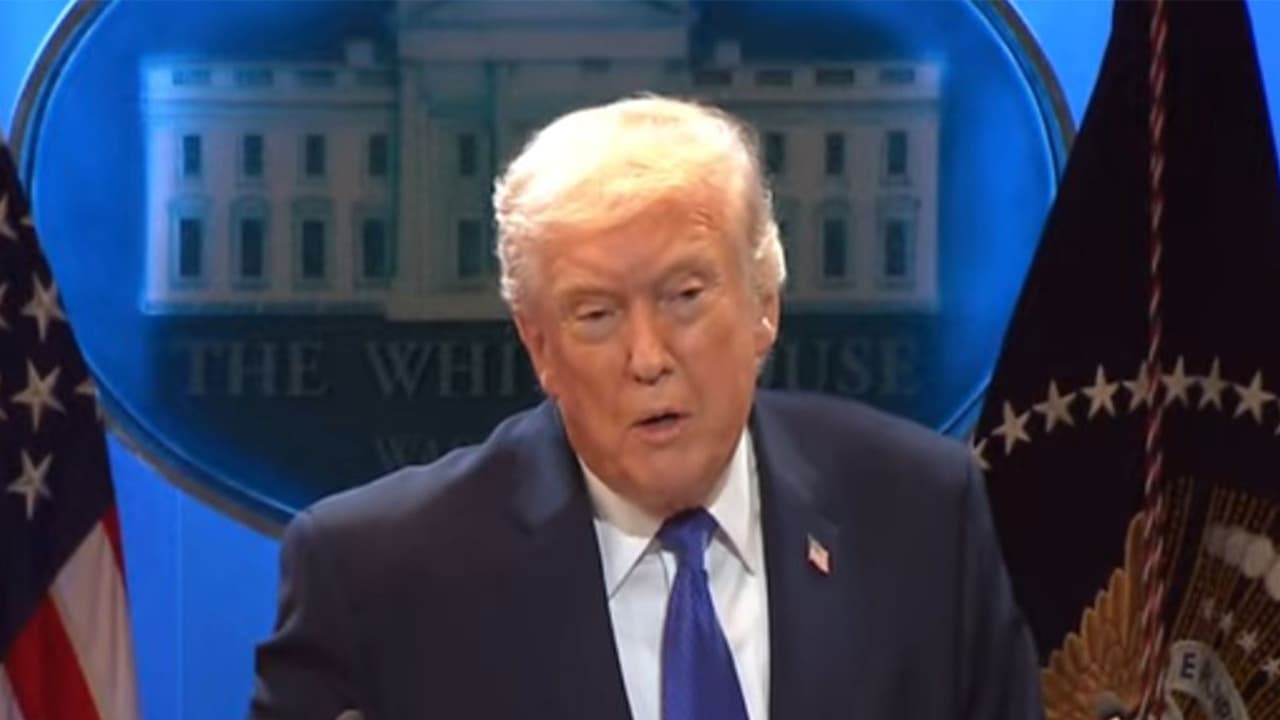
The US has imposed a new 10% global tariff under the Trade Act of 1974, which India is expected to pay. The move follows a Supreme Court ruling that struck down previous tariffs imposed by President Trump under emergency powers (IEEPA).
US Imposes 10% Global Tariff; India to Comply
The US has imposed a 10% global tariff, and India is expected to pay this tariff as part of its trade deal with the US. A White House official stated that this new tariff will remain in place until another authority is invoked, emphasising the expectation that trade partners abide by US trade deals.
A White House Official, when asked whether India will have to pay 10 per cent tariffs and whether they will replace previous tariffs under the International Emergency Economic Powers Act (IEEPA), told ANI, “Yes, 10% until another authority is invoked.” The official also advised all the trade partners to abide by the trade deals.
Trump Circumvents Supreme Court Ruling with New Authority
The new 10% global tariff is part of Trump’s protectionist trade agenda, aimed at addressing balance-of-payments issues and unfair trade practices. US President Donald Trump announced 10 per cent global tariffs “effective immediately,” following a major legal defeat at the US Supreme Court.
The Supreme Court ruled 6-3 that the Trump administration exceeded its legal authority by using the International Emergency Economic Powers Act (IEEPA) of 1977 to impose broad-based import tariffs.
Supreme Court’s 6-3 Decision
Terming SC’s ruling as a “terrible decision”, Trump announced he would sign an executive order for a 10% global tariff under Section 122 of the Trade Act of 1974. This authority allows for a temporary import surcharge (up to 15%) for 150 days to address balance-of-payments deficits. “Effective immediately, all the national security tariffs under Section 232 and existing Section 301 tariffs remain in place… Today, I will sign an order to impose a 10% global tariff under Section 122 over and above our normal tariffs already being charged,” he said.
Chief Justice John Roberts, joined by Justices Neil Gorsuch, Amy Coney Barrett, and the three liberal justices, held that the IEEPA does not explicitly authorise the president to levy duties–a power the Constitution assigns to Congress. Justices Samuel Alito, Clarence Thomas, and Brett Kavanaugh dissented, supporting the administration’s broader interpretation of emergency powers.
Financial Implications of the Ruling
The ruling invalidated billions of dollars in “reciprocal” and emergency tariffs, potentially requiring the government to refund approximately $130-$175 billion in collected revenue. US Supreme Court has held that the US President did not possess the authority under IEEPA to impose extensive import duties on goods from nearly all US trading partners.
Trump Slams ‘Ludicrous’ Supreme Court Decision
Trump has already stated that “alternatives will be used” to replace the tariffs that the court has “incorrectly rejected.” “Other alternatives will now be used to replace the ones that the court incorrectly rejected. We have alternatives. Could be more money, we will take in more money… We have taken in hundreds of billions of dollars. We will continue to do so,” he said.
Trump, referring to the decision as “ludicrous”, added that this decision benefits other countries but not the US. “To show you how ridiculous the opinion is, the court said that I am not allowed to charge even 1 dollar… I cannot charge 1 dollar to any country under IEEPA I assume this must be done to protect other countries, certainly not the United States of America. I am allowed to cut off any or all trade or business with any country. In other words, I can destroy the trade. I can destroy the country. I can do anything I want but I can’t charge one dollar. How ridiculous is that? Their decision is incorrect,” he said.
Trump further alleged that the courts are “swayed by foreign interests.” “Foreign countries that have been ripping us off for years are ecstatic. They are dancing in the streets, but they won’t be dancing for long… Those justices are a disgrace to our nation… The court has been swayed by foreign interests and a political movement that is far smaller than people would ever think,” he said.
India Deal Still ‘On’
Trump specifically noted that “The India deal is on,” suggesting that recent bilateral trade agreements–including the reduction of reciprocal tariffs to 18%–would be maintained through these new legal pathways.
Broader Consequences and Existing Tariffs
The ruling is expected to have wide-ranging consequences for global trade, businesses, consumers, inflation trends and household finances across the country. The financial implications of the ruling are substantial. The tariffs in question cover trillions of dollars in trade, and the US government collected nearly USD 134 billion in levies through December 14 under the contested authority, The Washington Post reported.
US stock indexes rose following the ruling, as investors anticipated a reduction in inflationary pressure, though gains were tempered by Trump’s immediate vow to reimpose new levies. The administration also launched new investigations into “unfair trade practices” under Section 301, which could lead to more permanent, targeted duties.
Trump emphasised that tariffs previously imposed under Section 232 (National Security) and existing Section 301 (Unfair Trade) remain “in full force and effect,” as they were not affected by the IEEPA ruling. (ANI)
(Except for the headline, this story has not been edited by Asianet Newsable English staff and is published from a syndicated feed.)