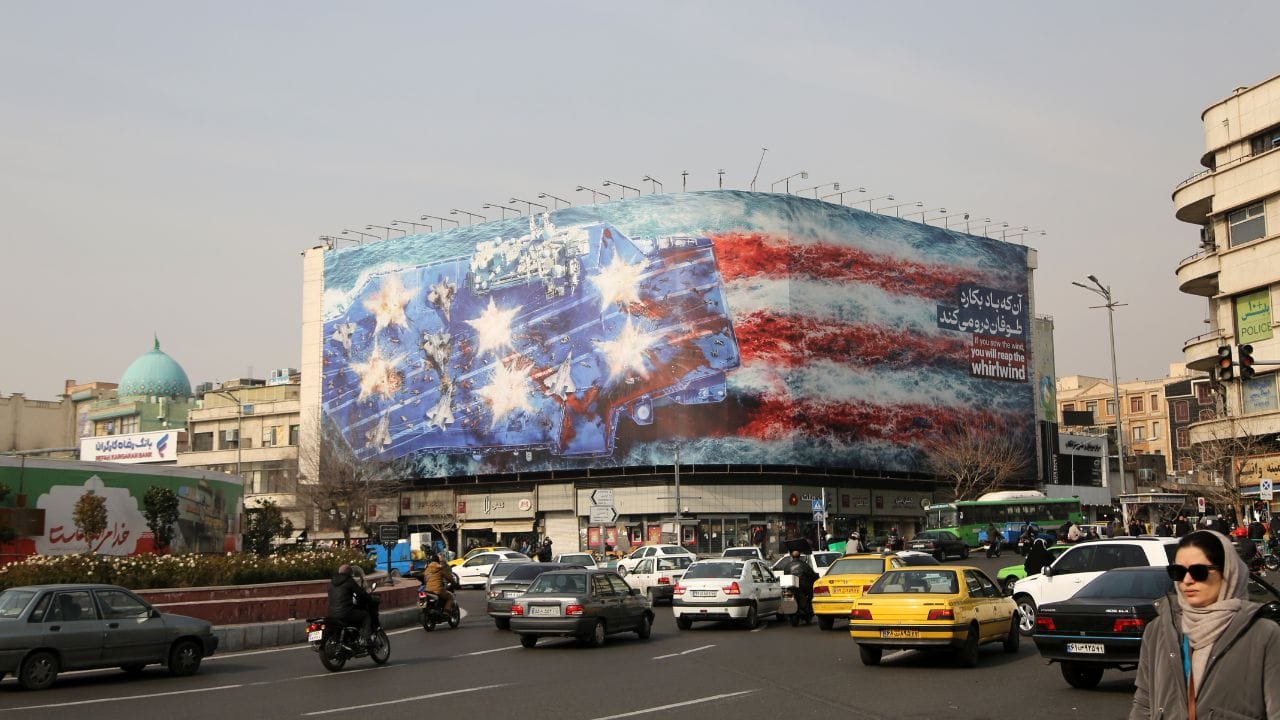
New Delhi: In a high-stakes display of “coercive diplomacy,” the United States and Iran concluded a second round of indirect talks in Geneva this Tuesday.
While negotiators in Switzerland spoke of a fledgling “path forward,” the horizon in the Middle East darkened with the arrival of dozens of American stealth fighters and the temporary closure of one of the world’s most vital oil chokepoints, Axios reported.
The Geneva progress: A blueprint for peace?
Emerging from the talks, Iranian Foreign Minister Abbas Araghchi offered a cautiously optimistic assessment, describing the dialogue as “serious, constructive, and positive.” According to Araghchi, the two sides have moved beyond mere introductions and reached a general understanding on guiding principles.
“We will move forward from now on and begin working on the text of a potential agreement,” Araghchi said via Iranian state TV. However, he tempered expectations, noting that while a path has finally been cleared, a final deal is not expected anytime soon. In contrast, US officials took a more laconic tone, simply stating that the session went “as expected.”
The military “stick”: 50+ jets and a second carrier
As diplomats sat at the table in Switzerland, the US military was busy reshaping the balance of power on the ground. According to open-source flight data and reports from Axios, the US has surged more than 50 high-end fighter jets, including F-35s, F-22s, and F-16s, into the Middle East within a single 24-hour window.
This massive aerial reinforcement follows President Donald Trump’s recent decision to deploy the USS Gerald R Ford, a second aircraft carrier, to the region. The move signals a “maximum pressure” backdrop to the ongoing negotiations, ensuring that the US military footprint remains a constant variable in the diplomatic equation.
Tehran’s counter-move
Tehran responded to the military build-up with a show of force in the Persian Gulf. Media outlets affiliated with the Islamic Revolutionary Guard Corps (IRGC) announced a temporary closure of the Strait of Hormuz.
The closure, which lasted several hours, was framed as a necessary measure for an unannounced naval drill. By momentarily halting traffic in the world’s most critical energy artery, Iran provided a sharp reminder of its ability to disrupt global markets if tensions boil over.
The “red line” reality check
Despite the “constructive” tone in Geneva, political friction remains high. US Vice President JD Vance sounded a note of skepticism during an interview with FOX News, suggesting that the two nations are still fundamentally at odds over key issues.
“In some ways it went well… but in other ways it was very clear that the President has set some red lines that the Iranians are not yet willing to actually acknowledge,” Vance said. He reiterated that the administration’s primary, non-negotiable objective remains preventing Iran from obtaining a nuclear weapon.