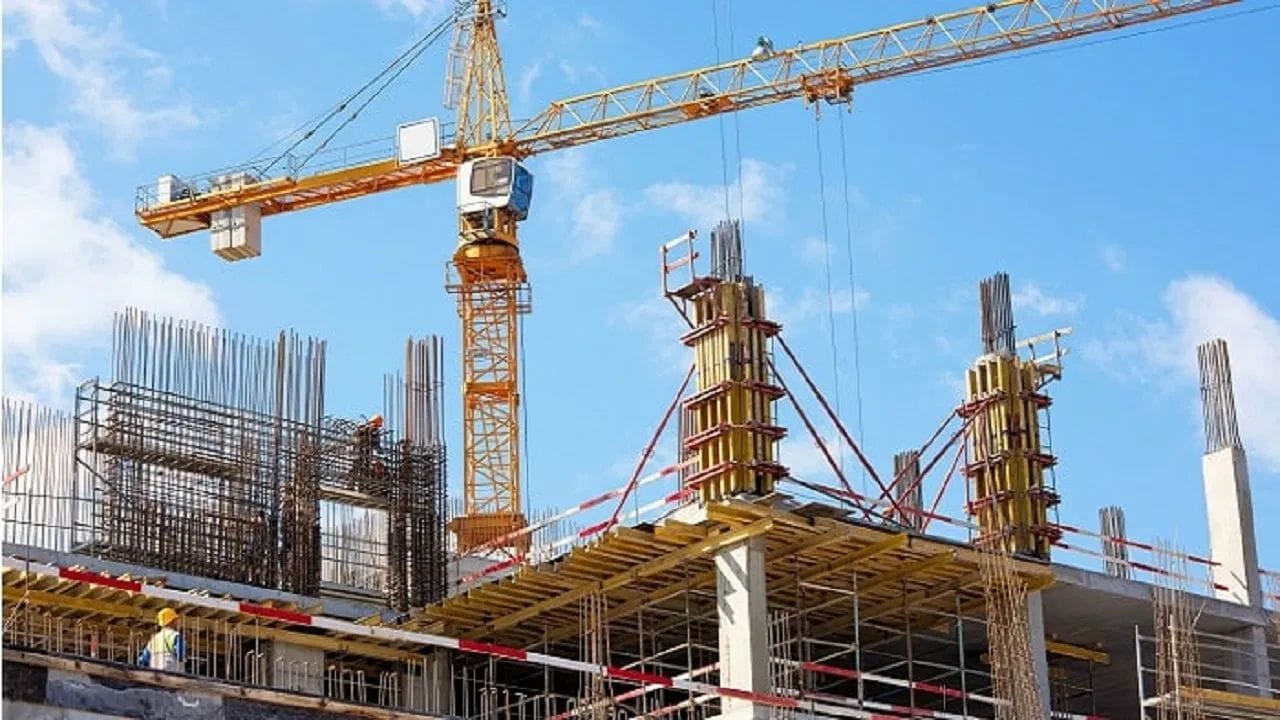
There seems to be a lot of seriousness regarding the growth of the country. For this, the government has completely focused on infrastructure. This is the reason why even in the last budget the government capex was more than Rs 11 lakh crore. Now the government is working on a new planning, so that there is no hindrance in the infra work. According to two sources, the central government is planning to make equity investment of Rs 30,000 crore in India’s Sovereign Wealth Fund. This investment is indicative of the government’s continued focus on infra, which has driven economic growth. According to these sources, who gave information on the condition of anonymity, a note has been sent to the Expenditure Finance Committee (EFC) regarding infusion of capital into the National Investment and Infra Fund (NIIF).
Once the scheme is approved by the EFC headed by Expenditure Secretary V. Vulanam, the Cabinet note will be sent for approval and it is likely to be announced in the upcoming Union Budget, sources said. One of the above sources said, “A significant portion of the huge amount being raised for NIIF will be invested in NIIF Master Fund II, the process of which has started.
How much money for Master Fund II?
NIIF is in the process of raising approximately $3.5 billion for its second master fund. Infrastructure spending has become the mainstay of India’s economic growth, where government investment has driven GDP despite sluggish private investment over the past few years. NIIF is also launching its Private Markets Fund II, with a target of $1 billion, and is in talks with the US for a proposed bilateral fund. Till now neither NIIF nor the Finance Ministry has issued any statement in this matter.
When was NIIF started?
The Government of India holds 49 percent stake in NIIF. It mainly focuses on investment in key areas of infrastructure. This sovereign fund manages equity capital of $4.9 billion through its four funds – Master Fund, Private Markets Fund, Strategic Opportunities Fund and India-Japan Fund – which include investments in sectors such as ports and logistics, renewable energy, roads, digital infra and manufacturing. NIIF was established in 2015 with an initial investment of Rs 20,000 crore from the Central Government.
In 2020, the Union Cabinet approved a further Rs 6,000 crore as equity investment in NIIF debt platforms, including Asim Infrastructure Finance Limited (AIFL) and NIIF Infrastructure Finance Limited (NIIF-IFL). NIIF’s investors include Abu Dhabi Investment Authority (ADIA), Temasek, AustralianSuper, Ontario Teachers’ Pension Plan, Canada Pension Plan Investment Board (CPPIB), Asian Infrastructure Investment Bank (AIIB), Asian Development Bank (ADB), New Development Bank (NDB) and Japan Bank for International Cooperation (JBIC).
investment of 111 lakh crores
NIIF is expected to play an important role in India’s infra growth target. The government’s National Infra Pipeline (NIP) targets an estimated infra investment of about Rs 111 lakh crore from FY 2020 to FY 2025. India’s capex target for FY 2026 has been set at Rs 11.21 lakh crore, which is about 3.1 percent of the gross domestic product (GDP). In last year’s budget, this target was 11.11 trillion dollars, which was about 3.4 percent of the GDP. According to the government, the effective capex for the financial year 2026 is estimated to be $ 15.48 trillion, whereas in the last financial year it was $ 13.18 trillion.
Capex tripled in 5 years
Capex has tripled since FY 2020, which has increased productivity in all sectors. Since Sanjeev Aggarwal, who was previously overseeing global private equity firm Actis’ energy investments in Asia, took over as Chief Executive Officer (CEO) and Managing Director (MD) of NIIF in January last year, NIIF has achieved some stellar successes. These include the sale of Ayana Renewable Power Pvt Ltd to ONGC NTPC Green Pvt Ltd (ONGPL) at an enterprise value of $2.3 billion.
Athang Infrastructure’s three road assets were sold to Cube Highways Trust for an enterprise value of $725 million. Aggarwal takes over from Rajiv Dhar, who had served as the interim MD and CEO of NIIF following the resignation of Sujoy Bose in May 2016. Sujoy Bose was the founding head of this fund. Dhar was earlier the Executive Director and Chief Operating Officer (COO) of NIIF.