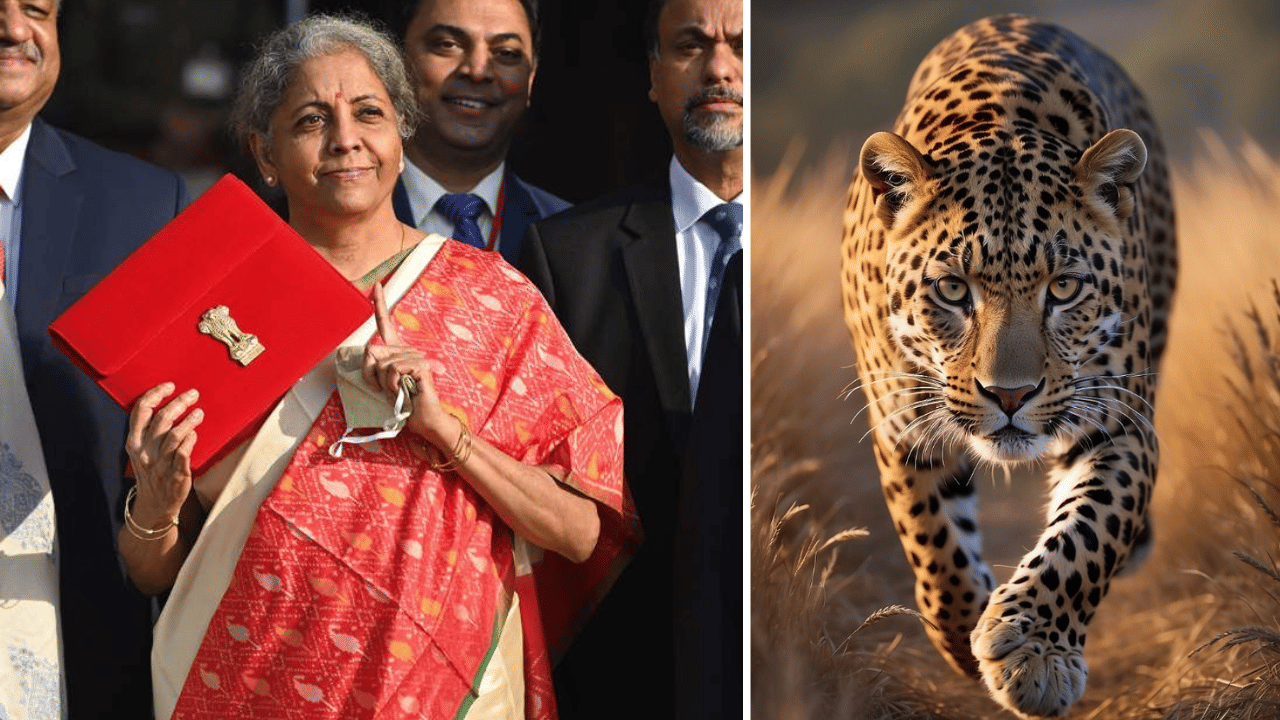
New Delhi: India’s Union Budget 2026 has thrust wildlife conservation into the spotlight, with a landmark announcement that New Delhi will host the Global Big Cat Summit this year. Finance Minister Nirmala Sitharaman highlighted this during her budget speech, underscoring how protecting majestic predators like tigers and lions ties directly into climate resilience and sustainable development. As India cements its role on the global stage, this summit promises to rally nations for bold action on big cat conservation amid pressing ecological challenges.
Imagine forests teeming with life, where the roar of a tiger echoes as a symbol of balance— that’s the vision driving this initiative. The summit isn’t just an event; it’s a clarion call linking wildlife to our planet’s health, with New Delhi at the helm.
Union Budget 2026 highlights
Finance Minister Nirmala Sitharaman unveiled the Union Budget 2026 on 1 February 2026, weaving environmental stewardship into its fabric with the Global Big Cat Summit as a centrepiece. She noted that India established the International Big Cat Alliance (IBCA) in 2024, and this year’s summit will convene heads of governments and ministers from 95 range countries to forge collective strategies. This move bolsters India’s environmental diplomacy, blending conservation with climate goals like carbon sequestration and disaster risk reduction. Budget allocations emphasise nature-based solutions, reflecting a shift where wildlife protection fuels economic and ecological progress—over 100 words of forward-thinking policy in action.
The announcement resonates amid India’s tiger census triumphs, doubling populations ahead of targets, proving fiscal commitment yields tangible wins. Curious how this fits broader fiscal plans? It signals wildlife as a smart investment.
Global Big Cat Summit 2026 explained
Picture this: leaders from across continents gathering in New Delhi for the first-ever Global Big Cats Summit under IBCA auspices, announced by Environment Minister Bhupender Yadav at COP30 in Brazil last November. This high-level event targets the seven iconic species—tiger, lion, leopard, snow leopard, jaguar, cheetah, and puma—whose habitats span Asia, Africa, and the Americas. Why does it matter to everyday folk? Big cats are ecosystem guardians; where they thrive, forests store carbon (India’s tigers alone safeguard vast sinks), grasslands regenerate, and water cycles stabilise, curbing floods and droughts.
India’s credentials shine: tiger numbers doubled to over 3,000 since 2010, Asiatic lions in Gujarat hit 700-plus, and cheetah reintroduction in Madhya Pradesh thrives. IBCA, launched in 2023, fosters research, funding, and cross-border pacts—now with 95 nations invited. Stats paint the stakes: globally, tigers number under 4,000 wild individuals, leopards face habitat loss at 2per cent yearly. The summit will swap strategies, from anti-poaching tech to community livelihoods, making conservation relatable—like how healthier habitats mean cleaner air and resilient farms for millions.
“We established the Big Cat Alliance in 2024. This year India is hosting the first-ever global Big Cat Summit where heads, heads of governments and ministers from 95 range countries will deliberate on collective strategies for conservation,” Sitharaman said while presenting the Union Budget 2026 in Parliament.
New Delhi’s rise as Big Cat leader
New Delhi isn’t just hosting; it’s emerging as the world’s big cat nerve centre, thanks to IBCA’s headquarters and India’s proven playbook. From doubling tigers via Project Tiger (now 50 reserves strong) to lion strongholds in Gir, India hosts five of seven species natively—a biodiversity feat few match. This leadership amplifies at COP30 ties, where Yadav linked cats to climate adaptation: their landscapes sequester millions of tonnes of CO2 annually while shielding communities from disasters.
Global eyes turn here as Delhi hosts summits blending policy with on-ground wins, like snow leopard programmes in the Himalayas. It’s environmental soft power: India invites all range states, building alliances that outlast events. Why New Delhi? Central, symbolic, and wired for diplomacy—positioning India as the go-to for wildlife innovation.
In sum, the Budget 2026 backed summit propels New Delhi’s ascent, uniting nations for a predator-packed planet that benefits us all—over 30 words of promise fulfilled.