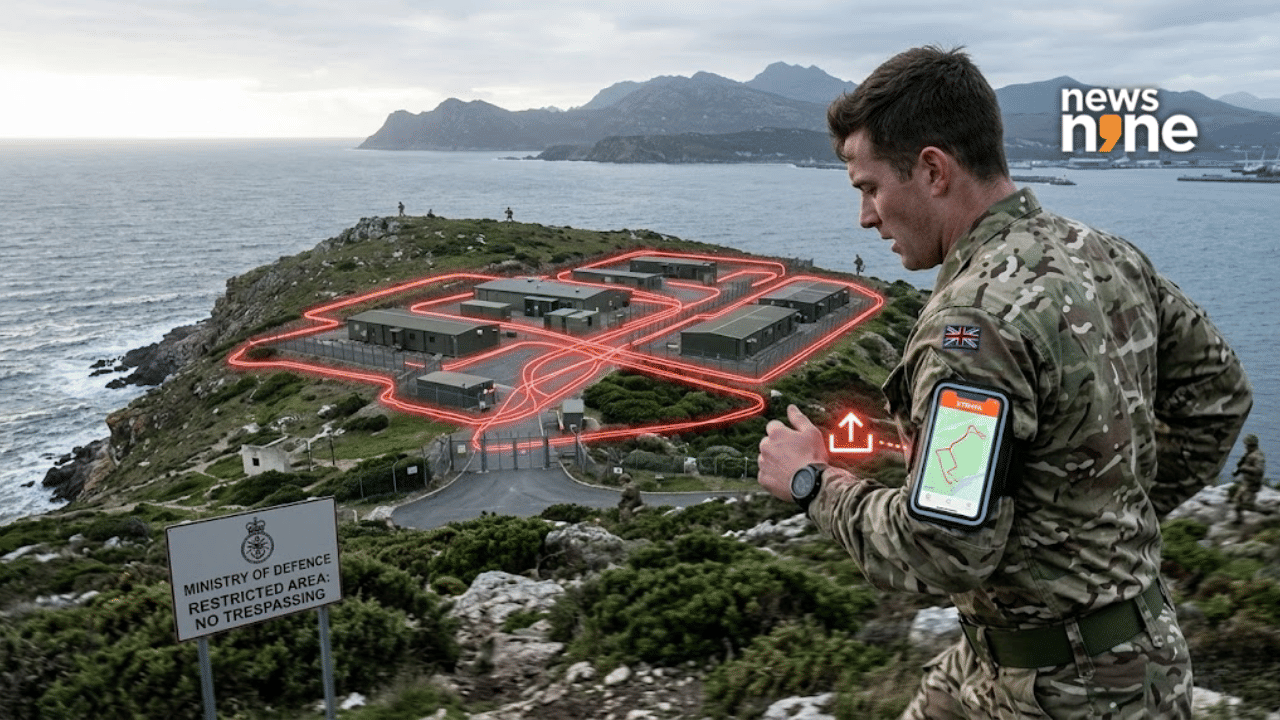
New Delhi: A running app getting mixed up in military security sounds odd at first. But that’s exactly what’s happening. Strava, the app people use to track workouts, has ended up exposing details tied to UK military personnel. Locations, daily routines, even bits of personal life. All out there, just sitting on public profiles.
The i Paper reports that more than 500 people linked to the armed forces logged runs inside restricted bases. These aren’t random parks. These are nuclear facilities, intelligence hubs, joint UK-US sites. What looks like harmless jogging data starts to feel very different when you zoom in a little.
Strava data reveals sensitive military patterns
Some of the examples are just carelessness. Runs tracked inside Faslane, Northwood, and RAF Menwith Hill. One route even showed up publicly with the name “Security Breach”.
A senior military source told The i Paper it is “damn good intelligence for the enemy.”
And yeah, it doesn’t stop at maps. You connect these runs with social media, and suddenly, you can start figuring out who is who. Roles, ranks, even family connections. In one case, a route helped point to a specific nuclear submarine. That’s the kind of detail you don’t expect to leak from a fitness app.
Real world risks and recent incidents
This isn’t some abstract risk people talk about in reports. One official straight up called it “frankly ridiculous”. It’s hard to argue with that.
There have already been warning signs. People have tried getting into Faslane. Security teams are dealing with probes and surveillance attempts more often now.
And it’s not just the UK. A French naval officer recently logged a workout that revealed the position of the aircraft carrier Charles de Gaulle in near real time. The data showed it moving near Cyprus, about 100 kilometres from Turkey. One workout, that’s all it took.
Why this matters for tech and policy
Strava has over 120 million users. Sharing is the whole point of the app. That’s what makes it fun. That’s also what makes it risky in the wrong place.
UK’s Ministry of Defence says it keeps reviewing its rules. Still, officials admit it is “a big issue”, which sounds like a polite way of saying this hasn’t been fixed yet.
Experts say even small bits of data can stack up. A run here, a photo there, a route name somewhere in between. Give it time, and it starts forming a picture.