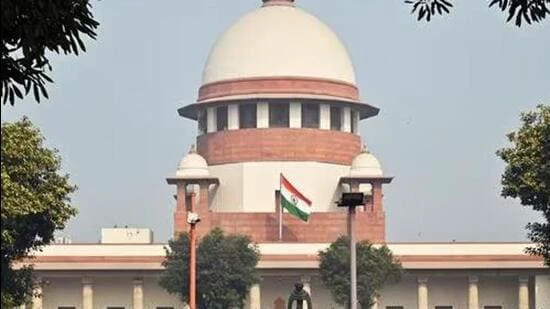
Opposition to the University Grants Commission (UGC)’s new regulations on promotion of equity in higher education campuses has reached the Supreme Court, with two separate petitions challenging the constitutional validity of the rules notified earlier this month.
Both petitions are likely to be mentioned before Chief Justice of India Surya Kant later this week for directions on listing and hearing.
The first writ petition has been filed by Mrityunjay Tiwari, a post-doctoral researcher at Banaras Hindu University, Uttar Pradesh, assailing the University Grants Commission (Promotion of Equity in Higher Education Institutions) Regulations, 2026. A second petition was filed in the Supreme Court on Tuesday by advocate Vineet Jindal, challenging the constitutional validity of Regulation 3(c) of the 2026 regulations.
The challenge comes amid intensifying political, academic and student opposition to the regulations, which were notified by the UGC on January 13, 2026, replacing its 2012 framework on the subject.
The 2026 regulations, under clause 3(c), define “caste-based discrimination” as discrimination “only on the basis of caste or tribe” against members of the Scheduled Castes (SCs), Scheduled Tribes (STs), and Other Backward Classes (OBCs). The final notified version also removed a provision that was present in a draft circulated in 2025 which proposed punishment in cases of false complaints.
Critics have argued that the definition excludes students from the general category, creates a presumption of guilt against them, and fails to provide safeguards against misuse.
In his petition, Tiwari has contended that the definition proceeds on an “untenable presumption” that caste-based discrimination is unidirectional. He has argued that, “by design and operation”, the regulations accord “legal recognition of victimhood” only to certain reserved categories, while excluding general or upper caste students from the scope of protection and grievance redressal.
Jindal’s plea assails the provision as unconstitutional, arbitrary and discriminatory, and violative of several fundamental rights granted under the Constitution. The petition argues that restricting the definition of “caste-based discrimination” exclusively to SC, ST and OBC communities denies equal protection of law and amounts to impermissible State discrimination. It also contends that the regulation is ultra vires the University Grants Commission Act, 1956.
Jindal has sought a declaration striking down Regulation 3(c) as void ab initio. In the alternative, he has urged the court to read down the provision and direct UGC to adopt a caste-neutral and inclusive definition of discrimination, extending grievance redressal mechanisms to all persons subjected to discrimination on the basis of caste, irrespective of caste identity.
The petition has also sought an interim restraint on the enforcement of Regulation 3(c) in its present form and a direction that Equal Opportunity Centres, equity helplines, inquiry mechanisms and ombudsperson proceedings under the 2026 regulations be made available in a non-discriminatory manner pending suitable amendment.
Outside the courtroom, political opposition to the regulations has continued to grow. Rajya Sabha MP Priyanka Chaturvedi has called for the rules to be “withdrawn or amended”, questioning whether the provisions ensure equal protection for all students. “What happens in case of false accusations? How will guilt be determined? How should discrimination be defined — through words, actions, or perceptions?” she asked in a social media post on Monday.
Uttar Pradesh BJP MLC Devendra Pratap Singh has written to the UGC warning that the regulations could make “general category students feel unsafe” and potentially widen caste-centric divisions on campuses. Student bodies, including the students’ union of Kumaun University in Uttarakhand, have also objected to the rules, arguing that they violate principles of natural justice and could foster an atmosphere of fear and distrust.
Amid the backlash, BJP MP Nishikant Dubey posted on X on Sunday that “all misconceptions” surrounding the regulations would soon be addressed, asserting that the Narendra Modi-led government remained committed to protecting the interests of all sections, including economically weaker sections among upper castes.
The controversy has also triggered resignations. Bareilly city magistrate Alank Agnihotri, a 2019-batch Provincial Civil Services officer, resigned on Monday citing his dissatisfaction with the UGC regulations, even as several BJP workers in Lucknow also stepped down from the party over the issue.