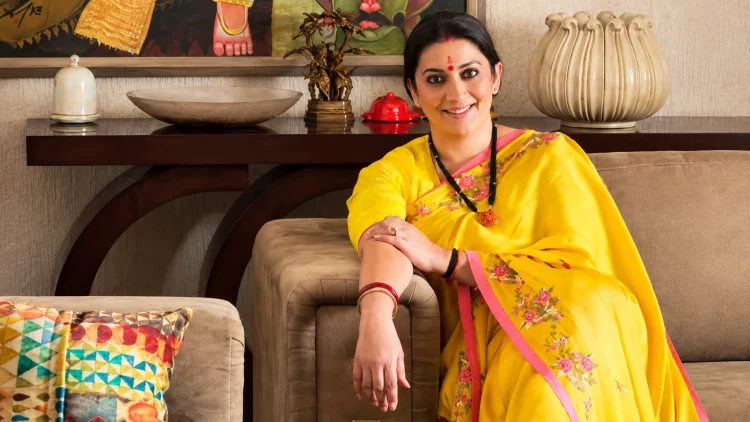
Actress and politician Smriti Irani has reflected on the lasting significance of Tulsi Virani, the character that made her a household name through the television series Kyunki Saas Bhi Kabhi Bahu Thi. Marking 25 years since Tulsi first appeared on Indian television, Irani credited producer Ekta Kapoor with helping place women and their experiences at the centre of prime-time storytelling.
In a recent Instagram post, Irani reshared a video discussing academic research on the influence of television in rural India. The material referenced research titled “The Power of TV: Cable Television and Women’s Status in India,” examining the relationship between access to cable television and changing attitudes towards women.
Irani recalls Tulsi’s television journey
Reflecting on the character’s anniversary, Irani said neither she nor the people behind the show could have known how widely Tulsi Virani would resonate with audiences when the character first entered Indian homes 25 years ago.
She also highlighted Kapoor’s role in shaping the programme and described the producer as a young woman who challenged established conventions in prime-time television. According to Irani, Kapoor’s decision to place women at the centre of the narrative contributed to changes in the way stories were presented on Indian television.
Tulsi became one of the most recognisable television characters of that era, while Kyunki Saas Bhi Kabhi Bahu Thi became a major part of Indian television’s popular culture.
Research examines television and women’s attitudes
Irani’s post also drew attention to academic research concerning the spread of cable television in rural India. The research she referenced examined whether exposure to television was associated with changes in attitudes towards women.
According to the material shared by Irani, the study looked at areas including women’s autonomy, education and attitudes towards domestic violence. Irani used the findings to discuss the broader possibility that entertainment can influence how audiences think about social roles and personal choices.
The actress did not present the research as proof that one television character alone caused social change. Instead, she connected the findings to her broader view that stories can introduce audiences to ideas and possibilities that may not otherwise be part of their everyday experience.
Smriti Irani on the influence of storytelling
Irani wrote that television stories can sometimes do more than mirror the society in which they are created. In her view, a fictional character can challenge an established boundary on screen before viewers begin questioning similar boundaries in their own lives.
She also reflected on younger viewers who watched Tulsi during the show’s original run. Many of those viewers are now adults and, as Irani pointed out, some are raising children of their own.
Her comments suggest that the significance of a long-running television character can extend beyond ratings or the duration of a programme. For Irani, the continued memory of Tulsi represents the possibility that stories can remain part of people’s lives long after an individual episode has ended.
A character remembered after two decades
The 25-year milestone has prompted Irani to look beyond her own performance and acknowledge the creative decisions that shaped the show. Her tribute places particular emphasis on Kapoor’s approach to television and the position of women in prime-time storytelling.
Kyunki Saas Bhi Kabhi Bahu Thi remains closely associated with the era of Indian television in which family dramas became a dominant part of prime-time programming. Tulsi Virani, meanwhile, became one of the defining characters of that period.
Irani’s latest reflection presents the anniversary as an opportunity to consider not only the character’s popularity but also the way television stories can become part of the memories and experiences of multiple generations.